
Equipment and Tools Every fitness trainer in Nigeria Needs in 2026
Equipment and Tools Every fitness trainer in Nigeria Needs in 2026
The fitness industry in Nigeria is booming. From Lagos to Abuja, more people are investing in their health, creating a massive opportunity for skilled personal trainers. But in a competitive market, having the right qualifications is only half the battle. To succeed and build a profitable business in 2026, you need the right equipment and, more importantly, the right business tools to stand out, attract clients, and get paid without stress.
Overview & Key Takeaways
This guide breaks down the essential equipment and digital tools every Nigerian fitness trainer needs to launch and grow their business in 2026. We cover everything from affordable, portable gear for mobile trainers to the technology required to manage clients and secure your income.
- Start lean and smart: Begin with portable, multi-functional equipment like resistance bands and kettlebells to keep initial costs under ₦80,000.
- Track everything to show value: Use tools like a measuring tape and a digital scale to demonstrate client progress, which justifies your fees and improves retention.
- Leverage technology for business management: A platform like TrustAm is crucial for creating a professional profile, managing bookings, and securing payments with escrow, protecting you from payment delays.
- Your smartphone is your office: A reliable smartphone paired with a strong power bank and a good data plan is a non-negotiable toolkit for a modern Nigerian trainer.
- Build a professional brand online: To attract high-paying clients, you must have a verifiable online presence with genuine reviews, which platforms like TrustAm facilitate with payment-backed feedback.
Fitness Trainers on TrustAm
Book with escrow protection. If a job isn't done right, open a dispute and our team steps in.

Adi Samuel
Service Provider
- Payment protected by escrow
- Money released only after you confirm the job
Adamu Ishaku
Service Provider
- Payment protected by escrow
- Money released only after you confirm the job

Rebound Home-based Physiotherapy & Rehabilitation
Service Provider · Abuja
- Payment protected by escrow
- Money released only after you confirm the job

Empress Touch and beauty services
Service Provider · Abuja
- Payment protected by escrow
- Money released only after you confirm the job

Kayode
Service Provider · Iseri
- Payment protected by escrow
- Money released only after you confirm the job

Edmond Investment
Service Provider · Enugu
- Payment protected by escrow
- Money released only after you confirm the job
The Foundation: Essential & Portable Training Gear
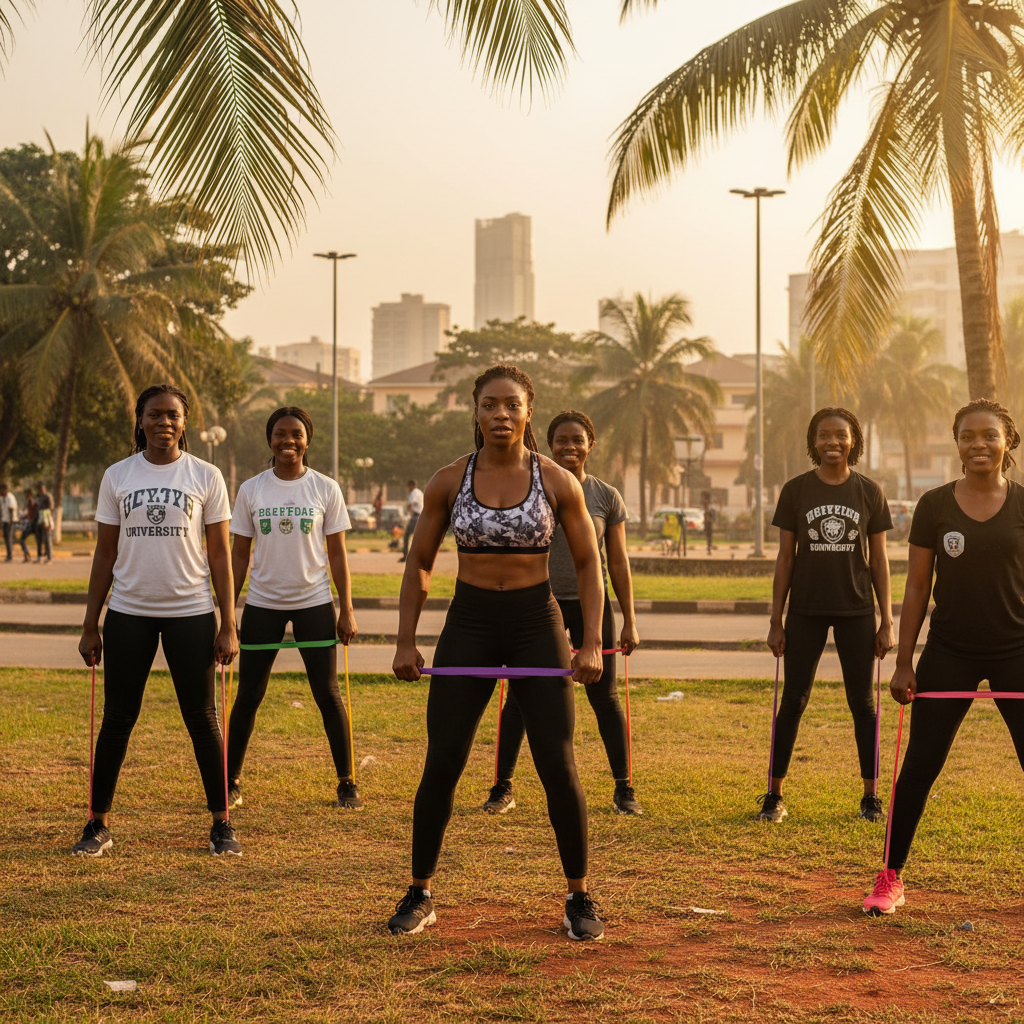
To start your fitness training business without the massive overhead of renting a gym space, you need a core set of portable and versatile equipment. This allows you to be a mobile trainer, visiting clients at their homes in areas like Lekki or Maitama, or running outdoor bootcamps. This approach keeps your startup costs low while you build your client base.
- Resistance Bands (Set): These are incredibly versatile for strength training, warm-ups, and rehabilitation exercises. A good quality set costs between ₦8,000 and ₦20,000 and is lightweight enough to carry anywhere.
- Adjustable Dumbbells: While more expensive (starting from ₦50,000), a pair of adjustable dumbbells replaces an entire rack of weights, saving you space and money in the long run. They are perfect for home-based trainers.
- Kettlebell (1 or 2): A single kettlebell (8kg - 16kg) can be used for a full-body workout, focusing on strength, cardio, and flexibility. Expect to pay between ₦12,000 and ₦30,000 depending on the weight and quality.
- High-Quality Yoga Mat: Essential for floor exercises, stretching, and client comfort and hygiene. A durable mat costs around ₦7,000 to ₦15,000.
- Skipping Rope: An affordable and highly effective tool for cardiovascular conditioning. A good speed rope can be purchased for as little as ₦3,000.
Tools for Tracking Progress & Proving Your Value
Clients pay you for results. To retain them and attract new ones through testimonials, you must meticulously track their progress. These simple tools are non-negotiable for proving the value of your training programmes and justifying your rates.
- Body Measuring Tape: The scale doesn't always tell the full story. Tracking changes in waist, hip, and arm measurements is a powerful way to show progress, especially when weight loss isn't the primary goal.
- Digital Body Weight Scale: A reliable digital scale provides consistent and accurate readings. It’s a basic tool that every client expects you to have.
- Client Progress Journal (Digital): Use a notes app or a spreadsheet to log every client's workouts, weights lifted, and personal bests. This data is invaluable for programme adjustments and motivational conversations.
- A Professional Booking & Management System: This is where you move from an amateur to a professional. Instead of messy WhatsApp chats, use the TrustAm app. You can log session notes, and more importantly, the app provides a clear history of all booked and completed sessions, creating an official record of your client's commitment and journey with you.
The 'Nigerian-Proof' Tech & Business Toolkit
Running a service business in Nigeria comes with unique challenges, from unpredictable power supply to payment hassles. Your tech toolkit must be robust and designed to handle these realities. This is what separates struggling trainers from successful ones.
- A Reliable Smartphone: This is your mobile office. You need it for communication, content creation for social media, and managing your business on the go.
- A 20,000mAh+ Power Bank: When NEPA or your local DISCO decides to take a break, your business shouldn't stop. A high-capacity power bank ensures your phone is always on for client bookings and payment confirmations.
- TrustAm for Service Providers: This is the single most important business tool you can have. Think of it as your personal assistant, accountant, and marketing manager in one app.
- Get Discovered: Create a professional profile on the TrustAm marketplace. Clients in Lagos, Abuja, Port Harcourt, and 10 other cities are actively searching for verified fitness trainers right now.
- Eliminate Payment Wahala: Stop chasing clients for payment. With TrustAm's escrow protection, the client pays into a secure account before the session. The funds are released to you automatically once the session is marked as complete. No more stories.
- Seamless Booking Management: Your clients can view your availability and book sessions directly in the app. This ends the endless back-and-forth scheduling via DMs.
- Build Real Trust: Only clients who have booked and paid for your service through the app can leave a review. These payment-backed reviews are 100% genuine and build immense trust with potential clients.

Scaling Up: Equipment for a Small Studio or Specialised Niche
Once you have a steady stream of clients and income, you might consider scaling up by setting up a small home studio or specializing in a niche. This requires a more significant investment but allows you to charge premium rates. Proper financial planning is key, and a resource like the Small Business Budgeting Guide for Nigerian Entrepreneurs in 2026 can be invaluable.
Key equipment for scaling up includes:
- Squat Rack or Power Cage: The centerpiece of any serious strength training space. Allows for safe execution of major compound lifts like squats, bench presses, and overhead presses.
- Olympic Barbell and Weight Plates: Essential for progressive overload and serious strength development.
- Adjustable Bench: A versatile piece for various dumbbell and barbell exercises.
- Specialty Gear: Depending on your niche, this could be anything from boxing gloves and pads for combat fitness to TRX suspension trainers or Pilates reformers.
Funding these upgrades can be a challenge, but a well-managed business with clear income records—like the one you can build using TrustAm's payment tracking—makes it easier to plan your finances or even apply for business loans in Nigeria.
Start Getting Clients on TrustAm
Stop chasing payments and haggling on WhatsApp. List your fitness training services on TrustAm to get discovered by clients in your city, manage bookings effortlessly, and get paid securely with escrow protection.
Create Your Free Provider Account →Join thousands of Nigerian service pros building their business on TrustAm.
Frequently Asked Questions
How much does it cost to become a personal trainer in Nigeria?
Becoming a certified personal trainer in Nigeria involves costs for certification, equipment, and business registration. Certification courses can range from ₦50,000 to ₦150,000. A basic set of portable equipment will cost between ₦50,000 and ₦100,000, and business name registration with the CAC is typically under ₦25,000.
Do I need a gym to be a fitness trainer?
No, you do not need a gym to start a successful fitness training business in Nigeria. Many trainers operate as mobile professionals, training clients in their homes, local parks, or dedicated personal training studios. This model significantly reduces startup costs and offers clients more flexibility.
How do fitness trainers get clients in Nigeria?
Fitness trainers in Nigeria get clients through a combination of word-of-mouth referrals, active social media presence (especially on Instagram), and listing their services on a trusted marketplace. Using an app like TrustAm is highly effective, as it connects you directly with users actively searching for verified trainers in major cities like Lagos, Abuja, and Port Harcourt.
What is the average salary of a personal trainer in Nigeria?
The income of a personal trainer in Nigeria varies greatly. A trainer employed by a commercial gym might earn a salary between ₦70,000 and ₦150,000 per month. However, independent trainers who build their own client base can earn significantly more, often between ₦200,000 to over ₦500,000 monthly, depending on their rates, number of clients, and location.
Book a verified Fitness Trainer
Verified providers. Payment held safe until the job is done. Reviews only from real, paid bookings.
Download TrustAm
AI-powered budgeting, instant P2P payments, and escrow protection. Built for Nigeria.
Or get a download link sent to your phone
Chisom Anen
Founder and CEO of TrustAm. Building Nigeria's reputation marketplace for verified service providers. Reviews unlock only after real payments.
Disclosure: This article is published by TrustAm. Some links may direct to our own marketplace and products.
Sources & References
- Consumer Price Index (Inflation Data)— nigerianstat.gov.ng
- Corporate Affairs Commission (Business Registration)— cac.gov.ng
- Starting a Profitable Business in Nigeria— paystack.com
- Nigeria Economic Overview— worldbank.org
Related Services
Find trusted providers related to this article.
Related Articles


Free Tools You Might Find Useful
Try these free calculators and tools related to this article.
Invoice Generator
Generate professional invoices for your Nigerian business or freelance work.
Use free tool →Receipt Generator
Generate payment receipts for completed services in Nigeria.
Use free tool →Quote Generator
Generate service quotations for clients in Nigeria.
Use free tool →Contract Generator
Generate basic service agreements for Nigerian service providers.
Use free tool →