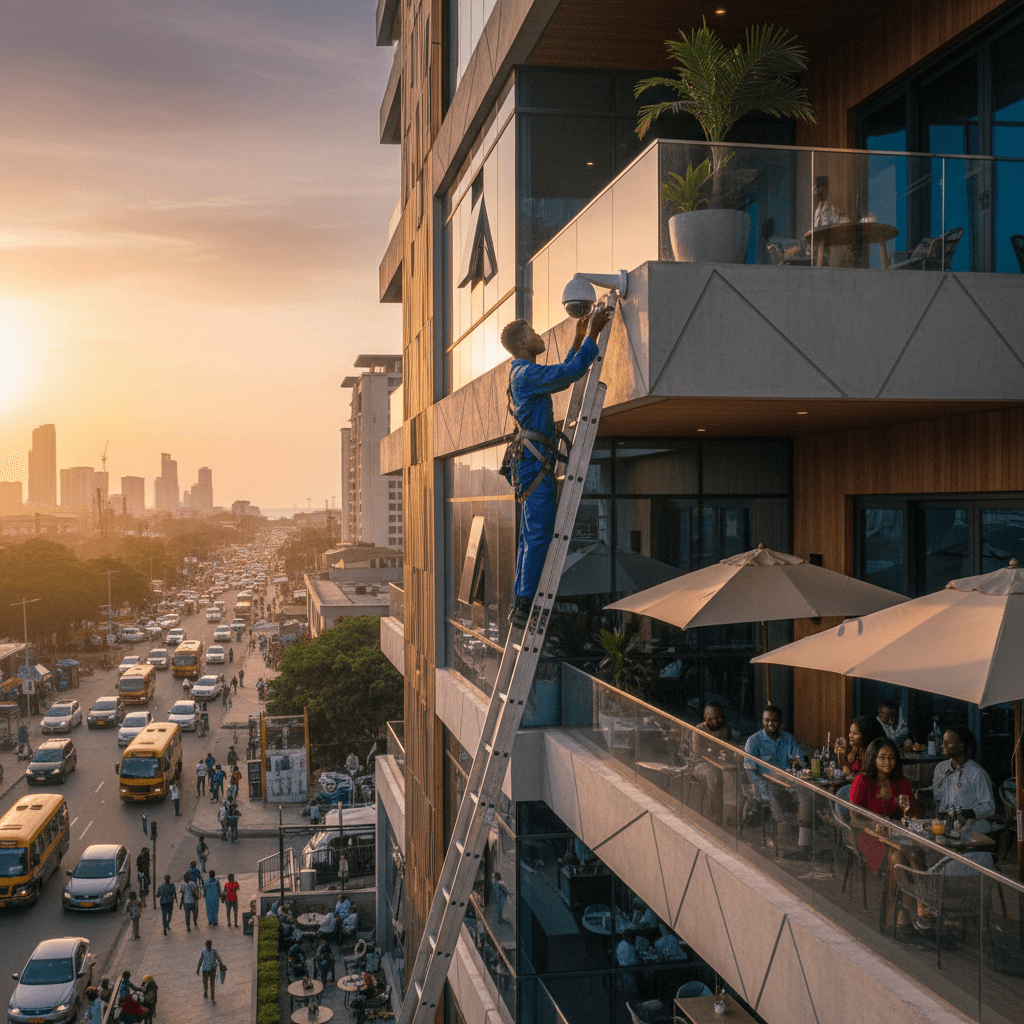
How to Set Your Prices as a CCTV and Security Installer in Nigeria
How to Set Your Prices as a CCTV and Security Installer in Nigeria
You’ve just completed a complex 8-camera IP installation for a client in Lekki. The system works perfectly, the remote view is crystal clear, but when you look at your profit after paying for the NVR, cameras, and your transport for three days, you realise you’ve barely made minimum wage. Sound familiar? In Nigeria's rapidly growing security market, knowing how to install CCTV is only half the battle; knowing how to price your services profitably is what separates a struggling technician from a thriving business owner.
Overview & Key Takeaways
This guide provides a complete breakdown of how to calculate profitable prices for your CCTV installation services in Nigeria. We'll cover everything from costing equipment and labour to researching market rates and using modern tools to secure your payments.
- Your price must cover three things: equipment costs (cameras, NVR), direct costs (labour, transport), and a healthy profit margin (aim for 20-40%).
- Research what competitors charge in your specific city (e.g., Lagos vs. Abuja vs. Port Harcourt), but focus on the value you provide, not just being the cheapest.
- Offer tiered packages (e.g., Basic 4-camera setup, Standard 8-camera HD setup, Premium IP camera setup) to simplify choices for clients and increase your average sale.
- Introduce Annual Maintenance Contracts (AMCs) as a recurring revenue stream. Don't rely solely on one-off installation jobs.
- Use the TrustAm app to create professional invoices and secure payments with escrow. This completely eliminates the risk of clients refusing to pay you after the job is done.
Security Installers on TrustAm
Book with escrow protection. If a job isn't done right, open a dispute and our team steps in.

MICH NNA COMMERCIAL ENT
Service Provider · Lekki
- Payment protected by escrow
- Money released only after you confirm the job
Williams Electrical contractor
Service Provider · Badagry
- Payment protected by escrow
- Money released only after you confirm the job
cash out 20k
Service Provider · sold 10 mtn 1k card
- Payment protected by escrow
- Money released only after you confirm the job

Stanley light world
Service Provider · Akure
- Payment protected by escrow
- Money released only after you confirm the job
John Cletus
Service Provider · Abuja
- Payment protected by escrow
- Money released only after you confirm the job
AAU Nice Global
Service Provider · Ughelli
- Payment protected by escrow
- Money released only after you confirm the job
Understanding the Core Components of Your CCTV Pricing
To set a price that keeps your business running, you must first understand and calculate all your costs accurately. Pricing based on guesswork or just "what feels right" is a direct route to 'sapa' and frustration. Your final quote to a client should be a well-calculated figure that covers your expenses and pays you for your expertise.
Here’s a breakdown of the essential costs you must factor in:
- Cost of Equipment (Cost of Goods Sold - COGS): This is the most direct cost. It includes every piece of hardware you'll use for the installation. With inflation hovering around 30%, equipment prices can change quickly, so always get current quotes from your suppliers.
- Cameras: Analogue HD (e.g., Hikvision, Dahua) can cost between ₦15,000 - ₦25,000 per unit. IP cameras are more expensive, from ₦30,000 upwards.
- DVR/NVR Unit: A 4-channel DVR might be ₦30,000, while a 16-channel NVR could be over ₦100,000.
- Hard Drive (HDD): A 1TB surveillance-grade hard drive is essential and costs around ₦45,000 - ₦60,000.
- Cabling & Connectors: Factor in the cost per meter for Coaxial or Cat6 Ethernet cables, plus BNC/RJ45 connectors and power jacks.
- Power Supply & Trunking: A centralized power supply unit and conduit/trunking for neat cabling are professional touches that also have costs.
- Labour Costs: Your time and skill are valuable. Don't give them away for free! Calculate a daily or hourly rate for yourself. A skilled installer in a major city like Lagos or Abuja can charge between ₦25,000 - ₦50,000 per day, depending on the complexity of the job.
- Overhead Costs: These are the hidden costs of running your business.
- Transportation: Fuel for your car or fares for keke/danfo to and from the site survey and for the installation days.
- Communication: Data and airtime for calls with clients and suppliers.
- Tools & Software: Wear and tear on your drills, ladders, and crimping tools.
- Marketing: The cost of getting your business seen. Listing your service on the TrustAm marketplace is a smart, cost-effective way to reach thousands of potential clients looking for verified installers.
- Profit Margin: After all costs are covered, this is the money you actually make. A healthy profit margin of 20-40% on top of your total costs is a good target. This is what you use to save, invest, and grow your business.
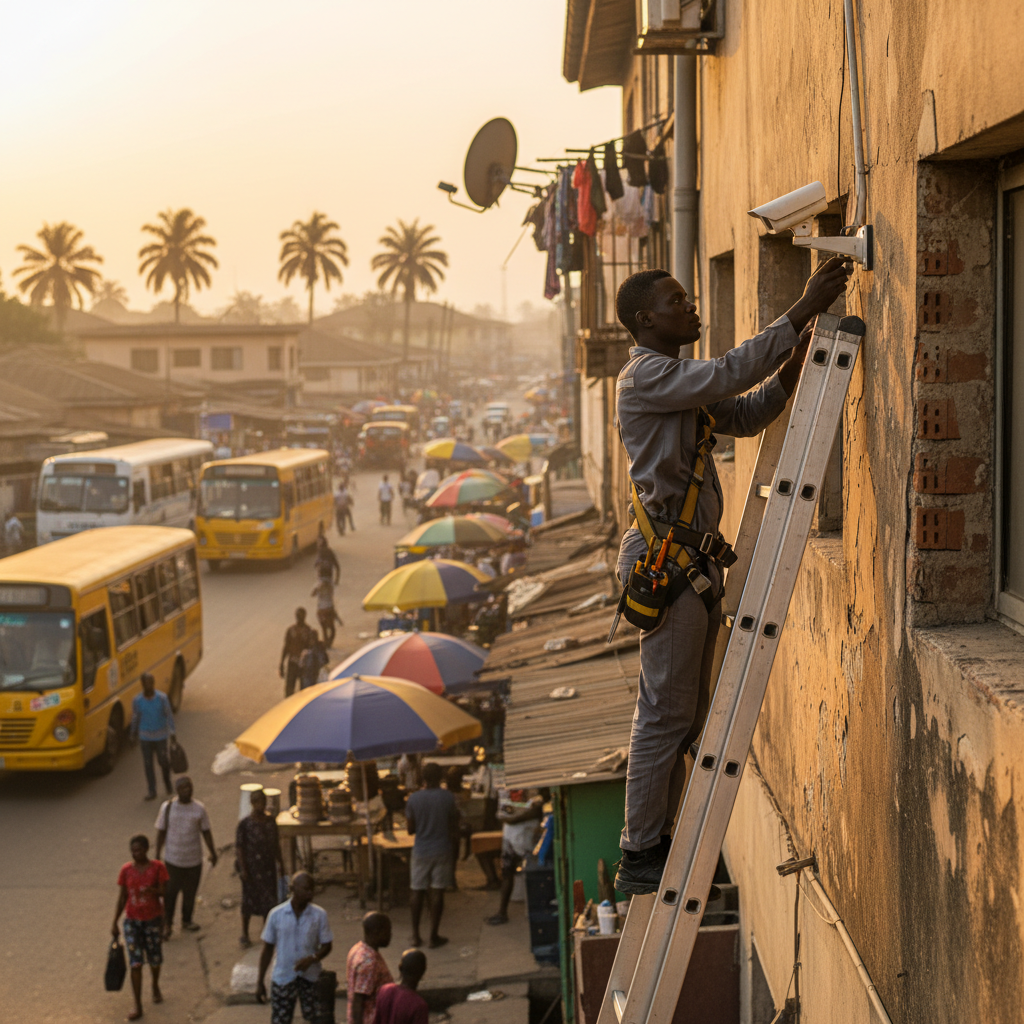
How to Research Market Rates in Your City (Lagos, Abuja, PH)
Researching what your competitors charge is crucial for positioning your business effectively. You don't want to be so expensive that you scare clients away, but you definitely don't want to be the cheapest guy who can't afford to deliver quality. Remember, pricing for a job in Maitama, Abuja, will be different from a job in Aba.
Here’s a simple, step-by-step process for researching the market:
- Browse Online Service Marketplaces: The easiest and fastest way is to check the TrustAm app. You can search for "CCTV & Security Installers" in your city and see the profiles of other verified professionals. While they may not list exact prices, you can see their level of professionalism, the services they highlight, and the quality of their reviews, giving you a clue about their pricing tier.
- Request 'Ghost' Quotes: Act like a potential customer. Call or message 2-3 competitors and ask for a quote for a standard 4-camera installation for a 3-bedroom bungalow. This gives you a direct insight into their pricing structure and what they include in their quotes.
- Network with Other Technicians: Build relationships with other tradespeople. An electrician you work with can give you insights into the going rates for technical services. This is similar to the advice we give consumers on how to find good electricians; professionals also need to network to stay informed.
- Consider the Client's Location and Profile: A quote for a corporate office in Victoria Island should be higher than one for a small shop in a less affluent area. High-end clients expect higher quality equipment and a more professional service, and they are willing to pay for it.
Creating Tiered Pricing Packages for Different Clients
Instead of creating a custom quote from scratch every single time, you can streamline your process by offering tiered packages. This approach makes it easier for clients to understand their options and often encourages them to choose a more comprehensive (and profitable) package. It makes you look more professional and organized.
Here’s an example of what your packages could look like:
| Package Tier | Description | Ideal For | Estimated Price (Installation Included) |
|---|---|---|---|
| Basic (Bronze) | 4 x 2MP Analogue HD Cameras, 4-Channel DVR, 1TB HDD, basic remote viewing setup on one device. | Small shops, residential apartments, small businesses. | ₦180,000 - ₦250,000 |
| Standard (Silver) | 8 x 4MP IP Cameras (better quality), 8-Channel NVR, 2TB HDD, professional remote view setup on multiple devices, mobile app configuration. | Medium-sized offices, duplexes, restaurants, supermarkets. | ₦400,000 - ₦650,000 |
| Premium (Gold) | 16 x 5MP+ IP Cameras with advanced features (night vision, audio, PTZ), 16-Channel NVR, 4TB+ HDD, integration with other security systems. | Warehouses, hotels, residential estates, high-net-worth individuals. | ₦900,000+ |
When you send your quote, you can easily create and send professional invoices for these packages using the TrustAm app. It allows you to itemize everything, so the client knows exactly what they are paying for, which builds immense trust.
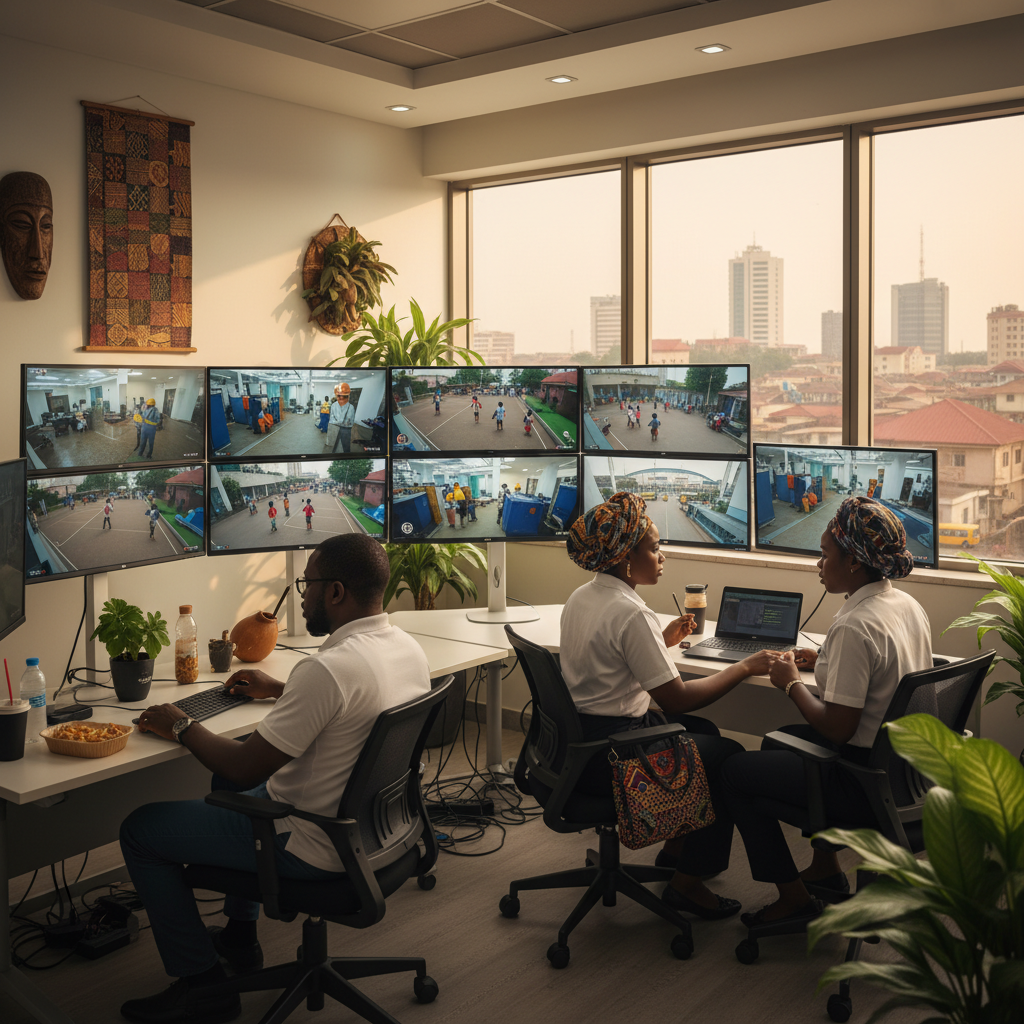
How to Quote Confidently and Get Paid Without Stress
Knowing your numbers is one thing; communicating them confidently and ensuring you get paid on time is another. Many great technicians struggle with this part. They do excellent work but get burned by clients who delay payment or start making excuses after the job is complete.
Here is your new, stress-free process for quoting and getting paid:
- Mandatory Site Survey: Never give a final, binding quote over the phone. Always visit the site to assess the building layout, potential installation challenges, and the client's specific needs. This prevents unexpected costs later.
- Provide a Detailed Written Quote: Use the TrustAm invoicing feature to send a professional, itemized quote. List the exact model of cameras, the NVR, hard drive size, cable lengths, labour costs, and your payment terms. Transparency prevents disputes.
- Define Clear Payment Terms: Your terms should be stated clearly on the quote. A common structure is 70% upfront payment to cover equipment costs and 30% upon completion and client sign-off.
- Use TrustAm Escrow for 100% Payment Security: This is the ultimate game-changer for service providers in Nigeria. Instead of chasing clients for your final payment, insist on using TrustAm. The client pays the full project amount into a secure escrow account. You are notified that the funds are secured, so you can start work with confidence. Once the installation is complete and the client confirms they are satisfied, TrustAm releases the payment to you instantly. No more stories, no more stress.
- Leverage Payment-Backed Reviews: After every successfully completed job on TrustAm, the client can leave a review. Because these reviews are tied to a completed payment, they are 100% genuine. Building a profile with positive, payment-backed reviews makes you the go-to choice for high-quality clients who are looking for reliability, not just the cheapest price. It's a powerful way to get more clients and justify your premium pricing.
Start Getting Clients on TrustAm
Stop struggling to find clients and chasing payments. List your CCTV installation business on TrustAm for free, get discovered by thousands of users in your city, and use our escrow system to guarantee you get paid for every single job.
Create Your Free Business Profile →Join thousands of Nigerian service professionals already growing their business with TrustAm.
Frequently Asked Questions
How much should I charge for a 4-camera CCTV installation in Nigeria?
The average cost for a standard 4-camera analogue HD CCTV installation in Nigeria in 2026 ranges from ₦180,000 to ₦250,000. This price includes the cameras, DVR, 1TB hard drive, cabling, and labour. Prices can be higher in cities like Lagos and Abuja and will increase if you use higher-resolution IP cameras.
Should I charge per camera or a flat fee for the whole project?
It's best to charge a flat fee for the entire project, broken down into packages (e.g., 4-camera package, 8-camera package). This is simpler for the client to understand than a per-camera cost. Your flat fee should be calculated based on your total equipment cost, estimated labour days, and your desired profit margin.
What's the best way to handle clients who want to buy their own equipment?
While it might seem easier, it's often problematic. You cannot guarantee the quality of their equipment, and if a fault develops, they will likely blame your installation. It's best to politely insist on supplying the equipment yourself to ensure compatibility and quality. If you must install their equipment, make sure your invoice clearly states that you provide no warranty on hardware supplied by the client.
How can I protect myself from clients who don't want to pay after installation?
The most effective way to protect yourself is by using an escrow service. On the TrustAm app, the client pays the full amount into a secure account before you begin work. The funds are only released to you after you have completed the job and the client confirms their satisfaction. This eliminates the risk of non-payment completely.
Book a verified CCTV & Security
Verified providers. Payment held safe until the job is done. Reviews only from real, paid bookings.
Download TrustAm
AI-powered budgeting, instant P2P payments, and escrow protection. Built for Nigeria.
Or get a download link sent to your phone
Chisom Anen
Founder and CEO of TrustAm. Building Nigeria's reputation marketplace for verified service providers. Reviews unlock only after real payments.
Disclosure: This article is published by TrustAm. Some links may direct to our own marketplace and products.
Sources & References
- Inflation Rates— cbn.gov.ng
- National Bureau of Statistics (NBS) MSME Report— nigerianstat.gov.ng
- Nigeria Economic Outlook— worldbank.org
Related Services
Find trusted providers related to this article.
Related Articles



Free Tools You Might Find Useful
Try these free calculators and tools related to this article.