
How to Start a Nail Technician Business in Nigeria in 2026: Complete Guide
How to Start a Nail Technician Business in Nigeria in 2026: Complete Guide
Look around you on your next trip in a danfo or at your favourite cafe in Lagos. The chances are high that you'll spot impeccably designed acrylics, chic gel manicures, and perfectly shaped nails. The nail care industry in Nigeria is not just a trend; it's a multi-million naira powerhouse fueled by a generation that views nail art as an essential form of self-expression. If you have a passion for nails and an entrepreneurial spirit, starting a nail technician business could be your ticket to financial freedom. But where do you even begin?
Overview & Key Takeaways
This article provides a detailed, step-by-step roadmap for aspiring nail technicians in Nigeria. We'll cover everything from professional training and calculating startup costs to finding your first clients and scaling your business using modern tools like TrustAm.
- Getting a steady stream of clients is your biggest hurdle. Listing your services on the TrustAm marketplace with a verified profile is the fastest way to build trust and get booked.
- Your initial startup cost can range from ₦150,000 for a mobile setup to over ₦1,500,000 for a small salon in 2026, so a detailed budget is crucial.
- Professional training is non-negotiable. Invest in a reputable beauty academy to learn proper techniques, hygiene, and business management.
- Price your services based on your skill, location, and material costs. Don't just copy what others are charging.
- Use TrustAm's escrow payment system to secure your earnings and eliminate the stress of chasing clients for payment after a service.
Nail Technicians on TrustAm
Book with escrow protection. If a job isn't done right, open a dispute and our team steps in.

Mannie nails
Service Provider · Nsukka
- Payment protected by escrow
- Money released only after you confirm the job

Mandy Glams
Service Provider · Uyo
- Payment protected by escrow
- Money released only after you confirm the job
Am in Anambra
Service Provider · Anambra state
- Payment protected by escrow
- Money released only after you confirm the job

OYN Nails
Service Provider · Yaba
- Payment protected by escrow
- Money released only after you confirm the job

Leemah's Nails
Service Provider · Ikeja
- Payment protected by escrow
- Money released only after you confirm the job
trills.nails
Service Provider · Lagos
- Payment protected by escrow
- Money released only after you confirm the job
Is a Nail Business Profitable in Nigeria? The Numbers
Yes, a nail technician business is highly profitable in Nigeria if managed correctly. With the high demand for quality nail services, skilled technicians in cities like Abuja, Port Harcourt, and Lagos can earn a significant income, often ranging from ₦200,000 to over ₦600,000 monthly, depending on their client base, location, and service offerings.
Let's break down the potential earnings with 2026 price estimates:
- Basic Manicure/Pedicure: ₦7,000 - ₦12,000
- Gel Polish Application: ₦8,000 - ₦18,000
- Acrylic Full Set (Basic): ₦12,000 - ₦20,000
- Complex Acrylic Set (with art, bling, etc.): ₦20,000 - ₦40,000+
- Nail Repair/Soak-off: ₦3,000 - ₦5,000
A moderately busy technician doing just two acrylic sets a day, five days a week, at an average price of ₦15,000 per set, could gross ₦600,000 in a month. Even after accounting for material costs, which typically run about 20-30% of revenue, the profit margin is substantial. The key is consistent client flow, which is where many new technicians struggle.
Step 1: Get Professional Training and Certification
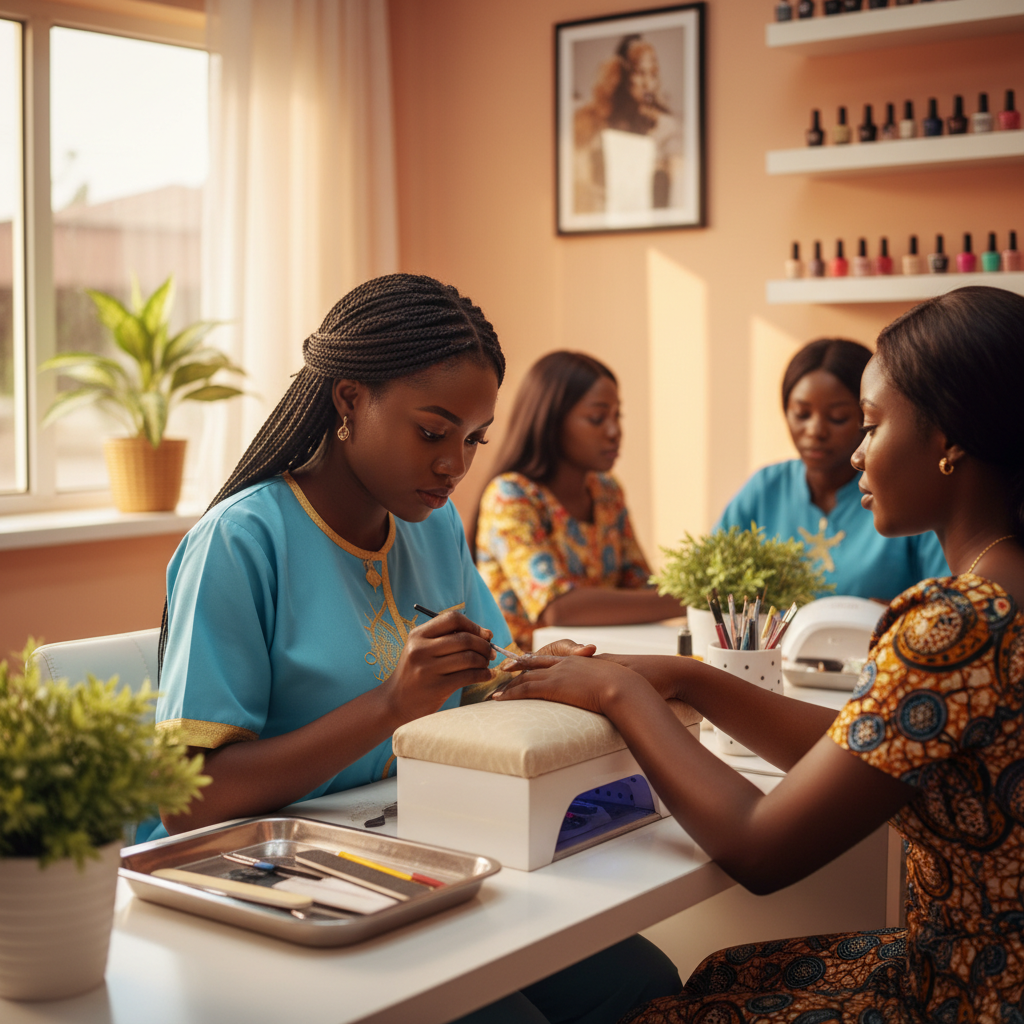
Before you buy a single bottle of polish, you must invest in professional training from a reputable beauty academy. YouTube tutorials are great for inspiration, but they cannot replace formal education on nail anatomy, hygiene protocols, product chemistry, and safe application/removal techniques. Proper training is what prevents you from damaging a client's natural nails or causing an infection—mistakes that can ruin your reputation before you even start.
When choosing a nail academy in Nigeria, look for these key things:
- Comprehensive Curriculum: Ensure the course covers everything from basic manicures and pedicures to advanced techniques like acrylic application, gel extensions, sculpting, and popular nail art.
- Emphasis on Sanitation: The academy must teach you industry-standard hygiene practices, including tool sterilisation and disinfection.
- Hands-On Practical Sessions: You need plenty of time to practice on real models under the supervision of an experienced instructor.
- Business & Marketing Skills: The best schools also teach you how to price your services, market your business, and manage clients.
- Recognized Certification: A certificate from a well-known academy adds credibility to your business and your TrustAm provider profile.
Training costs can range from ₦100,000 to ₦350,000+. View this as the most important investment in your business, not an expense.
Step 2: Create Your Business Plan and Budget
A business plan is your roadmap to success, outlining your services, target audience, pricing strategy, and financial projections. It forces you to think through every aspect of your business and is essential if you plan to seek funding. Even a simple one-page plan is better than nothing.
Estimating Your Startup Costs (2026 Prices)
Your initial investment will depend heavily on whether you start as a mobile (home service) technician or open a physical location.
Find Verified Providers on TrustAm
Looking for trusted beauty and wellness professionals near you? Browse verified providers with payment-backed reviews and escrow protection.
Option A: Mobile / Home-Based Business (₦200,000 - ₦400,000)
- Professional Training: ~₦150,000
- Comprehensive Starter Kit: ~₦150,000 (Includes a good quality UV/LED lamp, e-file, polishes, acrylics, tools, etc.)
- Ring Light & Phone Stand: ~₦20,000 (For taking high-quality photos/videos)
- Transportation/Logistics Fund: ~₦30,000
Option B: Small Salon / Kiosk (₦1,000,000 - ₦2,500,000+)
- All of the above.
- Rent (Annual, depends on location): ₦500,000 - ₦1,500,000+
- Furniture (Nail desk, client chairs, pedicure station, shelves): ~₦300,000
- Generator/Inverter: ~₦250,000 (Essential due to NEPA issues)
- Decor, Branding & Signage: ~₦150,000
To manage these expenses, use the TrustAm app's AI budgeting tool. You can create a 'Nail Business Startup' budget to track every kobo, from your training fees to the purchase of your first bottle of monomer. This financial clarity is crucial in your first few months.
Step 3: Sourcing Quality Equipment and Supplies
The quality of your tools and products directly affects the outcome and longevity of your work. Using cheap, low-quality products will lead to lifting, chipping, and unhappy clients who won't return or recommend you. Invest in reputable brands, even if it costs a bit more upfront.
Your Essential Starter Kit Checklist:
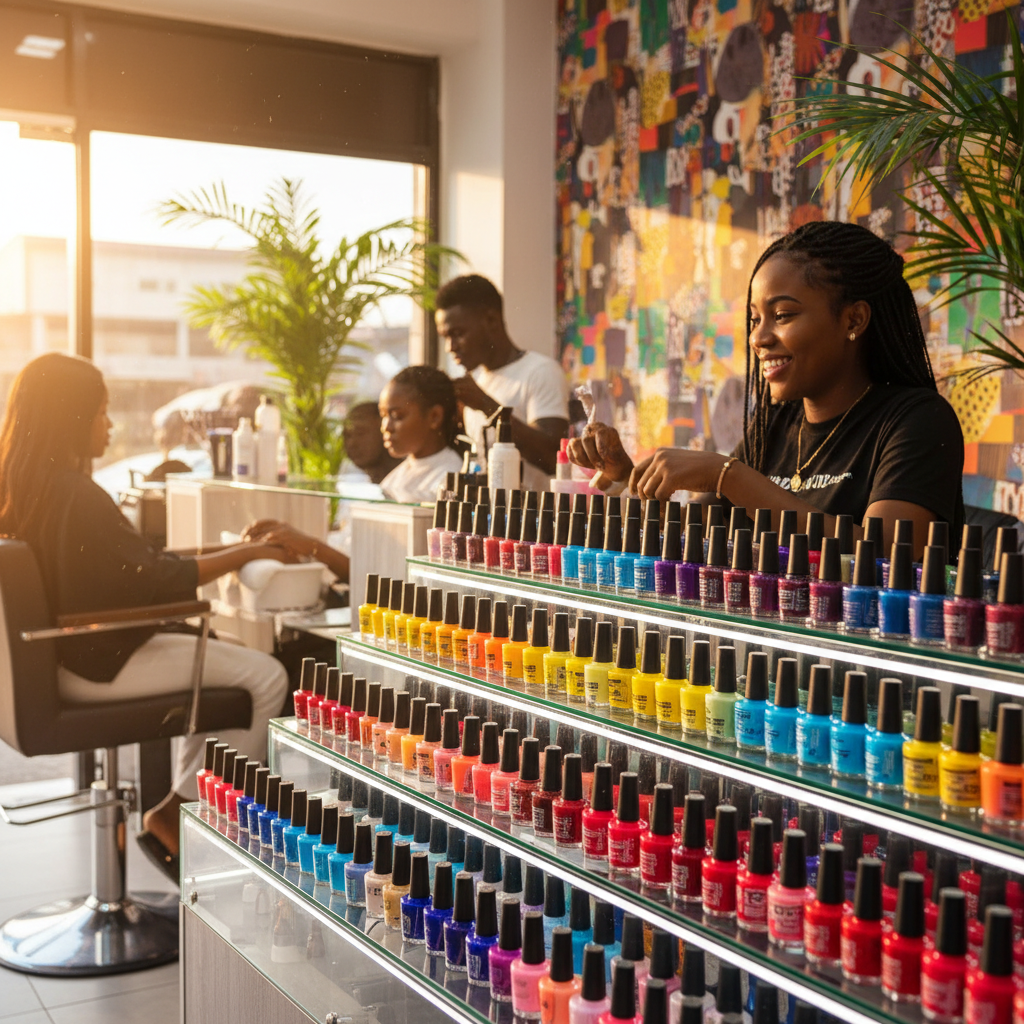
- Hardware: A high-wattage UV/LED Lamp, a professional Electric Nail File (E-file) with various bits, a dust collector.
- Implements: Stainless steel cuticle pushers, nippers, nail clippers, high-quality nail files (different grits), and buffers.
- Liquids & Chemicals: Acetone, Isopropyl Alcohol (99%), Cuticle Oil, pH Bonder/Dehydrator, Primer, Gel Base & Top Coats, Monomer.
- Enhancements: A range of core acrylic powders (clear, white, cover pinks), a curated selection of popular gel polish colours, nail tips, and forms.
- Sanitation: Hospital-grade disinfectant (like Barbicide), sterilisation pouches, disposable gloves, and face masks.
You can source these from major markets like Balogun in Lagos or find specialised beauty supply stores online that deliver nationwide. Always check reviews before buying from a new supplier.
Step 4: Setting Your Prices for Profitability
Pricing your services can be tricky. Charge too little, and you'll be overworked and underpaid. Charge too much, and you might struggle to attract clients initially. The key is to calculate your prices strategically, not just guess.
Follow this simple formula:
- Calculate Cost Per Service: Add up the approximate cost of all disposable products used for one client (e.g., acrylic powder, monomer, files, wipes).
- Factor in Your Time & Skill: Assign an hourly rate for yourself. If a service takes you 2 hours and your rate is ₦5,000/hour, that's ₦10,000.
- Add Overheads: Include a small portion of your monthly fixed costs (like rent, data, or marketing) into each service price.
- Research Competitors: Now, look at what other technicians at your skill level and in your area are charging. Check out our guide to the Best Nail Technicians in Lagos to get a feel for the market. Adjust your calculated price to be competitive but not cheap.
A transparent price list is essential. On your TrustAm marketplace profile, you can list each service (e.g., 'Acrylic Refill', 'Gel Pedicure', 'Freestyle Nail Art') with its exact price. This builds immediate trust and saves you the back-and-forth of DM negotiations.
Step 5: Finding Your First Clients and Building Your Brand
This is where the hustle truly begins. Having amazing skills means nothing if nobody knows you exist. Here’s how to get noticed and booked.
- Build a Killer Portfolio: Your work is your CV. Practice on friends, family, and models at a discount to build a portfolio of high-quality photos and videos. Good lighting is everything!
- Leverage Social Media: Instagram and TikTok are your best friends. Post clear, attractive content consistently. Use relevant hashtags like #NailsInLagos, #AbujaNailTech, #PHNails, and #NaijaNails.
- Create a Professional TrustAm Profile: This is your most powerful client acquisition tool. A verified profile on the TrustAm marketplace puts you directly in front of thousands of Nigerians actively searching for “nail technicians near me.” Unlike social media, users on TrustAm are there with the specific intent to book and pay for a service.
- Encourage Word-of-Mouth: Offer a small discount to clients who refer a friend. A happy customer is the most effective marketing you can have.
Think of TrustAm as your online shopfront. It legitimises your business with a verified badge, showcases your portfolio, and lets clients read payment-backed reviews—reviews left only by people who have actually paid for your service through the app, eliminating fake feedback.
Step 6: Managing Payments and Scaling Your Business
As you start getting clients, managing your bookings and finances professionally is what will set you apart and enable you to grow. The days of "I will transfer it later" leading to sapa are over.
This is where TrustAm transitions from a client-finder to your complete business management tool.
- Escrow Protection for Peace of Mind: When a client books you on the TrustAm marketplace, their payment is held securely in escrow. You can do the service with full confidence that the money is guaranteed. Once the job is marked as complete, the funds are released instantly to your wallet. No more awkward payment chasing.
- Professional Invoicing: For corporate clients or large owambe bookings, you can generate and send professional invoices directly from the TrustAm app. It's far more professional than sending your account details via WhatsApp.
- Data-Driven Growth: As you complete more jobs, TrustAm's dashboard provides you with spending and income analytics. You can see your most profitable services, your busiest months, and your repeat customer rate. This data is invaluable for knowing when it's time to increase your prices, hire an apprentice, or open that physical salon.
Start Getting Clients on TrustAm
Stop chasing DMs and start getting booked. List your nail technician services on Nigeria's #1 marketplace, get discovered by thousands of clients, and get paid securely with escrow protection for every job.
Create Your Free Provider Account →Join thousands of verified service providers growing their business on TrustAm.
Frequently Asked Questions
How much does it cost to start a nail tech business in Nigeria?
Startup costs vary significantly based on your business model. A mobile or home-based business can be launched with approximately ₦200,000 to ₦400,000, which covers professional training and a comprehensive starter kit. To open a small physical salon or kiosk, you should budget between ₦1,000,000 and ₦2,500,000 or more to cover rent, furniture, a generator, and initial inventory.
Do I need a license to be a nail technician in Nigeria?
While there is no specific national license required to be a nail technician in Nigeria, it is highly recommended to register your business name with the Corporate Affairs Commission (CAC). This formalises your business and is necessary for opening a corporate bank account. If you operate from a commercial space, you will also likely need permits from the local government authority.
How do I get clients for my new nail business?
The most effective strategy is a combination of online and offline efforts. Create a verified provider profile on the TrustAm marketplace, as this puts you in front of customers who are actively searching for your services. Supplement this by building a strong portfolio on social media platforms like Instagram and TikTok, and encourage word-of-mouth referrals by providing excellent service to your initial clients.
What are the most in-demand nail services in Nigeria?
As of 2026, the most popular and profitable nail services in Nigeria include complex acrylic full sets with intricate designs (such as ombre, marble, and chrome effects), durable gel manicures and pedicures, and BIAB (Builder in a Bottle) treatments for strengthening natural nails. Staying updated on these global and local trends is essential for attracting a modern clientele.
Book a verified Nails & Spa
Verified providers. Payment held safe until the job is done. Reviews only from real, paid bookings.
Download TrustAm
AI-powered budgeting, instant P2P payments, and escrow protection. Built for Nigeria.
Or get a download link sent to your phone
Chisom Anen
Founder and CEO of TrustAm. Building Nigeria's reputation marketplace for verified service providers. Reviews unlock only after real payments.
Disclosure: This article is published by TrustAm. Some links may direct to our own marketplace and products.
Sources & References
- Federal Inland Revenue Service— firs.gov.ng
- Corporate Affairs Commission— cac.gov.ng
- Small and Medium Enterprises Development Agency— smedan.gov.ng
- National Bureau of Statistics— nigerianstat.gov.ng
Related Services
Find trusted providers related to this article.
Related Articles



Free Tools You Might Find Useful
Try these free calculators and tools related to this article.