
How to Start a Nail Technician Business in Nigeria in 2026: Complete Guide
How to Start a Nail Technician Business in Nigeria in 2026: Complete Guide
The Nigerian beauty industry is booming, and skilled nail technicians are in higher demand than ever. From weekly manicures to elaborate acrylic sets for an owambe, Nigerians are spending serious money on looking good. If you have a passion for nail art and an entrepreneurial spirit, starting a nail technician business in 2026 could be your ticket to financial independence. But where do you even begin?
Overview & Key Takeaways
This comprehensive guide provides a step-by-step plan for launching a successful nail technician business in Nigeria. We cover everything from professional training and calculating startup costs to sourcing equipment, setting prices, and using modern tools like TrustAm to get a steady stream of clients.
- Get Clients Securely with TrustAm: List your nail services on TrustAm to connect with verified clients, get booked easily, and receive guaranteed payments through escrow protection.
- Budget for a Strong Start: Plan for a startup cost of approximately ₦450,000 - ₦700,000 for a comprehensive mobile nail tech business in 2026.
- Master High-Value Skills: Focus your training on in-demand, high-profit services like acrylic extensions, Gel-X systems, and intricate nail art to attract premium clients.
- Price Strategically: Your pricing should reflect your skill, product quality, and location (e.g., Lekki vs. Ikeja), not just what competitors charge.
- Formalize Your Business: Registering your business name with the Corporate Affairs Commission (CAC) builds credibility and allows you to open a corporate bank account.
Nail Technicians on TrustAm
Book with escrow protection. If a job isn't done right, open a dispute and our team steps in.
Am in Anambra
Service Provider · Anambra state
- Payment protected by escrow
- Money released only after you confirm the job

Teddy's Touch
Service Provider · Port Harcourt
- Payment protected by escrow
- Money released only after you confirm the job

Mannie nails
Service Provider · Nsukka
- Payment protected by escrow
- Money released only after you confirm the job

Mandy Glams
Service Provider · Uyo
- Payment protected by escrow
- Money released only after you confirm the job

OYN Nails
Service Provider · Yaba
- Payment protected by escrow
- Money released only after you confirm the job

Fabulous Home Spa Services
Service Provider · Lagos
- Payment protected by escrow
- Money released only after you confirm the job
Is a Nail Business Profitable in Nigeria in 2026?
Yes, a nail business is extremely profitable in Nigeria if run professionally. The demand for quality nail care is consistent, and with the current inflation rate hovering around 30%, clients understand the value of skilled services. A dedicated nail technician operating in major cities like Lagos, Abuja, or Port Harcourt can realistically earn anywhere from ₦250,000 to over ₦800,000 per month, depending on their client base, skill level, and business model.
The key to profitability lies in a few key areas:
- High-Profit Margin Services: Services like acrylics, Gel-X, and detailed nail art have higher profit margins compared to a basic manicure.
- Client Retention: Repeat customers are the backbone of a successful nail business. Excellent service and results keep them coming back.
- Efficient Operations: Minimizing waste of expensive products and managing your time effectively increases your overall profit.
- Professional Platform: Using a platform like TrustAm to manage bookings and payments eliminates no-shows and payment disputes, directly protecting your income.
Step 1: Get Professional Nail Technician Training
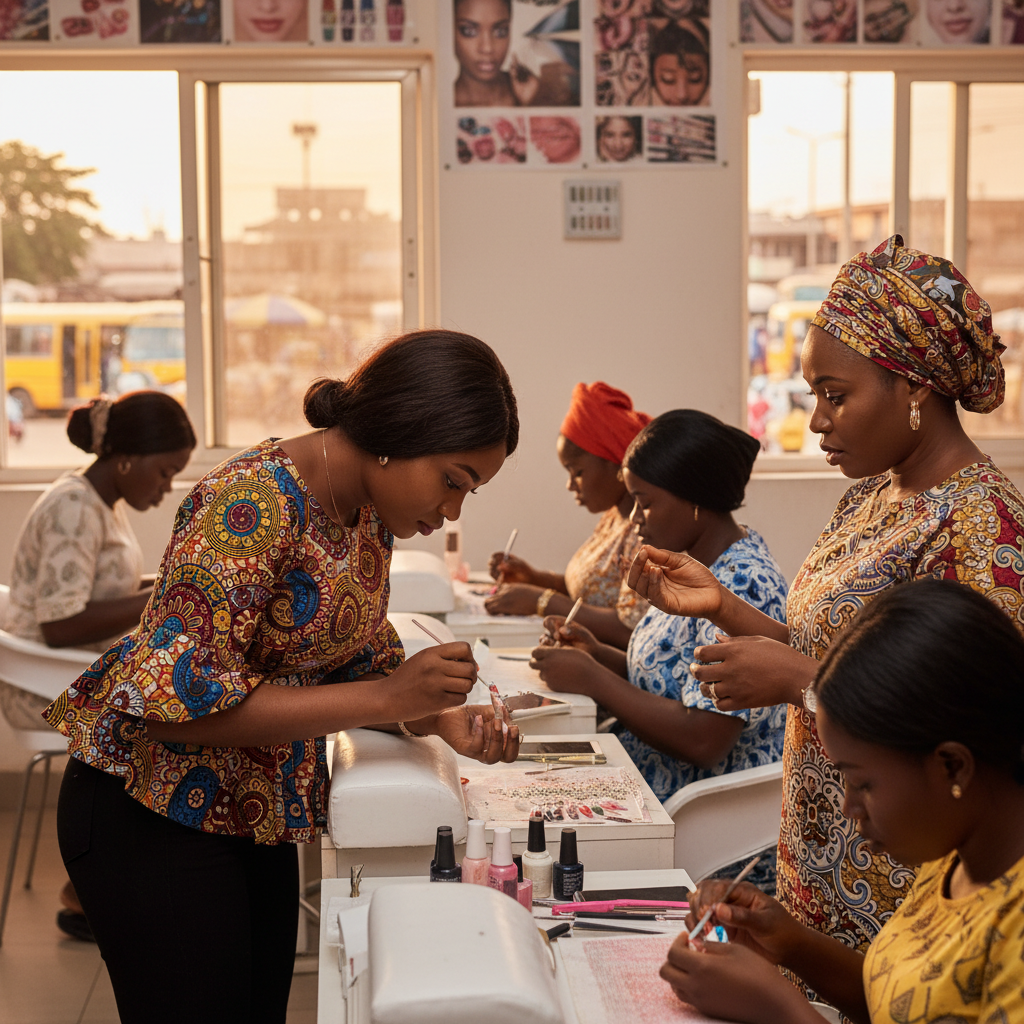
Before you touch a single client's nails, you must get proper training. Self-taught skills from YouTube can only take you so far; professional training is non-negotiable for safety, technique, and credibility. Enrolling in a reputable beauty academy in Nigeria will equip you with the foundational and advanced skills needed to excel.
Look for a curriculum that covers:
- Nail Anatomy & Health: Understanding the structure of the nail to avoid causing damage or infections.
- Sanitation & Hygiene: Crucial for client safety and building trust. This is a major differentiator.
- Manicures & Pedicures: The fundamentals of nail care.
- Gel Polish Application & Removal: A very popular and essential service.
- Nail Enhancement Systems: In-depth training on acrylics, dip powder, and modern systems like Gel-X.
- E-File (Electric Drill) Usage: Mastering the e-file for efficient and precise shaping and refills.
- Nail Art Techniques: From simple designs to complex, Instagram-worthy art that commands a premium price.
In 2026, expect to invest between ₦100,000 and ₦300,000 for a comprehensive training course in cities like Lagos or Abuja.
Step 2: Create a Business Plan & Calculate Your Startup Costs
A business plan is your roadmap to success, outlining your goals and how you'll achieve them. Your startup costs will be the biggest initial hurdle, and they depend heavily on your business model: mobile technician or a physical salon.
Here’s a realistic cost breakdown for 2026:
Mobile Nail Tech (Home Service)
Total Estimated Cost: ₦450,000 - ₦700,000
- Professional Training: ₦150,000
- Pro Starter Kit (Quality Lamp, E-file, Polishes, Acrylics, Gels, Tools): ₦250,000
- Sterilization Equipment: ₦40,000
- Portable Carry Case/Trolley: ₦35,000
- Initial Marketing (TrustAm Profile Setup, Social Media): ₦25,000
- Miscellaneous (Data, Transport float): ₦50,000
Small Salon/Kiosk
Total Estimated Cost: ₦1,800,000 - ₦3,500,000+
- All Mobile Tech Costs +
- Rent (1 Year Advance in a decent location): ₦800,000+
- Furniture (Nail Desk, Pedi Chair, Shelving): ₦400,000
- Generator/Inverter Setup: ₦350,000
- Interior Decoration & Signage: ₦150,000
- Business Registration (CAC): ₦50,000
Starting as a mobile technician is the most cost-effective way to enter the market. You can build your client base and save up for a physical location later. Platforms like TrustAm are perfect for mobile techs, as they connect you with clients specifically looking for home services in their area.
Step 3: Setting Your Prices for the Nigerian Market
Pricing your services correctly is a balance between art and science. Simply copying someone else's price list is a recipe for failure. You need to price for profitability and perceived value.
Here’s how to calculate your prices:
- Calculate Cost Per Service: How much do the products (polish, acrylic powder, tips) for one full set cost you? Add a small amount for disposables and overheads.
- Factor in Your Time & Skill: Your time is valuable. A complex 3-hour nail art set should cost significantly more than a 45-minute gel manicure.
- Research Your Location: Prices in Lekki or Maitama will be higher than in Ikorodu or Gwagwalada. Check what other reputable techs in your specific area are charging.
- Set Clear Service Tiers: Have a clear menu. Avoid confusion by listing prices clearly on your TrustAm profile. This prevents awkward haggling and shows you're a serious professional.
Example 2026 Price Guide (Mid-Range, Lagos/Abuja):
- Gel Manicure: ₦8,000 - ₦12,000
- Acrylic Full Set (Short/Medium): ₦15,000 - ₦25,000
- Gel-X Extensions: ₦18,000 - ₦30,000
- Soak Off/Removal: ₦3,000 - ₦5,000
- Intricate Nail Art (per nail): ₦1,000 - ₦4,000

Step 4: Getting Clients and Building Your Brand with TrustAm
You can be the most talented nail tech in Nigeria, but if no one knows you exist, you won't make any money. In 2026, relying solely on Instagram DMs and WhatsApp status updates is inefficient and risky.
The old way is filled with problems: endless back-and-forth chats to confirm a booking, clients who cancel at the last minute (no-shows), and the dreaded "I will send you the money later" after a home service appointment. This is where you need a professional system.
The TrustAm method is the smart, secure way to build your nail business:
- Create Your Professional Profile: Download the TrustAm app and set up your service provider profile for free. This is your professional storefront. Upload high-quality photos of your best work to your portfolio.
- List Your Services & Prices: Clearly list every service you offer, from a basic pedicure to a full bling acrylic set. Set your prices so clients know exactly what to expect.
- Get Discovered by Local Clients: When users in Lagos, Abuja, Port Harcourt, and 10 other Nigerian cities search for "Nail Technicians near me," your TrustAm profile will appear.
- Secure Payments with Escrow: This is the game-changer. When a client books you on TrustAm, they pay upfront. The money is held securely in escrow. Once you complete the service and the client confirms, the funds are released to your wallet instantly. No more chasing payments!
- Build Credibility with Payment-Backed Reviews: Only clients who have successfully booked and paid for your service through TrustAm can leave a review. This system eliminates fake reviews and builds genuine trust that attracts more high-quality customers.
Find Verified Providers on TrustAm
Planning to set up your own salon? You'll need reliable artisans. Find trusted professionals on TrustAm for your setup needs.
Create a Free Account →Step 5: Managing Your Business Finances
As a business owner, you are now your own accountant. Proper financial management from day one will prevent future headaches and help your business grow.
- Separate Your Finances: Open a bank account strictly for your business. This makes tracking income and expenses much easier. Registering your business name with the CAC will allow you to open a corporate account.
- Track Everything: Keep a record of every single purchase, from a new bottle of top coat to your data subscription.
- Leverage TrustAm's Tools: The TrustAm app automatically tracks all your earnings from the platform. The analytics dashboard gives you a clear view of your monthly income, helping you budget and plan.
- Use Professional Invoicing: For large bookings like bridal parties or corporate events, use TrustAm's invoicing feature to send a professional invoice with a secure payment link. It looks more professional and ensures you get paid promptly.
By following these steps and leveraging a powerful platform like TrustAm, you can move from an aspiring nail tech to a successful beauty entrepreneur. The demand is there; all you need is the skill, the strategy, and the right tools to succeed.
Start Getting Clients on TrustAm
Ready to turn your passion for nails into a profitable business? List your services on TrustAm to connect with verified clients, get paid securely with escrow, and build a 5-star reputation with payment-backed reviews.
Create Your Free Provider Account →Join thousands of Nigerian service providers growing their business on TrustAm.
Frequently Asked Questions
How much do I need to start a nail business in Nigeria?
To start as a mobile nail technician in Nigeria in 2026, you should budget between ₦450,000 and ₦700,000. This covers professional training, a comprehensive starter kit with quality tools and products, and initial marketing. Starting a small physical salon will cost significantly more, likely upwards of ₦1,800,000.
Is nail technician a good career in Nigeria?
Yes, being a nail technician is a very good and profitable career in Nigeria. It offers flexibility, creative expression, and high earning potential. Skilled technicians in major cities can earn a substantial income, often surpassing that of many traditional office jobs, especially when they build a strong, loyal client base.
What qualifications do you need to be a nail technician in Nigeria?
While there is no single government-mandated license, the industry standard is a certificate from a reputable beauty or cosmetology school. This certification proves you have been professionally trained in techniques, nail health, and crucial sanitation protocols, which is essential for gaining client trust and delivering safe, high-quality services.
How do I get my first clients as a new nail tech?
The best way to get your first clients is to create a professional online presence. Start by building a portfolio on a platform like TrustAm, where clients are actively searching for services. This allows them to see your work, your prices, and book you securely. You can also offer services to friends and family at a discount to build your portfolio and encourage word-of-mouth referrals.
Book a verified Nails & Spa
Verified providers. Payment held safe until the job is done. Reviews only from real, paid bookings.
Download TrustAm
AI-powered budgeting, instant P2P payments, and escrow protection. Built for Nigeria.
Or get a download link sent to your phone
Chisom Anen
Founder and CEO of TrustAm. Building Nigeria's reputation marketplace for verified service providers. Reviews unlock only after real payments.
Disclosure: This article is published by TrustAm. Some links may direct to our own marketplace and products.
Sources & References
- Federal Inland Revenue Service— firs.gov.ng
- Corporate Affairs Commission— cac.gov.ng
- Small and Medium Enterprises Development Agency— smedan.gov.ng
- National Bureau of Statistics— nigerianstat.gov.ng
Related Services
Find trusted providers related to this article.
Related Articles



Free Tools You Might Find Useful
Try these free calculators and tools related to this article.