
Walk into any owambe, corporate office, or university campus in Nigeria, and you'll see it: perfectly manicured nails are no longer a luxury, they're a statement. From intricate acrylic designs to minimalist gel polishes, the demand for skilled nail technicians is booming. If you have a passion for beauty and an entrepreneurial spirit, starting a nail business isn't just a side hustle; it's a legitimate path to financial independence, with top technicians in Lagos and Abuja earning upwards of ₦500,000 a month. But how do you go from a nail enthusiast to a booked-out business owner?
This guide provides a step-by-step blueprint for starting a profitable nail technician business in Nigeria. We cover everything from training and calculating startup costs to pricing your services, marketing your brand, and using modern tools like TrustAm to get clients and secure payments.
Book with escrow protection. If a job isn't done right, open a dispute and our team steps in.

Service Provider · Nsukka

Service Provider
Yes, a nail business is extremely profitable in Nigeria if you have the right skills and business strategy. The potential earnings are significant because it's a service with high-profit margins and repeat customers. A client who loves your work will likely return every 3-4 weeks, providing a stable income stream.
Let's break down the potential earnings in a major city like Lagos in 2026, considering the high inflation rate (around 25-30%):
A moderately busy nail tech doing just 5 full sets a week at an average price of ₦12,000 can earn ₦60,000 per week, or ₦240,000 per month. Highly skilled, in-demand technicians in areas like Lekki or Maitama can easily double or triple that figure. The key to profitability is tracking every kobo. Using an app like TrustAm allows you to see all your income in one place, helping you analyze your earnings and manage expenses effectively to understand your true profit.
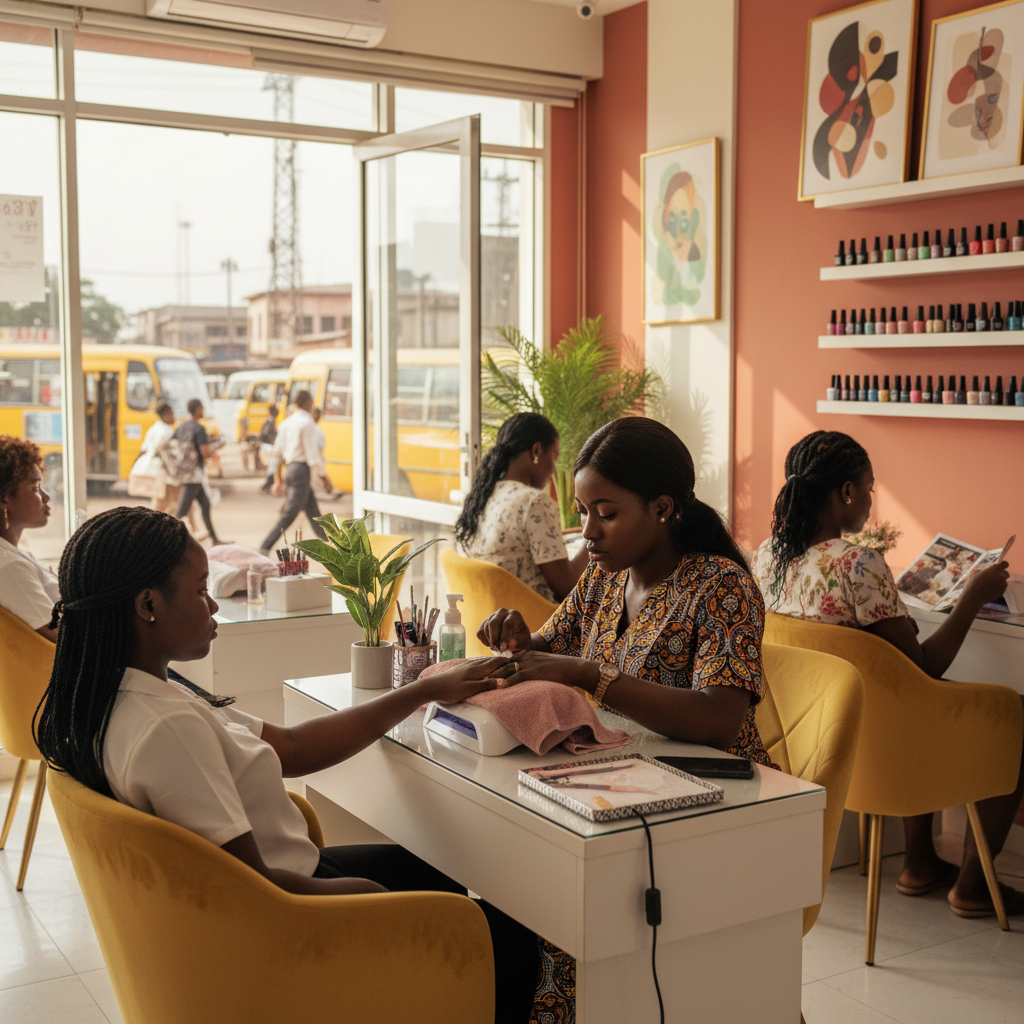
Turning your passion into a profitable business requires a clear plan. Follow these essential steps to set yourself up for success from day one.
The foundation of a successful nail business is skill. Before you touch a single client, you must invest in quality training from a reputable beauty academy or an experienced nail artist. YouTube tutorials are great for inspiration, but they cannot replace hands-on, professional instruction on crucial topics like:
Training costs in Nigeria can range from ₦50,000 for basic courses to over ₦200,000 for comprehensive, advanced programs. See it as an investment that will pay for itself many times over.
Your initial investment will depend on your business model (mobile vs. salon), but every new nail tech needs a professional kit. Don't be tempted by cheap, unbranded products from the market—they can lead to poor results and client complaints. Budget for the following:
Your total startup cost will likely fall between ₦150,000 and ₦500,000. Start saving, or consider a small loan from family or a microfinance bank.

You have three primary options when starting out, each with its own costs and benefits. Your choice will depend on your budget and career goals.
| Feature | Mobile (Home Service) | Renting a Chair/Space | Owning a Salon |
|---|---|---|---|
| Startup Cost | Low (₦150k - ₦300k) | Medium (Rent + Kit) | Very High (₦1M+) |
| Flexibility | High - you set your schedule and locations. | Medium - must adhere to salon hours. | Low - you are tied to the location. |
| Overhead | Low (Mainly transport costs) | Fixed (Monthly rent/commission) | High (Rent, NEPA, staff, etc.) |
| Client Acquisition | Must build from scratch. | Can get walk-ins from the salon. | Must build brand from scratch. |
For most beginners, starting as a mobile nail technician is the smartest choice. It keeps your initial costs low while you build a client list. The biggest challenge for mobile techs is building trust with new clients who may be hesitant to invite a stranger into their home. This is where TrustAm is a game-changer. By having a verified profile with your photo, services, and payment-backed reviews from previous clients, you instantly build credibility. Clients can book you with confidence, and payments are held in escrow until the job is done, protecting you from no-shows or payment disputes.
Your skills are useless if nobody knows about them. In 2026, your marketing strategy must be digital-first. Forget printing flyers; focus your energy where your clients are: online.
Ready to turn your nail skills into a real business? Create your free provider profile on TrustAm today. Get discovered by thousands of clients in your city, manage your bookings, and get paid securely with escrow protection. Stop chasing payments and start building your brand.
Create Your Free Provider Account →Join hundreds of successful nail technicians growing their business on TrustAm.
The startup cost for a nail business in Nigeria typically ranges from ₦150,000 to ₦500,000 in 2026. This covers essential expenses like professional training (₦50k-₦200k), a quality starter kit with a UV lamp and e-file (₦80k-₦250k), and initial marketing. Starting as a mobile technician is the most budget-friendly option.
When you are just starting as a sole proprietor or freelancer, you are not legally required to register your business name with the Corporate Affairs Commission (CAC). However, as your business grows and you want to open a dedicated bank account under your brand name or access business loans, registering it as a Business Name is highly recommended for professionalism and credibility.
The best way to get your first clients is to create a professional provider profile on the TrustAm marketplace. Upload high-quality photos of your work, set your prices, and ask friends or family to book you through the app to generate your first payment-backed reviews. Simultaneously, showcase your work on Instagram and TikTok, and always link back to your TrustAm profile for secure bookings.
The most in-demand nail services in Nigeria currently are acrylic full sets (especially with detailed art and embellishments), gel extensions (like Gel-X), and long-lasting gel manicures. Classic manicures and pedicures also remain popular for clients seeking simple, clean looks. Offering a range of these services will attract a wider client base.
Verified providers. Payment held safe until the job is done. Reviews only from real, paid bookings.
AI-powered budgeting, instant P2P payments, and escrow protection. Built for Nigeria.
Or get a download link sent to your phone
Disclosure: This article is published by TrustAm. Some links may direct to our own marketplace and products.
Find trusted providers related to this article.
Try these free calculators and tools related to this article.

Service Provider · Uyo

Service Provider · Yaba

Service Provider · Lagos
Service Provider · Uyo


