
Forget the 9-to-5 hustle for a minute. The Nigerian beauty industry is a multi-billion naira goldmine, and one of its most profitable veins is the nail care business. From simple manicures in Ikeja to elaborate acrylic sets for an owambe in Abuja, the demand for skilled nail technicians is higher than ever. If you have a passion for creativity and an eye for detail, starting a nail business could be your ticket to financial independence. This isn't just about painting nails; it's about building a brand, a loyal clientele, and a sustainable income stream in 2026.
This guide provides a step-by-step plan for launching a successful nail technician business in Nigeria. You will learn everything from getting the right training and calculating startup costs to setting competitive prices and finding your first clients using modern tools.
Book with escrow protection. If a job isn't done right, open a dispute and our team steps in.

Service Provider · Nsukka

Service Provider · Aba
Yes, a nail business is extremely profitable in Nigeria if managed correctly. The demand for nail services cuts across different demographics, from university students to corporate professionals and party-goers, ensuring a steady stream of potential customers. The key to profitability lies in managing your costs and maximizing your earnings per client.
Let's do some quick maths. Assume the cost of materials (polish, acrylic, tips, files, etc.) for one full set of acrylic nails is around ₦3,000 - ₦5,000, factoring in 2026's likely inflation. In cities like Lagos or Port Harcourt, you can charge between ₦12,000 and ₦25,000 for that same set, depending on complexity and your location. That’s a profit margin of over 200% on just one client.
Of course, you have to subtract your material costs, transport (if you're mobile), and other overheads. But the potential is clear. Using a platform like TrustAm ensures you collect every kobo you earn. By having clients book and pay into escrow, you avoid the stress of chasing payments or dealing with last-minute price arguments.

Before you earn a single naira, you must invest in quality training. Watching YouTube videos is great for inspiration, but it cannot replace the hands-on, structured learning you get from a professional academy. Proper training teaches you not just the art, but also the science of nail care, including crucial hygiene and sanitation practices that protect you and your clients.
Look for academies in your city that offer comprehensive courses. Here’s what a good curriculum should cover:
Training can cost anywhere from ₦80,000 to ₦300,000 depending on the academy's reputation and the course duration. See it as your most important investment.
Your initial startup costs will depend on whether you choose to be a mobile technician or set up in a physical location. A mobile business has lower overheads and is a great way to start. You can always get a shop later as your client base grows.
Here is a breakdown of an essential startup kit for a mobile nail tech in 2026:
Estimated Mobile Startup Cost (2026): ₦150,000 - ₦250,000.
For a small salon or kiosk, you'll need to add costs for rent, a nail desk and chairs, shelving, and basic decor. This could range from ₦500,000 to over ₦1,500,000 in cities like Abuja or Lagos.
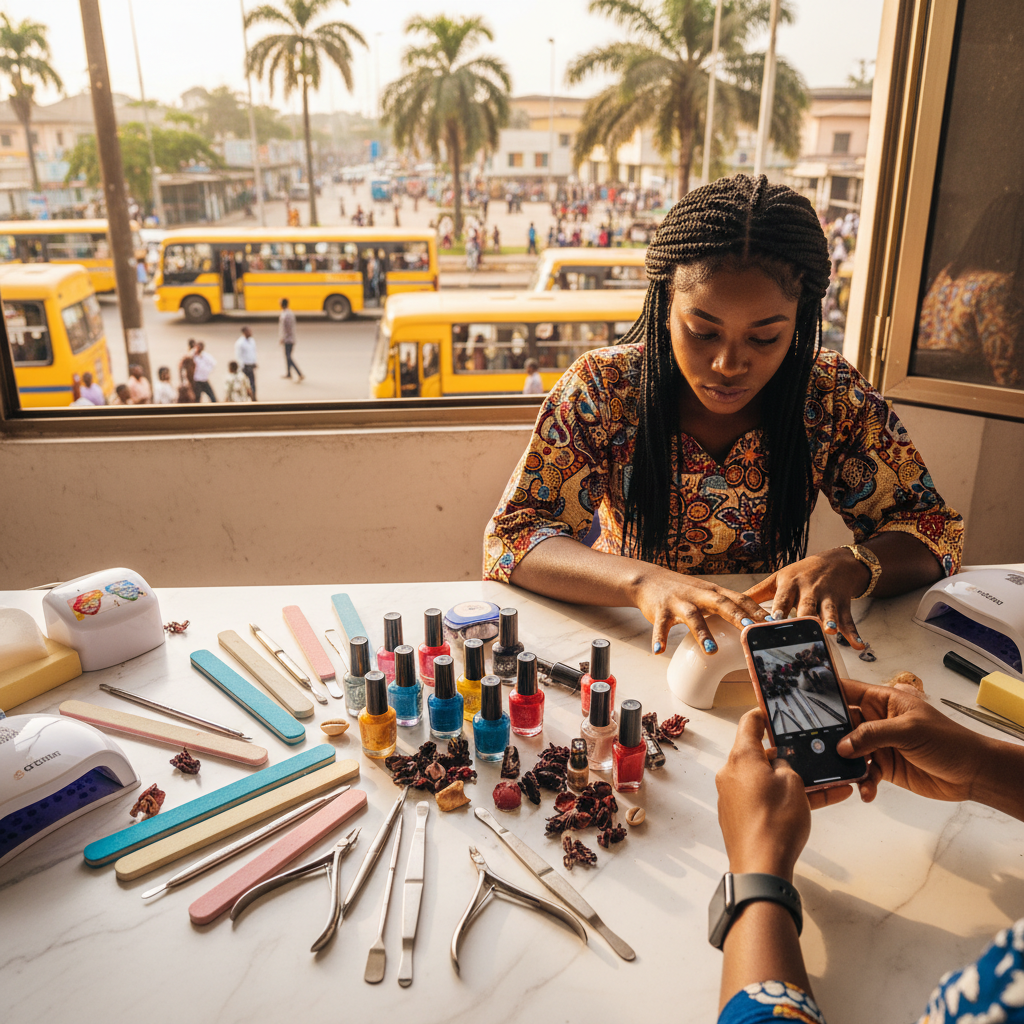
Pricing your services correctly is a delicate balance. You need to cover your costs and time while remaining competitive. Start by researching what other nail techs in your area are charging. A quick search for Best Nail Technicians in Lagos on the TrustAm blog can give you a good baseline.
Here’s a sample 2026 price list for a mid-range nail tech in a major Nigerian city:
When you set up your provider profile on TrustAm, you can list all your services with clear, fixed prices. This transparency builds trust with potential clients. They know exactly what they're paying for before they book, which means no awkward haggling when it's time to pay.
Having great skills is useless if nobody knows you exist. Marketing is crucial. In the beginning, your focus should be on building a portfolio and getting those first few crucial reviews.
As you get busier, managing DMs, calls, and appointments can become chaotic. More importantly, securing payment is the biggest headache for many service providers in Nigeria. You have to deal with no-shows, clients changing their minds about the price, and sometimes, people who just disappear after the service is done.
This is where TrustAm changes the game for your business. It's not just a place to be found; it's your all-in-one business management tool.
By handling the stressful parts of the business, TrustAm frees you up to focus on what you do best: creating beautiful nails.
Ready to turn your passion into profit? Create your free provider profile on TrustAm to connect with thousands of clients in your city. Get discovered, manage bookings, and get paid securely with escrow protection.
Create Your Free Provider Account →Join thousands of Nigerian service providers growing their businesses on TrustAm.
The startup cost for a nail business in Nigeria in 2026 can range from ₦150,000 to ₦250,000 for a mobile technician who only needs to buy a starter kit and products. To set up a small physical salon or kiosk, the cost can be significantly higher, from ₦500,000 to over ₦1.5 million, depending on rent and location.
No, you do not need a physical shop to start a successful nail technician business. Many nail techs in Nigeria operate as mobile (freelance) providers, traveling to their clients' homes or offices. This model significantly reduces startup costs and overheads, making it an excellent way to enter the market.
To attract high-paying clients, you need to build a premium brand. This involves using high-quality products, providing exceptional customer service, showcasing a professional portfolio of your best work, and building a stellar reputation. Listing your services on a trusted platform like TrustAm, where you can get payment-backed reviews, helps signal quality and reliability to discerning clients.
A nail technician's monthly earnings in Nigeria vary widely based on skill, location, and number of clients. A part-time or beginner tech might earn ₦150,000 - ₦250,000 per month. An established, full-time technician in a major city like Lagos or Abuja can earn between ₦400,000 and ₦700,000 or even more, especially if they specialize in high-demand services like intricate nail art.
Verified providers. Payment held safe until the job is done. Reviews only from real, paid bookings.
AI-powered budgeting, instant P2P payments, and escrow protection. Built for Nigeria.
Or get a download link sent to your phone
Disclosure: This article is published by TrustAm. Some links may direct to our own marketplace and products.
Find trusted providers related to this article.
Try these free calculators and tools related to this article.

Service Provider · Uyo

Service Provider · Yaba

Service Provider · Lagos
Service Provider · Uyo


