
Ever scrolled through Instagram and marvelled at the intricate nail art, thinking, "I can do that"? You're not alone. The Nigerian beauty industry is booming, estimated to be worth over ₦700 billion, and skilled nail technicians are in higher demand than ever. From owambe-ready acrylics in Lagos to chic gel manicures in Abuja, a career in nails is not just a side hustle; it's a legitimate, profitable business waiting to be built. But turning that passion into profit requires more than just a good eye for colour—it requires skill, a solid plan, and the right tools to manage your business effectively.
This guide provides a step-by-step plan for launching a successful nail technician business in Nigeria. You'll learn everything from getting the right training and calculating your startup costs to setting your prices and finding your first clients using modern tools.
Book with escrow protection. If a job isn't done right, open a dispute and our team steps in.

Service Provider · Nsukka

Service Provider · Aba
To build a reputable business, you must invest in professional training. While learning from YouTube is a start, a formal certification from a reputable Nigerian beauty school gives you credibility and teaches you the foundational skills that videos often miss, especially regarding hygiene and client safety. You can't afford to get this wrong.
Your training should cover a range of essential skills that clients in cities like Lagos, Port Harcourt, and Abuja expect as standard:
Training costs in Nigeria can range from ₦50,000 for a basic course to over ₦200,000 for an advanced, comprehensive program at a top academy in Ikeja or Maitama.
Your initial investment will depend heavily on whether you start as a mobile technician or open a physical salon. A mobile business has significantly lower startup costs, making it the most popular entry point for new nail techs in Nigeria. Let's break down the potential costs for 2026, keeping in mind an inflation rate of around 25-30%.
Estimated Startup Costs for a Mobile Nail Technician:
Total Estimated Mobile Startup Cost: ₦140,000 - ₦525,000+
For a small salon, you'd need to add costs for rent deposit, furniture (nail desks, pedicure chairs), utilities (especially a generator for when NEPA disappoints), and potentially CAC business registration. This can easily push your startup costs past ₦1,500,000.
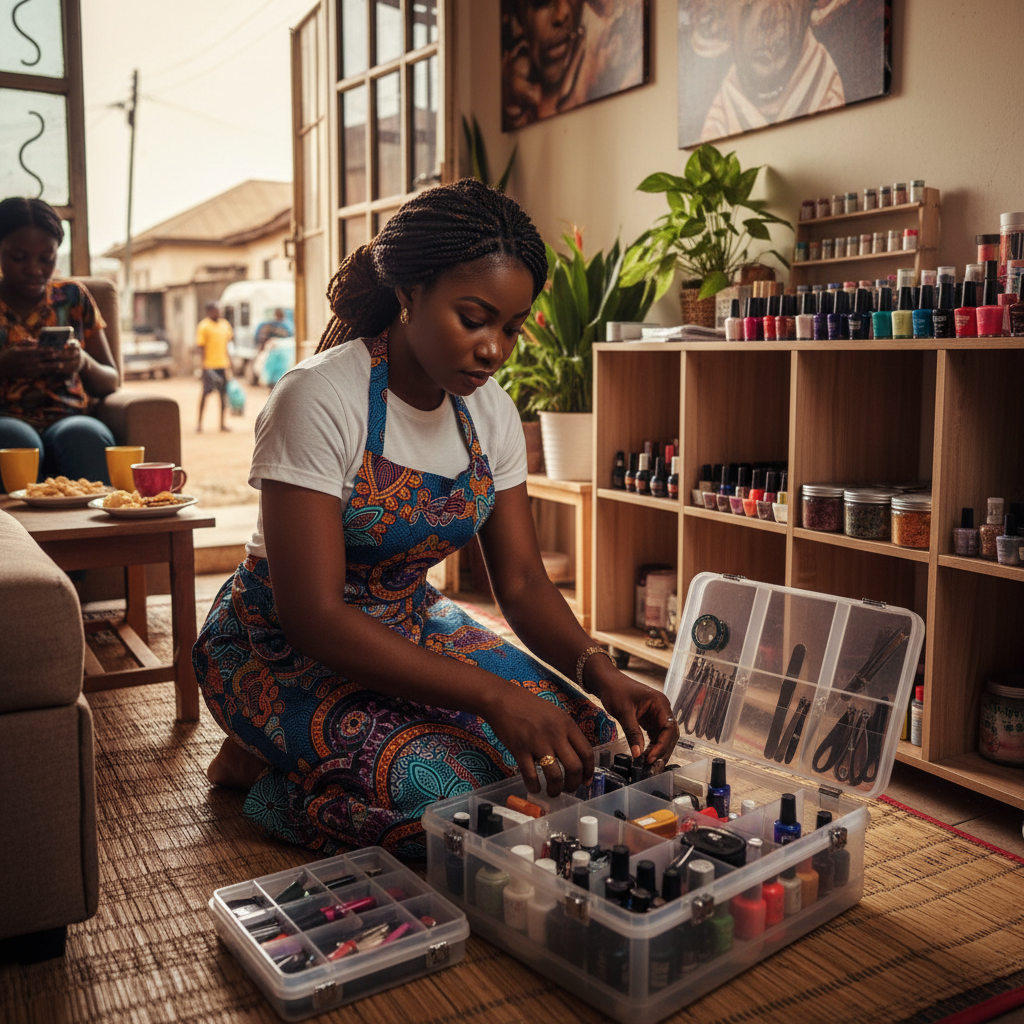
Choosing between a mobile service and a brick-and-mortar salon is a critical decision that shapes your costs, lifestyle, and client base. Each model has distinct advantages, and thankfully, a platform like TrustAm can help you succeed with either choice by connecting you to clients wherever you are.
| Feature | Mobile Nail Tech | Salon Owner |
|---|---|---|
| Startup Cost | Low (₦150k - ₦400k) | High (₦800k - ₦2M+) |
| Overheads | Low (Mainly transport & data) | High (Rent, electricity, staff, etc.) |
| Flexibility | Very High (Set your own hours & locations) | Lower (Fixed location and business hours) |
| Client Experience | Convenient, personal, in-home service | Premium, controlled, spa-like environment |
| TrustAm Advantage | Get booked by clients across your city (e.g., from Surulere to Lekki). Secure payments upfront before you travel. | Appear in searches for "nail salon near me". Manage all your appointments and walk-ins in one place. |
Most Nigerian nail techs start mobile to build a client base and save capital before investing in a physical location. It's a smart, low-risk strategy.
Pricing your services correctly is crucial for profitability. You need to research what other technicians in your area with similar skill levels are charging. Check out our guide on the Best Nail Technicians in Lagos for a sense of the market rates. Your price should reflect the cost of your products, your time, your skill, and your desired profit margin.
Sample 2026 Price List (Lagos/Abuja):
Now, let's talk about the biggest headache for service providers in Nigeria: getting paid. The endless follow-ups, the fake transfer alerts, the "I'll send it now" that never comes. This is where TrustAm becomes your business's best friend. When a client books you on the TrustAm marketplace, they pay the full amount into a secure escrow account. The money is held safely until you've completed the service. Once you mark the job as done, the funds are released to your wallet instantly. No chasing, no stories, no sapa. This single feature transforms your cash flow and peace of mind.

You can be the most talented nail tech in Nigeria, but if nobody knows you exist, you won't make any money. Getting your first clients is all about visibility and trust.
Looking to collaborate with other creative professionals? Browse verified providers on TrustAm to build your network.
Create a Free Account →Ready to turn your nail skills into a real business? Create your free provider profile on TrustAm to get discovered by thousands of clients, manage bookings, and get paid securely with escrow protection.
Create Your Free Provider Account →Join 10,000+ verified service providers growing their business on TrustAm.
A nail technician's income in Nigeria varies greatly based on location, skill, and client base. A part-time mobile tech might earn ₦80,000 - ₦150,000 per month, while an established, in-demand technician with a salon in a prime location like Lekki or Wuse 2 could earn over ₦500,000 - ₦1,000,000 monthly.
While it's not strictly necessary when you're just starting as a mobile technician, registering your business name with the Corporate Affairs Commission (CAC) is highly recommended as you grow. It adds a layer of professionalism, protects your brand name, and is required to open a corporate bank account.
Currently, the most popular services are acrylic extensions (especially coffin and stiletto shapes), gel manicures due to their longevity, intricate nail art, and luxury pedicures. Offering these services with high skill will keep you consistently booked.
The key is clear communication from the start. Hold a consultation before you begin to agree on the design, shape, and price. For payment issues, using a platform like TrustAm with upfront escrow payments completely eliminates this problem, ensuring you are always paid for your work.
Yes, absolutely. With relatively low startup costs for a mobile setup and high demand for quality services, a nail technician business is one of the most profitable ventures in the Nigerian beauty industry. Your profitability depends on your skill, pricing strategy, and ability to attract and retain clients.
Verified providers. Payment held safe until the job is done. Reviews only from real, paid bookings.
AI-powered budgeting, instant P2P payments, and escrow protection. Built for Nigeria.
Or get a download link sent to your phone
Disclosure: This article is published by TrustAm. Some links may direct to our own marketplace and products.
Find trusted providers related to this article.
Try these free calculators and tools related to this article.

Service Provider · Uyo

Service Provider · Yaba

Service Provider · Lagos
Service Provider · Uyo


