That alert from your bank hits. Your monthly allowance is in. You feel like a king for a day, maybe two. But by week three, you're checking your balance after every purchase, praying the ATM doesn't swallow your card. The sapa is real. If this sounds familiar, you're not alone. University life is a crash course in independence, and managing money for the first time is one of its toughest modules. The good news? You can pass with flying colours. Let's break down the most common money mistakes Nigerian students make and how to dodge them like a pro.
This guide unpacks the top financial errors Nigerian students fall into, from poor budgeting to peer pressure spending. You'll learn practical, actionable strategies and how to use tools like the TrustAm app to build a solid financial foundation before you even graduate.
The biggest money mistake is not having a budget at all. Without a plan, your allowance becomes a free-for-all, making it impossible to track where your money goes or save for important things. "I'll just be careful" is not a financial strategy; it’s how you end up with ₦1,500 in your account a week before your next allowance is due. A simple budget helps you allocate funds for your needs (food, textbooks, transport) and your wants (outings, new clothes, data for Netflix).
The Fix: Ditch the back-of-a-napkin calculations and get smart.
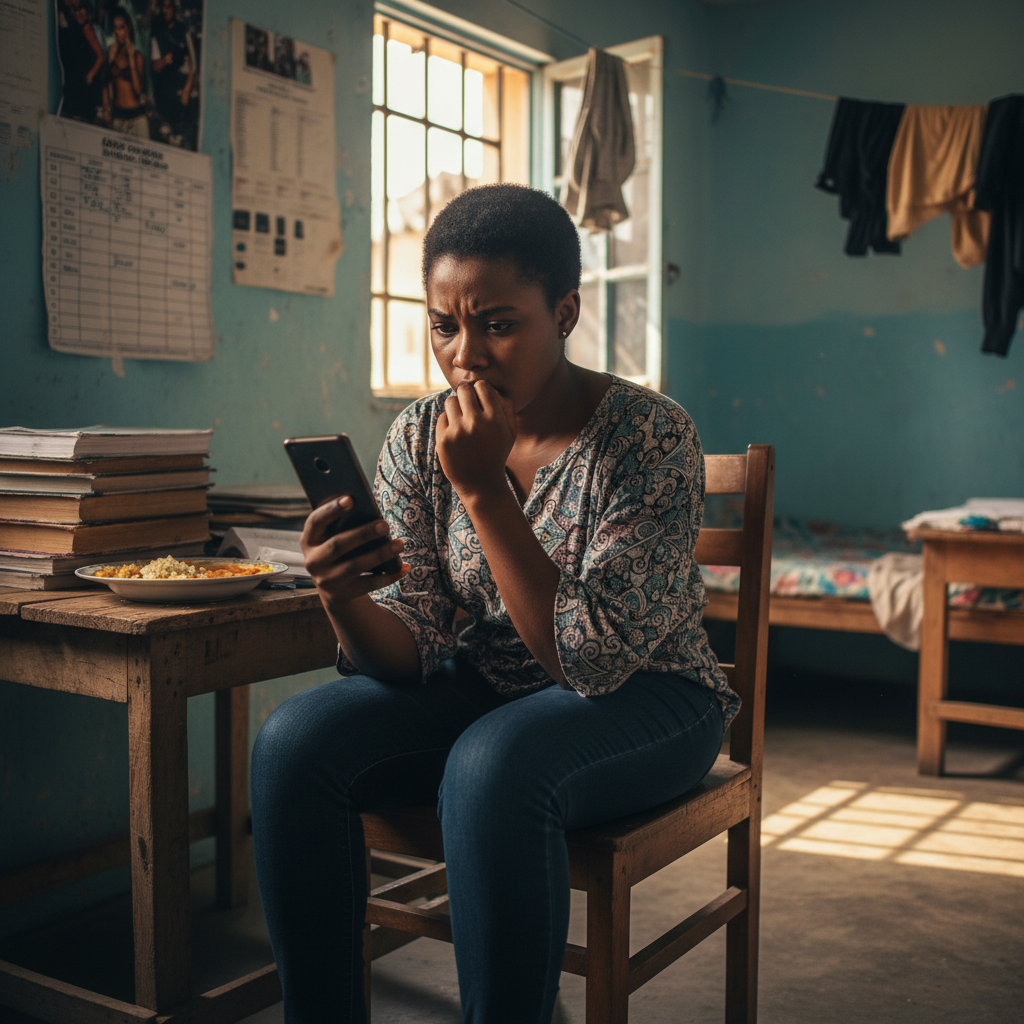
Peer pressure spending is a major drain on student finances. The desire to fit in by buying expensive gadgets, clothes, and attending every social event often leads to debt and financial stress. Your roommate just got the new iPhone. Your friends are all buying the ₦15,000 Aso Ebi for a course-mate's wedding. The pressure to keep up is intense, but trying to match someone else's lifestyle when you don't have their income is a recipe for disaster.
The Fix: Run your own financial race.
Depending on a single source of income, typically parental allowance, is incredibly risky. A small delay or unexpected family expense can leave you stranded with no financial backup. Your parents are trying their best, but with inflation in Nigeria hovering around 30%, their money doesn't stretch as far as it used to. Being financially independent starts with creating your own income, no matter how small. A side hustle not only brings in extra cash but also teaches you valuable skills like time management and customer service.
The Fix: Turn your skills into a steady income stream.
For more ideas, read our post on the Best Side Hustles for Gen-Z Nigerians in 2026.
Looking for trusted professionals or want to list your own student-friendly service? Browse verified providers with payment-backed reviews and escrow protection.
Create a Free Account →
Consistently spending small, seemingly insignificant amounts on things like data, transport, and snacks can add up to a huge portion of your budget without you realizing it. You think nothing of buying a ₦500 meat pie, taking a ₦700 Keke to a nearby faculty instead of walking, or subscribing to a ₦1,000 daily data plan. Individually, they're small. But let's do the math:
The Weekly Drain Calculation:
₦500 meat pie x 3 times a week = ₦1,500
₦700 Keke ride x 4 times a week = ₦2,800
Total per week = ₦4,300
Total per month = ₦17,200!
That's over ₦17k gone on "small" things. This is money that could have been saved, invested, or used for a major project.
The Fix: Become a financial detective with TrustAm.
The pressure to make money fast is real, especially when you see flashy lifestyles online. This makes students vulnerable to scams promising ridiculously high returns in a short time. If someone is promising you a 50% return on your investment in 24 hours, it's a scam. Full stop. The same goes for relying on sports betting as an income source; the house always wins in the long run.
The Fix: Build sustainable income, don't gamble.
Stop letting sapa win. With TrustAm, you can track your allowance with AI budgeting, find side hustle clients in our marketplace, and get paid securely. Build smart money habits today that will set you up for success after graduation.
Create Your Free Account →Join 50,000+ Nigerians already using TrustAm to manage their money smarter.
A Nigerian student can save money by first creating a detailed budget using an app like TrustAm to track all spending. Actively cut down on non-essential costs like eating out and impulse buys, cook your own meals, and look for student discounts. Most importantly, start a side hustle to increase your income, giving you more room to save consistently.
The best side hustle depends on your skills and schedule. Popular and profitable options include private tutoring, graphic design, social media management, makeup artistry, and hair braiding. You can list these services on the TrustAm marketplace to connect with verified clients and ensure you get paid securely through their escrow system.
To budget your monthly allowance, start by listing your total income for the month. Then, list your essential expenses (needs) like food, transport, and course materials. Subtract your needs from your income. The remaining amount can be split between your wants (entertainment, new clothes) and savings, following a simple plan like the 50/30/20 rule. Using an app like TrustAm automates this process for you.
Taking on debt as a student should be a last resort and approached with extreme caution, especially from high-interest loan apps which can quickly spiral out of control. It's generally better to focus on increasing your income through a side hustle and aggressively cutting expenses before considering a loan for non-emergency situations.
A Nigerian student can save money by first creating a detailed budget using an app like TrustAm to track all spending. Actively cut down on non-essential costs like eating out and impulse buys, cook your own meals, and look for student discounts. Most importantly, start a side hustle to increase your income, giving you more room to save consistently.
The best side hustle depends on your skills and schedule. Popular and profitable options include private tutoring, graphic design, social media management, makeup artistry, and hair braiding. You can list these services on the TrustAm marketplace to connect with verified clients and ensure you get paid securely through their escrow system.
To budget your monthly allowance, start by listing your total income for the month. Then, list your essential expenses (needs) like food, transport, and course materials. Subtract your needs from your income. The remaining amount can be split between your wants (entertainment, new clothes) and savings, following a simple plan like the 50/30/20 rule. Using an app like TrustAm automates this process for you.
Taking on debt as a student should be a last resort and approached with extreme caution, especially from high-interest loan apps which can quickly spiral out of control. It's generally better to focus on increasing your income through a side hustle and aggressively cutting expenses before considering a loan for non-emergency situations.
Disclaimer: This article is for informational purposes only and does not constitute financial advice. Always consult a qualified financial professional before making major financial decisions.
Disclosure: This article is published by TrustAm, a financial services company. Some links in this article may direct to our own products.
Try these free calculators and tools related to this article.
Plan your monthly budget for living in Lagos with realistic cost breakdowns.
Use free tool →Plan your monthly budget for living in Abuja with realistic cost breakdowns.
Use free tool →Plan your monthly budget for living in Port Harcourt.
Use free tool →Plan your monthly budget for living in Ibadan with affordable cost breakdowns.
Use free tool →