
electricians vs DIY: When to Hire a Professional in Nigeria
electricians vs DIY: When to Hire a Professional in Nigeria
You hear a faint crackle from the wall socket where your phone is charging. You ignore it. Then, a tiny wisp of smoke, a sharp ‘pop!’, and the smell of burning plastic fills the room. Your power is out, and your charger is toast. In Nigeria, where ‘NEPA’ can be unpredictable, we’re all used to power issues. The first instinct for many is to save money and try a quick fix. But when it comes to electricity, that DIY spirit can cost you far more than a few thousand naira—it can cost you your home or even your life.
Overview & Key Takeaways
This guide breaks down exactly when it's safe to handle minor electrical tasks yourself versus when you absolutely need to call a professional electrician in Nigeria. We'll cover the risks, the costs, and how to find a reliable technician without getting scammed.
- For major jobs, always hire a pro: Any work involving your main circuit breaker (DB box), exposed wiring, or installing heavy appliances requires a licensed electrician.
- DIY is for simple, powerless tasks: Changing a lightbulb or replacing a plastic switch cover are generally safe DIY tasks, provided the power is off.
- The cost of a mistake is huge: A faulty DIY job can lead to electrical fires, destroyed appliances, and serious injury, costing hundreds of thousands of naira to fix.
- Use TrustAm to find verified electricians: The TrustAm marketplace connects you with vetted professionals, lets you read payment-backed reviews, and protects your money with an escrow system.
- Safety first, always: Before attempting any electrical DIY, no matter how small, switch off the power at the main breaker to prevent electric shock.
Electricians on TrustAm
Book with escrow protection. If a job isn't done right, open a dispute and our team steps in.

Stanley light world
Service Provider · Akure
- Payment protected by escrow
- Money released only after you confirm the job

TERRY ELECTRICAL SERVICE
Service Provider · Victoria Island
- Payment protected by escrow
- Money released only after you confirm the job

Surecrownventures
Service Provider · Ibadan
- Payment protected by escrow
- Money released only after you confirm the job
Paul Shigbaja
Service Provider · Ikorodu
- Payment protected by escrow
- Money released only after you confirm the job

Sodiqtheelectrician
Service Provider · Ibadan, UI area
- Payment protected by escrow
- Money released only after you confirm the job

Rokeeb Babatunde
Service Provider · Ibadan
- Payment protected by escrow
- Money released only after you confirm the job
The Temptation of DIY: Why We Try to Fix It Ourselves
In an economy where inflation is hovering around 30%, every naira counts. The idea of paying someone for a job you think you can handle feels like a waste, especially when sapa is real. The desire to save money is the number one reason Nigerians turn to YouTube tutorials for electrical repairs. Added to this is the notorious difficulty of finding a reliable artisan. We’ve all heard stories of the “my guy” electrician who disappears after collecting a deposit or does a shoddy job that creates an even bigger problem.
This combination of factors makes DIY seem like a smart, cost-effective choice. However, while fixing a leaky tap might result in a wet floor, a mistake with electricity can have catastrophic consequences. The real question isn’t “Can I do this?” but “What is the risk if I get this wrong?”
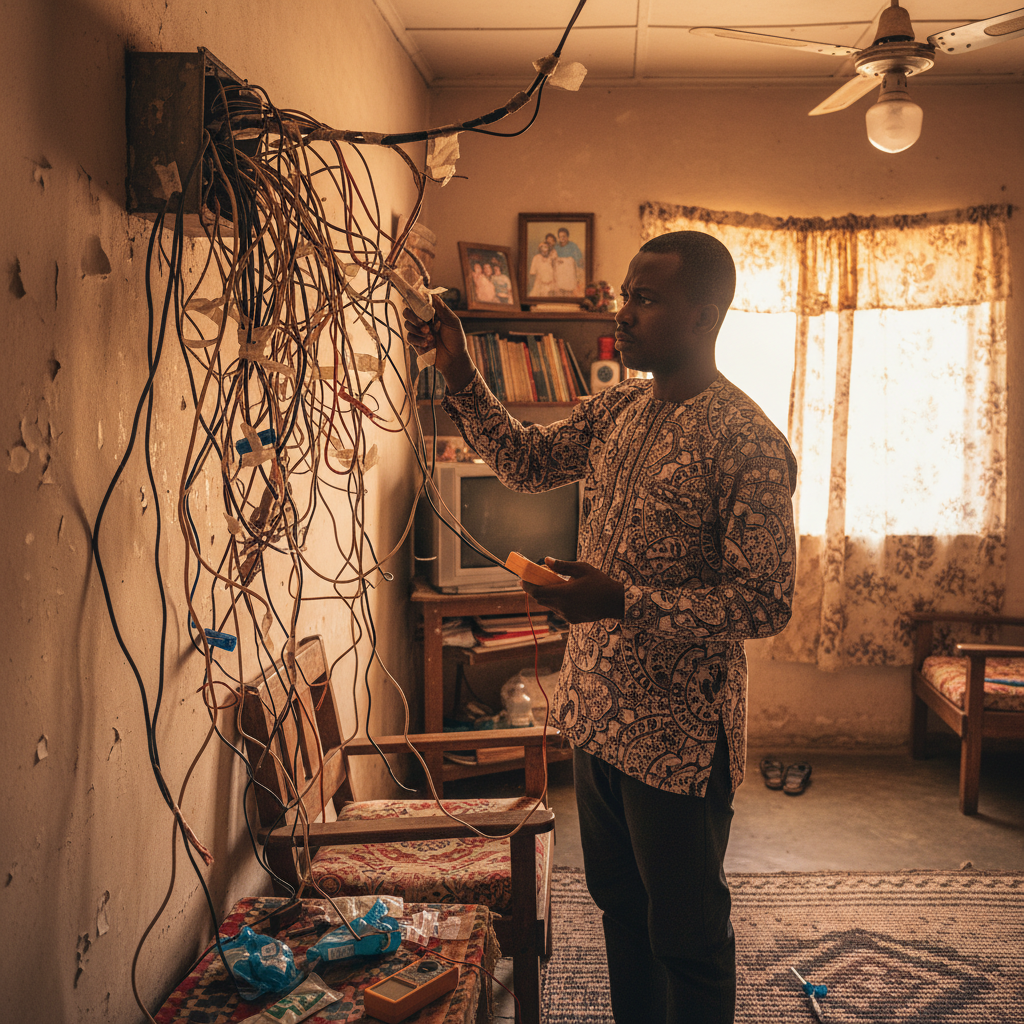
When DIY is Okay: Simple Electrical Fixes You Can Handle
You don't need to call an electrician for every little thing. Some minor tasks are perfectly safe for a careful and prepared person to handle. The golden rule for any DIY electrical work is to always turn off the power at the main distribution board (DB box) first. No exceptions.
Here are a few tasks generally considered safe for DIY:
- Changing a Lightbulb: This is the most basic electrical task. Just ensure the light switch is off before you start.
- Replacing a Switch or Socket Plate: We’re talking about the plastic cover, not the electrical mechanism behind it. If your cover is cracked or old, it’s a simple screwdriver job to replace it.
- Replacing a Fuse in a Plug: If an appliance suddenly stops working, it might just be a blown fuse in the plug. You can easily buy a new fuse and swap it out.
- Connecting a Plug to an Appliance Cord: Wiring a new 3-pin plug onto an extension cord or a small appliance is a common task, but you must follow the colour-coding correctly (Brown for Live, Blue for Neutral, Green/Yellow for Earth).
Even for these simple jobs, if you feel unsure or see signs of trouble like blackened wires or a crumbling socket, it’s time to stop and find a pro on the TrustAm marketplace. It’s better to be safe than sorry.
Red Flags: When You Absolutely MUST Hire a Professional Electrician
This is where the line is drawn. Attempting any of the following tasks without professional training is not brave; it’s reckless. The risk of electric shock, fire, and major property damage is extremely high.
Call a professional immediately if you experience any of these issues:
- Sparks, Smoke, or a Burning Smell: These are urgent warning signs of a dangerous fault in your wiring. Do not touch anything. Turn off the power at the main breaker if you can do so safely and call an electrician.
- Frequently Tripping Breakers: If a circuit breaker in your DB box keeps tripping, it means the circuit is overloaded or has a short. This is a fire hazard that needs professional diagnosis.
- Flickering or Dimming Lights: When this happens across multiple rooms, it often points to a serious issue with your main wiring or the connection from the grid.
- Installing Major Appliances: Air conditioners, electric water heaters, and electric cookers draw a lot of power and often require a dedicated circuit. A professional needs to install these to ensure they are wired safely.
- Any Work on the Distribution Board (DB Box): The DB box is the heart of your home's electrical system. Never attempt to open it or work on it yourself. This is a job for a qualified electrician only.
- Running New Wires or Installing New Sockets: Adding a new light fixture or power outlet involves tapping into existing circuits or creating new ones. This requires knowledge of load calculation and proper wiring techniques to prevent overloads and fires.
- Rewiring Your Home: If you live in an older building in places like Surulere or Old GRA in Port Harcourt, your wiring might be outdated and unsafe. A full or partial rewire is a major project for professionals only.
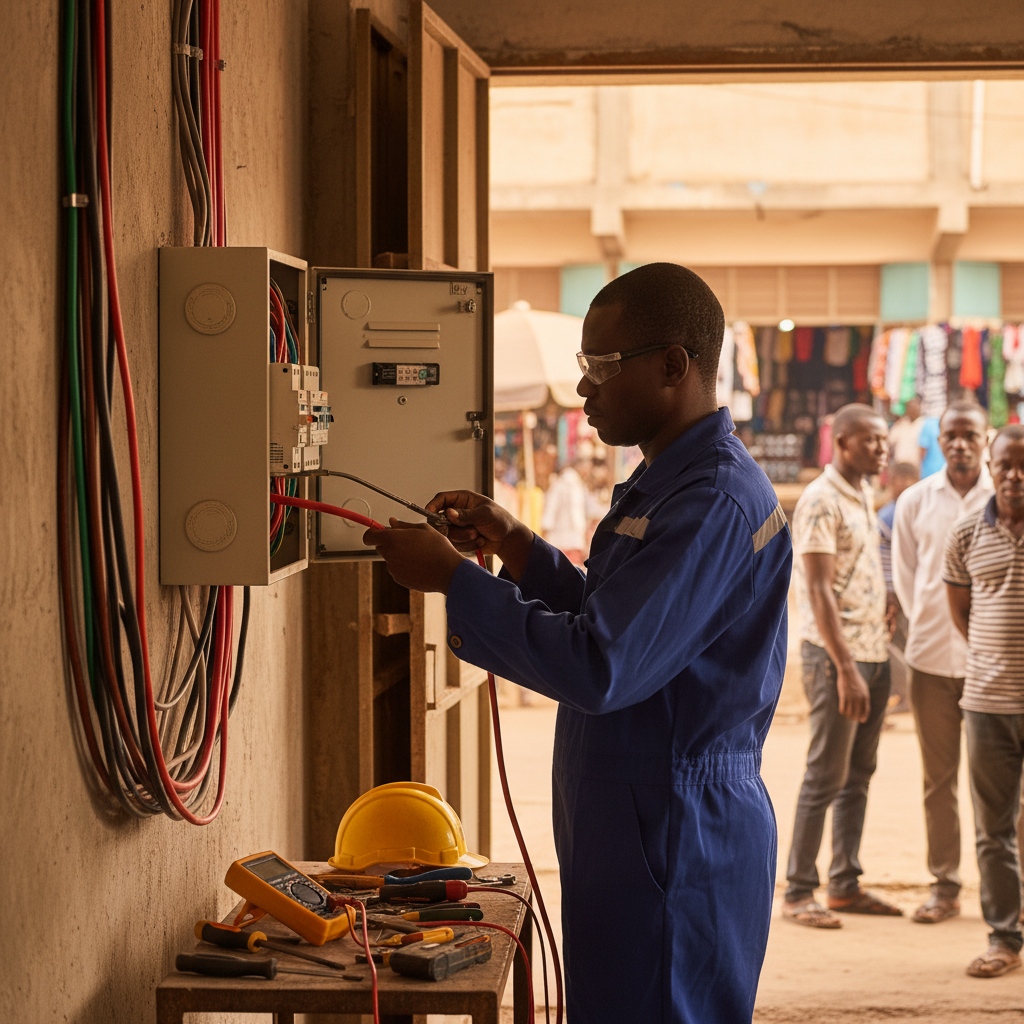
The Hidden Costs of a Bad DIY Job
Trying to save ₦10,000 on an electrician can easily end up costing you ₦500,000 or more. A major electrical repair can completely derail your finances. That's why having a solid emergency fund, as outlined in our guide to creating a sample monthly budget, is crucial.
Consider the potential financial fallout from a DIY job gone wrong:
- Damaged Appliances (Cost: ₦150,000 - ₦1,000,000+): A simple wiring mistake can send a power surge through your outlets, frying your expensive TV, laptop, fridge, and phones in an instant.
- Cost to Fix the Fix (Cost: ₦25,000 - ₦100,000+): A professional electrician will have to spend time diagnosing your mistake before they can even start on the original problem. This makes the job more complex and much more expensive.
- Fire Damage (Cost: Catastrophic): According to the Lagos State Fire and Rescue Service, power surges and electrical faults are a leading cause of fire incidents. The cost to repair fire damage can run into millions of naira.
- Medical Bills (Cost: Varies): An electric shock can cause severe burns and cardiac arrest. The financial and personal cost is immeasurable.
When you look at these numbers, paying a verified professional from the start is clearly the most financially sound decision.
Find Verified Providers on TrustAm
Looking for trusted electricians, generator technicians, or AC repair specialists near you? Browse verified providers with payment-backed reviews and escrow protection on TrustAm.
How TrustAm Protects You from Electrical Scams
The biggest fear after deciding to hire a professional is finding a good one. How do you avoid the nightmare artisan who takes your money and does a terrible job? This is precisely the problem TrustAm was built to solve.
The TrustAm marketplace is your safest bet for hiring electricians and other home service professionals in Nigeria. Here’s how it protects you:
- Verified Professionals: Every service provider on TrustAm goes through a verification process. You’re not just hiring a random number you found online; you're hiring a professional with a verified identity.
- Payment-Backed Reviews: You can read genuine reviews from previous customers. Unlike social media comments that can be faked, reviews on TrustAm can only be left by users who have actually booked and paid for the service through the app.
- Escrow Protection: This is the game-changer. When you book a service, your payment is held securely in TrustAm's escrow. The electrician doesn't get the money until you have confirmed that the job is completed to your satisfaction. This single feature eliminates the risk of them running off with your deposit or doing a poor job.
- Clear Quotes and Invoicing: Agree on the price upfront. The entire transaction is managed within the app, giving you a clear record of payments and protecting you from unexpected price hikes.
Instead of risking your money and safety with an unknown technician, you can confidently browse, book, and pay a reliable electrician on TrustAm, knowing you’re protected every step of the way.
Take Control of Your Finances with TrustAm
Don't let unexpected home repairs drain your account. Find verified electricians on the TrustAm marketplace and pay securely with escrow. It's the smartest way to manage home service expenses and protect your money from scams.
Create Your Free Account →Join 50,000+ Nigerians already using TrustAm to manage their money smarter.
Frequently Asked Questions
How much does an electrician cost in Lagos?
The cost varies by location and job complexity. A basic call-out fee for diagnosis in areas like Lekki or Ikeja can range from ₦5,000 to ₦15,000. Replacing a single socket might cost ₦3,000 - ₦7,000 (excluding materials), while installing a new AC unit could be ₦15,000 - ₦30,000. For major work like partial rewiring, expect to pay upwards of ₦150,000. It's best to get quotes from multiple verified electricians on TrustAm.
Is it illegal to do your own electrical work in Nigeria?
While there aren't strict laws penalizing homeowners for minor DIY electrical work, it is extremely risky. Any significant work must be done by a qualified professional to meet safety standards. Furthermore, if a fire occurs due to faulty DIY wiring, your home insurance claim could be denied. For your safety and financial protection, it's always best to hire a professional.
What should I check before hiring an electrician?
Before hiring an electrician in Nigeria, check for reviews and past work. Ask for a clear quote before work begins. Most importantly, use a platform like TrustAm that offers a layer of security through provider verification, payment-backed reviews from real customers, and escrow protection, which ensures the electrician is only paid after you approve the completed job.
Can I replace an electrical socket myself in Nigeria?
While it might seem simple, replacing an electrical socket involves working with live circuit wires and is not recommended for amateurs. A mistake like crossing the live and neutral wires can create a short circuit, cause a fire, or lead to electrocution. Given the relatively low cost of hiring a professional for this task (around ₦5,000), the risk is not worth the small savings.
Book a verified Electrician
Verified providers. Payment held safe until the job is done. Reviews only from real, paid bookings.
Download TrustAm
AI-powered budgeting, instant P2P payments, and escrow protection. Built for Nigeria.
Or get a download link sent to your phone
Chisom Anen
Founder and CEO of TrustAm. Building Nigeria's reputation marketplace for verified service providers. Reviews unlock only after real payments.
Disclosure: This article is published by TrustAm. Some links may direct to our own marketplace and products.
Sources & References
- National Bureau of Statistics — Labour— nigerianstat.gov.ng
- World Bank Nigeria— worldbank.org
- SMEDAN— smedan.gov.ng
- Federal Inland Revenue Service— firs.gov.ng
Related Services
Find trusted providers related to this article.
Related Articles


Free Tools You Might Find Useful
Try these free calculators and tools related to this article.
Electrician Prices
Estimate electrical work and installation costs in Nigeria.
Use free tool →Electrician Calculator
Estimate electrical service and repair costs across Nigeria.
Use free tool →Lagos Budget
Plan your monthly budget for living in Lagos with realistic cost breakdowns.
Use free tool →Abuja Budget
Plan your monthly budget for living in Abuja with realistic cost breakdowns.
Use free tool →