
How to Start a Nail Technician Business in Nigeria in 2026: Complete Guide
How to Start a Nail Technician Business in Nigeria in 2026: Complete Guide
Forget what you heard – the Nigerian beauty industry isn't just surviving; it's booming. Valued at over ₦1.5 trillion and growing, it's a massive market. And one of the most profitable and accessible entry points? Nails. Every owambe, birthday shoot, or even just a regular Tuesday needs a perfect manicure. If you have a passion for nail art and an entrepreneurial spirit, 2026 is your year to turn that skill into a serious business. This isn't just about painting nails; it's about building a brand that can pay your bills and more.
Overview & Key Takeaways
This guide provides a step-by-step plan for launching a successful nail technician business in Nigeria. We cover everything from training and calculating startup costs to finding your first clients and getting paid securely in 2026.
- Get Clients Immediately: Listing your service on the TrustAm marketplace is the fastest way to connect with verified customers in cities like Lagos, Abuja, and Port Harcourt.
- Startup Costs Range Widely: You can start a mobile nail business for as little as ₦150,000 - ₦250,000, while a small physical space can cost upwards of ₦800,000.
- Pricing is Location-Dependent: A gel manicure in Ikeja might cost ₦8,000, while the same service in Lekki Phase 1 could be ₦15,000. Research your local market.
- Secure Payments are Non-Negotiable: Use a platform with escrow protection, like TrustAm, to eliminate the risk of clients refusing to pay after service delivery.
- Build Trust with Reviews: Payment-backed reviews on your TrustAm profile are more credible than social media comments and help you attract high-quality clients.
Nail Technicians on TrustAm
Book with escrow protection. If a job isn't done right, open a dispute and our team steps in.

Mannie nails
Service Provider · Nsukka
- Payment protected by escrow
- Money released only after you confirm the job

Mandy Glams
Service Provider · Uyo
- Payment protected by escrow
- Money released only after you confirm the job
Am in Anambra
Service Provider · Anambra state
- Payment protected by escrow
- Money released only after you confirm the job

OYN Nails
Service Provider · Yaba
- Payment protected by escrow
- Money released only after you confirm the job

Leemah's Nails
Service Provider · Ikeja
- Payment protected by escrow
- Money released only after you confirm the job
trills.nails
Service Provider · Lagos
- Payment protected by escrow
- Money released only after you confirm the job
Step 1: Get the Right Skills and Training
Before you can charge a kobo, you need to be good at what you do. Top-tier skills are what separate a ₦5,000-a-set tech from a ₦25,000-a-set artist. You must master the fundamentals of nail health, hygiene, and various application techniques. Don't be the person giving clients infections because of poorly sanitized tools.
Here are your main training pathways in Nigeria:
- Formal Beauty Schools: Institutions in major cities like Lagos and Abuja offer comprehensive cosmetology courses that include nail technology. These can cost anywhere from ₦100,000 to ₦400,000 and typically last 3-6 months. They provide certification, which adds to your credibility.
- Apprenticeship (Learning on the Job): This is a very common route. You learn directly from an experienced nail tech in their salon. While often cheaper (or sometimes free, in exchange for your work), the quality of training can vary. Make sure you learn from someone whose work you genuinely admire.
- Online Courses & Self-Taught: With YouTube and Instagram, you can learn a lot. However, this route requires extreme discipline. It's best for learning new design trends after you've already mastered the basics of application and hygiene from a hands-on teacher.
Pro Tip: Focus on mastering the most in-demand services first: perfect gel polish application, structured manicures (BIAB), and clean acrylic/sculpting gel extensions. These are the money-makers.
Step 2: Calculate Your Startup Costs (The Real Numbers)
Your startup cost depends heavily on your business model. To start as a nail technician in Nigeria in 2026, you will need to budget for equipment, products, and marketing. With inflation hovering around 25-30%, planning your finances is more critical than ever.
Here’s a realistic breakdown for two common scenarios:
| Item | Mobile Nail Tech (Estimated Cost 2026) | Small Kiosk/Salon (Estimated Cost 2026) |
|---|---|---|
| Training & Certification | ₦50,000 - ₦200,000 | ₦50,000 - ₦200,000 |
| Basic Kit (UV/LED Lamp, E-file, Tools) | ₦80,000 - ₦150,000 | ₦100,000 - ₦200,000 |
| Initial Product Stock (Polishes, Gels, Acrylics) | ₦100,000 - ₦250,000 | ₦200,000 - ₦400,000 |
| Rent & Furnishing (Desk, Chairs) | N/A | ₦300,000 - ₦1,000,000+ (annual) |
| Generator/Inverter | N/A (or small 'I better pass my neighbour') | ₦150,000 - ₦400,000 |
| Marketing (TrustAm Profile, Social Media) | ₦10,000 (for data/boosts) | ₦20,000+ |
| Total Estimated Startup Cost | ₦240,000 - ₦610,000 | ₦820,000 - ₦2,220,000+ |
Starting mobile is clearly the more affordable option. You can use an app like TrustAm to manage your income and expenses from day one, tracking every naira you spend on supplies and earn from clients to see your profitability clearly.
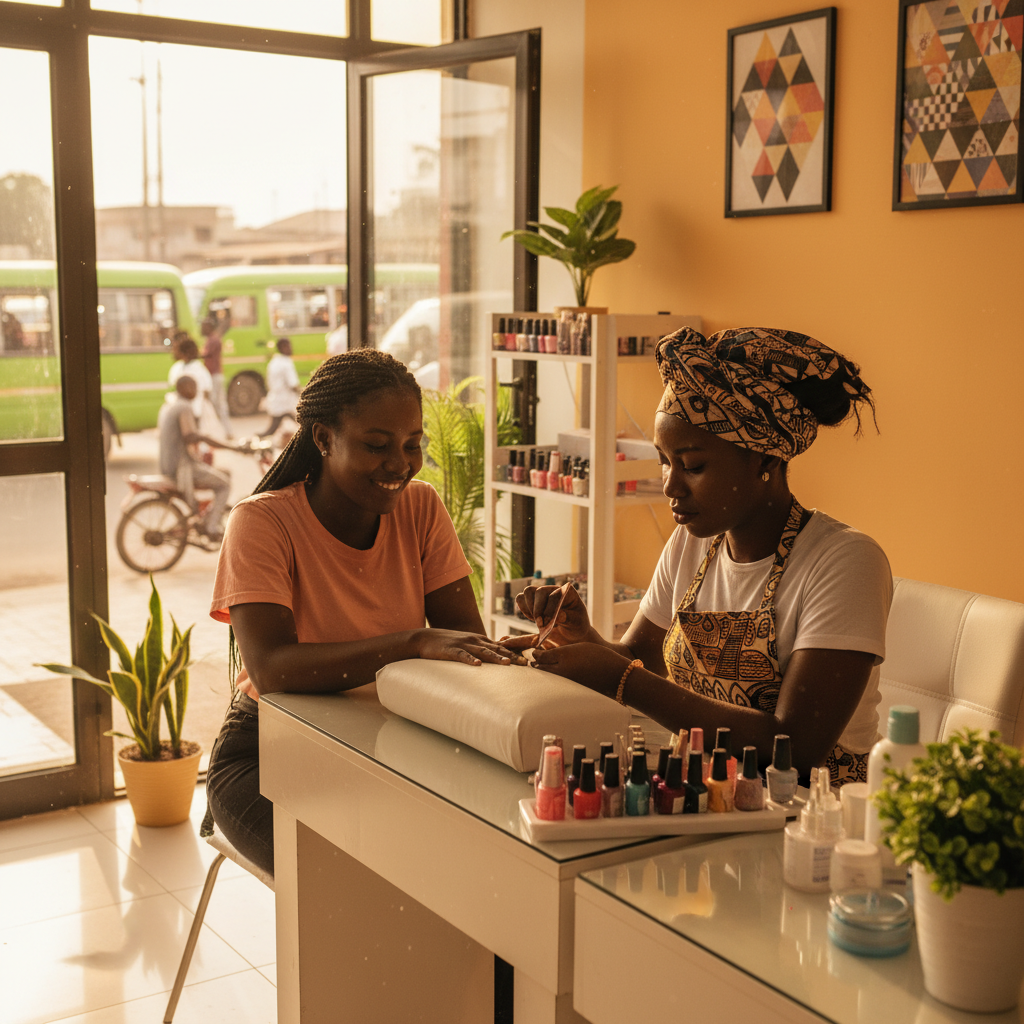
Step 3: Choose Your Business Model: Mobile vs. Salon
Deciding whether to go to your clients or have them come to you is a major choice. Each model has distinct advantages and challenges in the Nigerian context.
The Mobile Nail Technician
This is the most popular starting point for a reason. You travel to your clients' homes or offices.
- Pros: Low overheads (no rent, no NEPA bills), flexibility to set your own schedule, and the ability to charge a premium for convenience.
- Cons: Logistics can be stressful (Lagos traffic!), carrying equipment can be cumbersome, and personal safety is a consideration.
For mobile techs, building trust is paramount. This is where creating a professional service provider profile on TrustAm is a game-changer. It gives you instant credibility, allows clients to see your verified status, and read payment-backed reviews from previous jobs, making them feel secure booking you for a home service.
The Salon Owner
Renting a dedicated space, even a small one, establishes your brand and offers a more professional experience.
- Pros: A stable and professional environment, ability to serve multiple clients, and potential for walk-in customers.
- Cons: High startup and running costs (rent, power, staff), less flexibility, and you're tied to one location.
Step 4: Build Your Kit: Essential Tools & Quality Products
Your tools and products are your biggest assets. Using cheap, low-quality products will lead to nails that lift, chip, or break, and you'll quickly lose customers. Invest in quality from the start.
Your essential kit should include:
- Sanitation Supplies: Hospital-grade disinfectant, Barbicide, alcohol, cotton pads, and a sterilizer pouch system. This is non-negotiable.
- Tools of the Trade: A good quality E-file (electric file), cuticle pushers and nippers, nail files and buffers, nail clippers, and dust brushes.
- Application Essentials: A high-wattage UV/LED lamp (at least 48W), quality nail brushes for acrylic and gel application.
- Core Products: Dehydrator, primer, base coat, top coat (glossy and matte), a range of popular gel polish colours, builder gel (BIAB), and a monomer/polymer system for acrylics.
- Extras: Cuticle oil, lotion, nail art supplies (gems, foils, stickers), and nail tips.

Step 5: Set Your Prices and Create a Service Menu
Pricing your services correctly is a delicate balance. You need to cover your costs, pay yourself a salary, and remain competitive. Research is key here. A great strategy is to browse the TrustAm marketplace to see what other verified nail technicians in your city are charging.
Consider these factors when setting your prices:
- Location: Prices in Maitama, Abuja will be higher than in a smaller town.
- Your Skill Level: Be honest about your experience. You can't charge expert prices as a beginner.
- Product Cost: High-end brands like The GelBottle or Apres Gel-X cost more, so your prices should reflect that.
- Service Time: How long does a full set of acrylics take you? Factor in your time.
- Overheads: If you have a salon, you must factor in rent, electricity, and other bills.
Find Verified Providers on TrustAm
Looking for trusted Nails & Spa services near you? Browse verified providers with payment-backed reviews and escrow protection.
Step 6: Get Your First Clients with TrustAm
Getting your first paying clients is the biggest hurdle. While posting on Instagram and WhatsApp is a start, it's a crowded space. You need a way to stand out and build trust from day one.
This is where TrustAm becomes your most powerful marketing tool. Instead of just being another nail page on Instagram, you become a verified business professional.
- Create Your Free Profile: Sign up on the TrustAm app and create a detailed profile under the 'Nails & Spa' category. Upload high-quality photos of your best work.
- Get Verified: Complete the verification process. This shows potential clients that you are a legitimate and trustworthy service provider.
- Be Discoverable: When people in your city (e.g., Uyo, Benin City, Ibadan) search for nail technicians, your profile will appear. TrustAm connects you directly with customers actively looking for your services.
- Leverage Payment-Backed Reviews: After completing a job booked and paid for through TrustAm, the client can leave a review. These reviews are powerful because they are tied to an actual transaction, making them far more credible than random social media comments. Good reviews will push your profile higher in search results.
Relying solely on friends and family won't build a sustainable business. TrustAm gives you access to a wider pool of serious customers, helping you fill your appointment book faster.
Step 7: Manage Your Bookings and Get Paid Securely
As you get busier, managing DMs, calls, and appointment times can become chaotic. And the worst feeling? Finishing a 3-hour nail set only for the client to start telling stories about payment. "My transfer is not going," "Let me send it when I get home." We've all been there.
Using TrustAm streamlines your entire business operation and protects your income:
- Professional Invoicing: Send professional invoices directly from the app. It details the services rendered and the total cost.
- Escrow Protection: This is the ultimate protection. When a client books you, they deposit the payment into a secure TrustAm escrow account. The money is held safely until you have completed the service to their satisfaction. Once you're done, the funds are released to you. No more payment excuses or ghosting.
- Multiple Payment Options: Clients can pay you easily via card, bank transfer, or USSD, all within the app.
- Income Tracking: The app automatically tracks all your earnings, giving you a clear picture of your monthly revenue and business growth.
By professionalizing your booking and payment process with TrustAm, you signal to clients that you are a serious business owner, which justifies your premium pricing.
Start Getting Clients on TrustAm
Ready to turn your nail skills into a real business? List your services on TrustAm to connect with thousands of clients, get paid securely with escrow, and build your reputation with payment-backed reviews.
Create Your Free Provider Account →Join thousands of Nigerian service providers already growing their business on TrustAm.
Frequently Asked Questions
How much does it cost to start a nail business in Nigeria?
The cost to start a nail business in Nigeria in 2026 can range from ₦150,000 to over ₦1,000,000. A mobile business is the most affordable, with costs around ₦150,000 - ₦400,000 for training, a basic kit, and initial products. Setting up a small physical salon is significantly more expensive due to rent, furniture, and utilities, often starting from ₦800,000.
Do I need a license to be a nail technician in Nigeria?
Currently, there is no specific national license required to practice as a nail technician in Nigeria. However, if you open a physical salon, you will need to register your business name with the Corporate Affairs Commission (CAC) and may be subject to local government levies and permits depending on your state.
How much can a nail tech earn in a month in Nigeria?
A nail technician's monthly earnings in Nigeria vary greatly based on location, skill, and number of clients. A part-time or beginner tech might earn ₦80,000 - ₦150,000 per month. An experienced, in-demand nail tech with a steady clientele in a major city like Lagos or Abuja can earn between ₦300,000 and ₦800,000 or more per month.
How do I get clients for my new nail business?
The most effective way to get clients for your new nail business is to create a professional service provider profile on a marketplace like TrustAm. This exposes you to thousands of users actively searching for nail services. You should also build a strong portfolio on social media (Instagram, TikTok), offer an introductory discount, and encourage word-of-mouth referrals by providing excellent service.
Book a verified Nails & Spa
Verified providers. Payment held safe until the job is done. Reviews only from real, paid bookings.
Download TrustAm
AI-powered budgeting, instant P2P payments, and escrow protection. Built for Nigeria.
Or get a download link sent to your phone
Chisom Anen
Founder and CEO of TrustAm. Building Nigeria's reputation marketplace for verified service providers. Reviews unlock only after real payments.
Disclosure: This article is published by TrustAm. Some links may direct to our own marketplace and products.
Sources & References
- Federal Inland Revenue Service— firs.gov.ng
- Corporate Affairs Commission— cac.gov.ng
- Small and Medium Enterprises Development Agency— smedan.gov.ng
- National Bureau of Statistics— nigerianstat.gov.ng
Related Services
Find trusted providers related to this article.
Related Articles



Free Tools You Might Find Useful
Try these free calculators and tools related to this article.