
How to Start a Nail Technician Business in Nigeria in 2026: Complete Guide
How to Start a Nail Technician Business in Nigeria in 2026: Complete Guide
The Nigerian beauty industry is booming, and it's not just about makeup and hair anymore. The demand for creative, high-quality nail services has exploded, with a simple gel manicure in cities like Lagos or Abuja costing anywhere from ₦8,000 to ₦15,000. If you have a passion for nail art and an eye for detail, you're not just sitting on a hobby—you're sitting on a potential six-figure monthly income. But how do you go from doing your friends' nails for fun to running a profitable, respected business that clients flock to? It's about more than just buying polish; it's about strategy, professionalism, and using the right tools to get paid for your talent.
Overview & Key Takeaways
This guide provides a step-by-step plan for launching a successful nail technician business in Nigeria, covering training, business planning, startup costs, client acquisition, and getting paid securely. You'll learn how to price your services competitively and build a trusted brand from day one.
- List on TrustAm Immediately: Create your professional profile on the TrustAm marketplace to get discovered by clients in 13 major cities and build trust with payment-backed reviews.
- Budget ₦200k - ₦500k for Startup: Your initial investment for a mobile setup will cover essential tools like a UV/LED lamp, quality polishes, acrylic/gel kits, and sanitation supplies.
- Start Mobile to Save Costs: Begin as a mobile nail tech to avoid high rent costs. Use TrustAm to manage your mobile bookings and secure payments with escrow before you even leave your house.
- Price for Profit, Not Just Popularity: Calculate your costs per service (product, time, transport) to set prices that cover your expenses and pay you a proper salary. Don't just copy others.
- Professionalism is Key: Formal training, excellent hygiene, and secure payment methods (like TrustAm's escrow) separate amateurs from in-demand professionals.
Nail Technicians on TrustAm
Book with escrow protection. If a job isn't done right, open a dispute and our team steps in.

Mannie nails
Service Provider · Nsukka
- Payment protected by escrow
- Money released only after you confirm the job

Pola
Service Provider · Aba
- Payment protected by escrow
- Money released only after you confirm the job

Mandy Glams
Service Provider · Uyo
- Payment protected by escrow
- Money released only after you confirm the job
Am in Anambra
Service Provider · Anambra state
- Payment protected by escrow
- Money released only after you confirm the job

OYN Nails
Service Provider · Yaba
- Payment protected by escrow
- Money released only after you confirm the job

Leemah's Nails
Service Provider · Ikeja
- Payment protected by escrow
- Money released only after you confirm the job
Is a Nail Business Really Profitable in Nigeria?
Yes, a nail technician business is highly profitable in Nigeria if managed correctly. With the growing demand for self-care and beauty services, skilled nail techs can earn a significant income, especially in urban centres where disposable income is higher. The key is moving from a hobbyist to a professional who commands premium prices through skill and reliability.
Let's break down the potential earnings in 2026:
- The Side Hustler: A part-time tech doing 2-3 clients a week at an average of ₦10,000 per client can make an extra ₦80,000 - ₦120,000 per month. That's enough to cover bills or serious savings.
- The Full-Time Mobile Pro: A dedicated mobile tech in Port Harcourt or Ibadan could service 2 clients a day, 5 days a week. At the same average price, that's an income of over ₦400,000 monthly before costs.
- The Established Brand: Top-tier nail techs in high-brow areas like Lekki in Lagos or Maitama in Abuja with a strong brand and consistent clientele can earn well over ₦800,000 per month.
The difference between these levels isn't just skill—it's business acumen. The highest earners have a consistent flow of clients and a professional system for booking and payments. This is where a platform like TrustAm becomes a game-changer, connecting you directly with people actively searching for nail services in your city.

Step 1: Get Professional Training and Skills
To succeed in this competitive market, you need professional training that goes far beyond YouTube tutorials. Proper training teaches you essential techniques, nail anatomy, and critical hygiene practices to prevent infections. This knowledge is what builds client trust and justifies premium pricing.
Invest in a course from a reputable beauty school in your city. Look for training that covers:
- Core Services: Professional manicures, pedicures, and proper gel polish application/removal.
- Advanced Techniques: Acrylics, Gel-X extensions, sculpting, and encapsulation.
- Nail Artistry: From simple designs to complex, free-hand art.
- Safety and Sanitation: This is non-negotiable. Learn how to properly clean, disinfect, and sterilize your tools to protect yourself and your clients.
A comprehensive training course in Nigeria can cost anywhere from ₦80,000 to ₦250,000. While it seems like a big investment, the certification you receive is a mark of quality you can proudly display on your TrustAm profile to attract serious, high-paying clients.
Step 2: Create a Simple but Solid Business Plan
A business plan is your roadmap to success, and it doesn't need to be a 50-page document. It should simply outline your target clients, the services you'll offer, how you'll price them, and your marketing strategy. Think of it as your guide to making smart decisions.
- Target Audience: Who do you want to serve? University students in Ife? Busy corporate women in VI? Brides-to-be preparing for their big day? Owambe lovers needing stunning nails for the weekend? Defining your ideal client helps you tailor your services and marketing.
- Service Menu: Don't try to offer everything at once. Start with a focused menu of services you've mastered. For example: Gel Manicure, Acrylic Full Set, Refills, Nail Art (per nail), and Soak-off.
- Pricing Strategy: Research what other techs in your area charge, but don't just copy them. Calculate your price based on Your Costs (product used + transport) + Your Time + Your Desired Profit. This ensures you're actually making money on every appointment.
- Brand Name & Identity: Choose a catchy, professional name for your business. Create a simple logo using a tool like Canva.
- Client Acquisition Channel: How will clients find you? While Instagram is great for a portfolio, TrustAm is where you get *booked* and *paid* securely. It should be the core of your strategy for turning followers into paying customers.
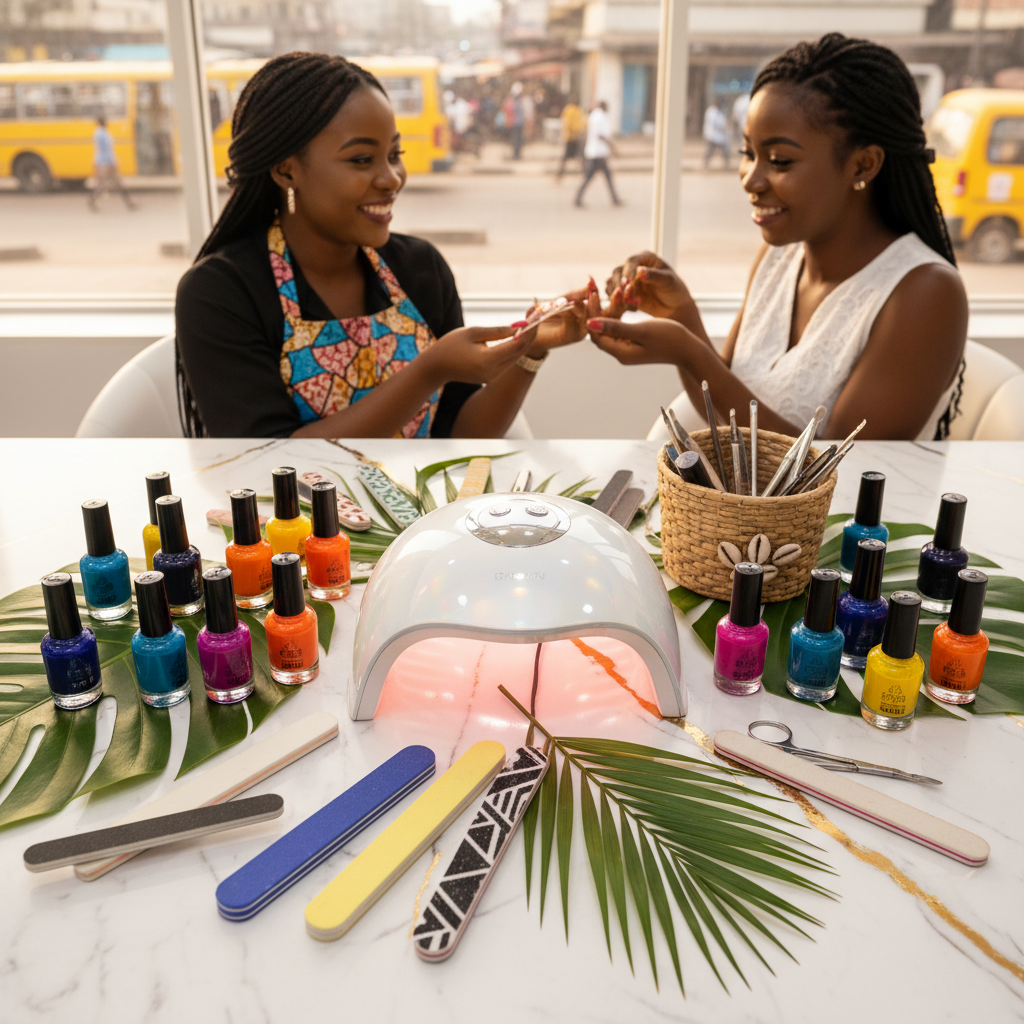
Step 3: Calculate Your Startup Costs
Starting a nail business in Nigeria can cost between ₦200,000 and ₦500,000 for a mobile setup in 2026. This initial investment covers your professional kit, essential equipment, and some basic marketing. Don't be tempted by cheap, unbranded products online; quality tools and products give better results and are safer for your clients.
Essential Kit Breakdown (Approx. 2026 Prices)
- UV/LED Lamp: ₦20,000 - ₦45,000
- E-file (Nail Drill): ₦25,000 - ₦50,000
- Quality Gel Polishes (starter set of 15-20 colours): ₦40,000 - ₦70,000
- Acrylic or Gel-X System (Monomer, powder, tips, forms): ₦40,000 - ₦80,000
- Manicure/Pedicure Tools (Cuticle pushers, nippers, files, buffers): ₦15,000 - ₦25,000
- Sanitation Supplies (Disinfectant, sterilizer, wipes, gloves): ₦15,000 - ‐25,000
- Ring Light (for great photos): ₦15,000 - ₦30,000
Total Estimated Startup Cost: ~₦170,000 - ₦325,000
Step 4: Choose Your Business Model: Mobile Tech vs. Salon Space
Your business model determines your startup costs and flexibility. Starting as a mobile nail technician is the most cost-effective way to launch, while renting a salon space offers more stability but requires a much higher initial investment and running costs.
Mobile Nail Tech
- Pros: Very low overhead (no rent or NEPA bills!), flexible schedule, and you can serve clients across a wide area (e.g., from Ikeja to Lekki). It's the perfect way to build your client base without financial pressure.
- Cons: You have to manage travel time and costs, carry your equipment everywhere, and rely on the client's space (which may have poor lighting or distractions).
- The TrustAm Advantage: The TrustAm app is built for mobile professionals. Clients can find you based on their location, you can manage your calendar on the go, and most importantly, our escrow payment system ensures the client has paid *before* you even leave your house. No more wasting transport fare on clients who aren't serious.
Salon Space / Rented Chair
- Pros: A professional and controlled environment, clients come to you, and it's easier to manage inventory and create a premium experience.
- Cons: Very high costs—rent in a good location in Lagos or Abuja can be crippling for a new business. You also have to deal with utility bills, staff, and local government levies.
Our Recommendation: Start as a mobile tech. Build your clientele and save your profits using the secure TrustAm platform. Once you have a steady income and a loyal customer base, you can confidently graduate to renting a physical space.

Step 5: Get Your First Clients (And Keep Them Coming!)
Getting your first clients requires a mix of showcasing your work and building undeniable trust. While social media is great for display, a professional marketplace profile is what converts viewers into paying customers who respect your time and your price.
- Build a Stunning Portfolio: Your work is your CV. Take clear, well-lit photos and videos of your best nail sets. A simple ring light can make a huge difference.
- Leverage Social Media Smartly: Post your portfolio on Instagram and TikTok. Use location-specific hashtags like #NailsInLagos, #AbujaNailTech, or #PHNails to attract a local audience.
- Set Up Your TrustAm Profile (Non-Negotiable): This is your professional headquarters. It's free to create a profile on TrustAm. Here, you can upload your portfolio, list your services with clear prices, and set your availability. It signals to clients that you are a serious business owner.
- Get the 'Verified' Badge: Complete our verification process on TrustAm. This badge tells clients that we have confirmed your identity, giving them the confidence to book you over an unverified stranger on Instagram.
- Focus on Payment-Backed Reviews: After every job booked and paid for through TrustAm, the client can leave a review. These reviews are golden because they are tied to a real, verified payment. One payment-backed review on TrustAm is worth more than 20 anonymous comments on Instagram. You can even check out our list of the Best Nail Technicians in Lagos in 2026: Prices, Reviews & How to Book on TrustAm to see what a top-rated profile looks like.
Step 6: Manage Payments and Avoid "I Will Send It Later" Stories
The biggest headache for new service providers in Nigeria is getting paid on time and in full. Chasing payments, dealing with fake transfer alerts, and last-minute cancellations are draining. To protect your income and your peace of mind, you must use a secure payment system from day one.
This is where TrustAm's Escrow Protection becomes your business's best friend. It completely eliminates payment risk.
Here’s how it works:
- Client Pays Upfront: When a client books you on the TrustAm marketplace, they pay the full service fee into a secure escrow account. You are immediately notified that the funds are secured.
- You Work with Confidence: Knowing the money is safe, you can confidently buy any specific supplies, travel to the client, and perform the service without any financial anxiety.
- Instant Payout on Completion: Once the job is done and the client is happy, they confirm completion in the app. The funds are released instantly to your TrustAm wallet. No delays, no excuses.
With TrustAm, the phrase "I will send it later" becomes a thing of the past. You can also send professional invoices and payment request links directly from the app, helping you manage all your business income in one place.
Start Getting Clients on TrustAm
Ready to turn your nail skills into a real business? Create your free TrustAm profile today. Get discovered by thousands of clients in 13 cities, manage your bookings, and get paid securely with escrow protection. Stop chasing payments and start building your empire.
List Your Services for Free →Join our growing community of verified service professionals across Nigeria.
Frequently Asked Questions
How much do I need to start a nail business in Nigeria?
To start a mobile nail technician business in Nigeria in 2026, you should budget between ₦200,000 and ₦500,000. This amount covers the cost of a comprehensive professional kit, including a quality UV/LED lamp, an e-file, a starter set of polishes and acrylics, and proper sanitation supplies.
Do I need a certificate to be a nail technician in Nigeria?
While there is no single, nationwide legal requirement for a license to be a nail technician in Nigeria, obtaining a certificate from a reputable beauty school is crucial. It proves your expertise, teaches you vital health and safety protocols, and gives clients the confidence to trust you with their nail health, allowing you to charge higher prices.
How do I price my nail services in Lagos or Abuja?
To price your nail services in competitive cities like Lagos or Abuja, first research what other technicians with a similar skill level are charging. However, your final price should be based on a clear calculation: (Cost of Products Used) + (Value of Your Time) + (Transportation Costs if Mobile) + (Desired Profit Margin). A basic gel manicure might range from ₦8,000 - ₦15,000, while a complex acrylic set with art could be ₦15,000 - ₦30,000+.
What is the best way to get clients as a new nail tech?
The best strategy for a new nail tech is a combination of showcasing your skills and building trust. Use Instagram to post high-quality photos of your work as a portfolio. Then, direct potential customers to your professional profile on TrustAm, where they can see your prices, book appointments, and pay securely. The payment-backed reviews you earn on TrustAm are the most powerful tool for convincing new clients to choose you.
Book a verified Nails & Spa
Verified providers. Payment held safe until the job is done. Reviews only from real, paid bookings.
Download TrustAm
AI-powered budgeting, instant P2P payments, and escrow protection. Built for Nigeria.
Or get a download link sent to your phone
Chisom Anen
Founder and CEO of TrustAm. Building Nigeria's reputation marketplace for verified service providers. Reviews unlock only after real payments.
Disclosure: This article is published by TrustAm. Some links may direct to our own marketplace and products.
Sources & References
- Federal Inland Revenue Service— firs.gov.ng
- Corporate Affairs Commission— cac.gov.ng
- Small and Medium Enterprises Development Agency— smedan.gov.ng
- National Bureau of Statistics— nigerianstat.gov.ng
Related Services
Find trusted providers related to this article.
Related Articles



Free Tools You Might Find Useful
Try these free calculators and tools related to this article.