
Forget what you heard; the beauty industry in Nigeria isn't just surviving, it's booming. In 2026, with social media driving trends and self-care becoming a priority for young Nigerians, nail artistry has transformed from a simple grooming service into a lucrative, creative career. If you have a passion for polish and an eye for detail, starting a nail technician business could be your ticket to financial independence. But where do you even begin?
This guide provides a complete roadmap for aspiring nail technicians in Nigeria. We'll cover everything from getting the right training and calculating your startup costs to marketing your services and, most importantly, getting paid without stress.
Book with escrow protection. If a job isn't done right, open a dispute and our team steps in.

Service Provider · Nsukka

Service Provider · Aba

Service Provider · Uyo

Service Provider · Lagos

Service Provider · Yaba

Service Provider · Lagos
Yes, starting a nail technician business in Nigeria is highly profitable if you approach it strategically. The demand for quality nail services is consistently high, especially in urban centers like Lagos, Abuja, and Port Harcourt. Clients view nail care as a recurring necessity, not a one-off luxury, which means you can build a loyal customer base that provides steady income.
Let's look at the numbers. As of 2026, with inflation hovering around 28%, pricing is key. Here’s a rough breakdown of what you can charge:
With just 3-4 clients a day as a mobile tech, your monthly revenue can easily exceed ₦300,000. The key to profitability is managing your costs. By sourcing your supplies smartly and minimizing overhead (especially by starting mobile), your profit margins can be as high as 70%. The biggest challenge isn't the potential to earn, but finding a steady stream of clients and ensuring you get paid for every job. This is where a platform like TrustAm becomes your most valuable business partner, connecting you directly to paying customers.
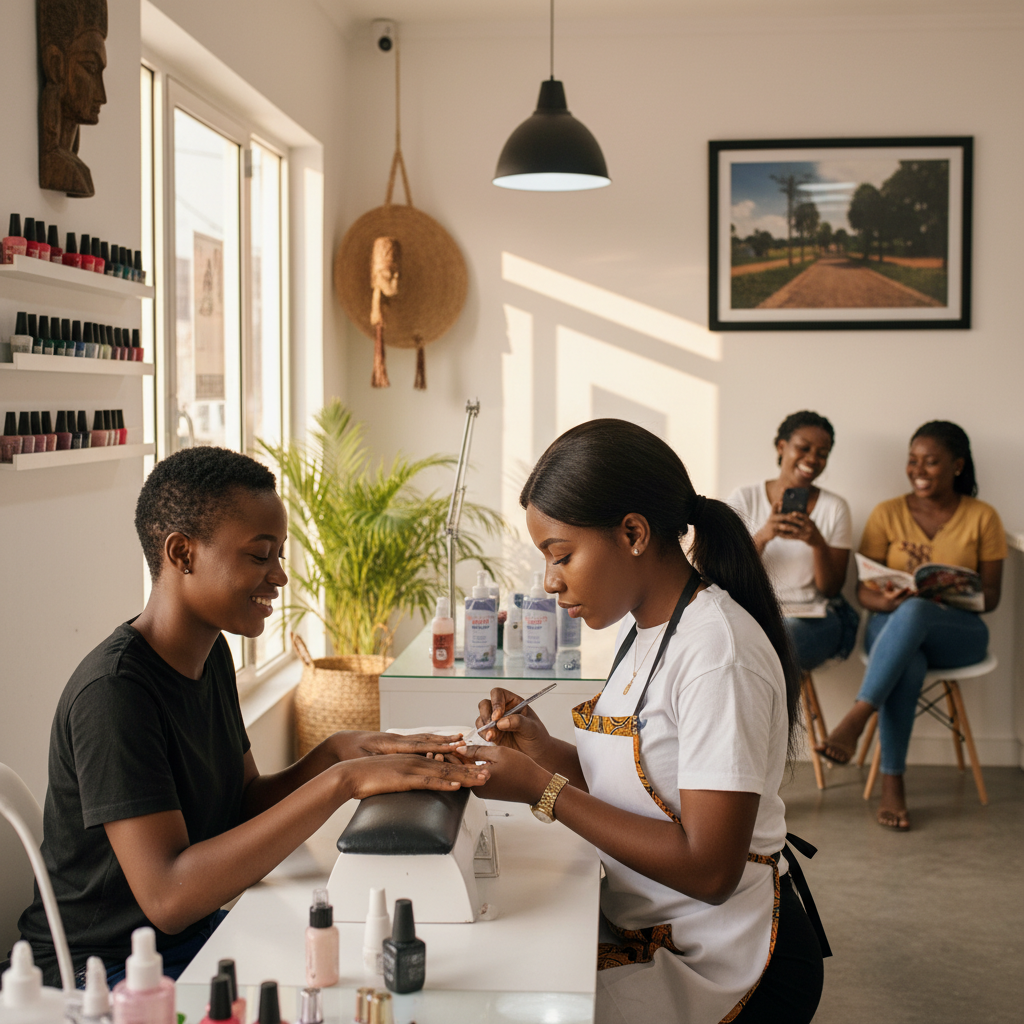
Before you buy a single bottle of polish, invest in proper training. Self-taught skills can only take you so far; professional training from a reputable beauty school in Nigeria will teach you crucial techniques, product knowledge, and, most importantly, hygiene and sanitation standards. This isn't just about creating beautiful nails; it's about protecting your clients' health.
Here’s why certification is vital:
Look for schools in your city that offer comprehensive courses covering everything from basic manicures to advanced acrylic sculpting. The investment, typically between ₦80,000 and ₦250,000, will pay for itself many times over.
You need a clear financial plan to avoid running out of cash before you even get your first client. Your startup costs will vary depending on your business model (mobile vs. salon), but every new nail tech will need a basic starter kit.
Here's a sample budget for a mobile nail tech in 2026:
Total Estimated Startup Cost: ₦300,000 - ₦470,000
Funding can come from personal savings (your ajo or esusu contributions are perfect for this), a loan from family, or microfinance banks. Start lean and reinvest your profits into better equipment and more supplies as you grow.
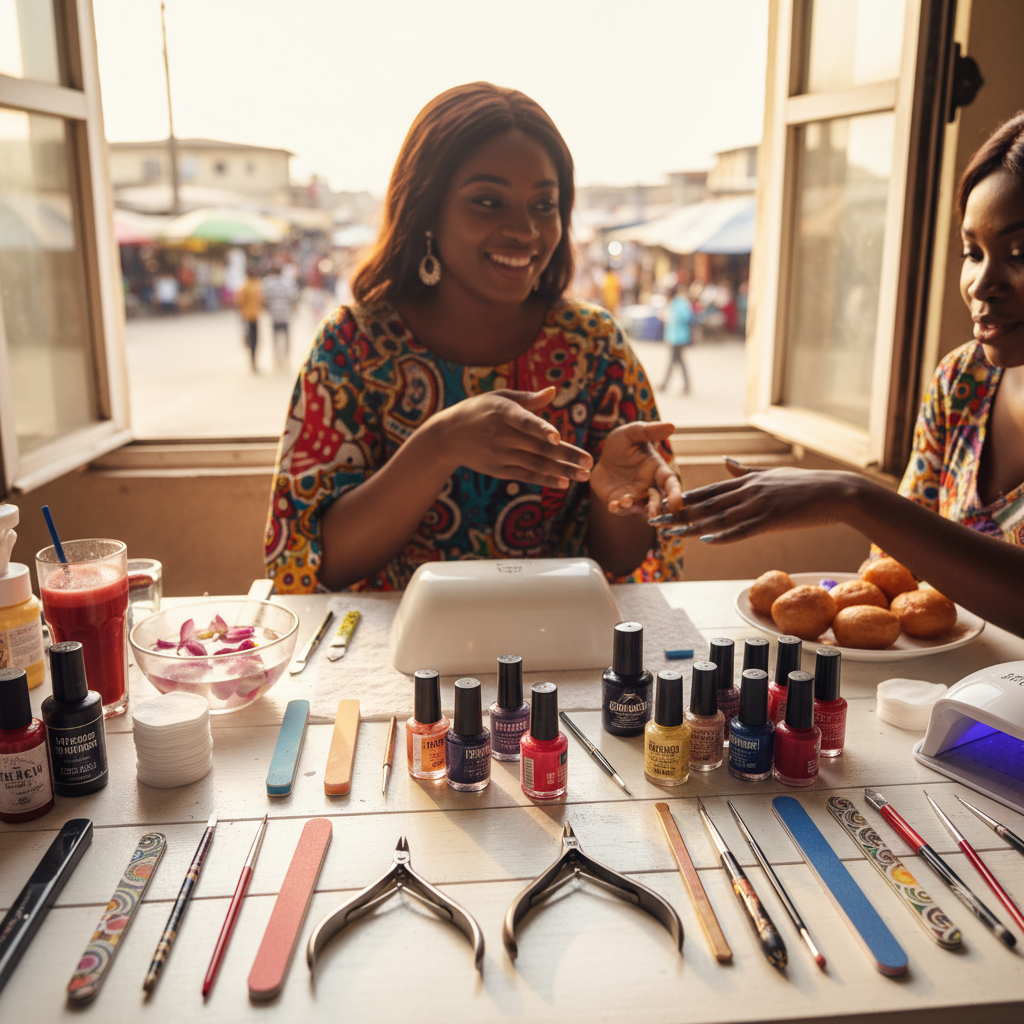
Having the skills is one thing; getting people to pay you for them is another. This is where smart marketing comes in, and your number one tool should be your TrustAm profile. Think of it as your professional online storefront, designed to bring clients to you.
Here’s how to get your first clients:
One of the biggest headaches for service providers in Nigeria is payment. You deal with clients who haggle prices after the service is done, those who promise to transfer money and "forget," or no-shows who waste your time. This is where TrustAm's escrow system becomes a game-changer for your business's financial health.
Here’s the simple, stress-free process:
This system eliminates 99% of payment issues. For more tips on managing your business finances, see this guide on financial management for service providers. Using escrow not only protects your income but also signals to clients that you are a serious, professional business owner.
Need a logo or professional photos for your new nail business? Browse verified providers on TrustAm.
Create a Free Account →Once you have a steady flow of clients and are getting consistent 5-star reviews on TrustAm, it's time to think about growth. Scaling doesn't always mean opening a physical salon right away.
Here are some ways to scale your business:
Stop chasing payments and start building your client base. List your nail services on TrustAm to get discovered by thousands of users, build trust with verified reviews, and get paid securely for every job with our escrow system.
Create Your Free Provider Account →Join thousands of Nigerian service pros growing their business on TrustAm.
To start a mobile or home-based nail technician business in Nigeria in 2026, you should budget between ₦300,000 and ₦500,000. This amount covers professional training, a comprehensive starter kit with quality tools and products, and initial marketing expenses to get your first clients.
While there isn't a specific government-issued "nail technician license" in Nigeria like in some other countries, getting a certification from a reputable beauty school is the industry standard. This certification demonstrates your competence and commitment to hygiene, which is crucial for building client trust.
The best way to get your first clients is to create a professional service provider profile on the TrustAm marketplace. Upload high-quality photos of your work, list your services with clear prices, and ask your initial clients (even friends and family) to book and review you through the app to build authentic, payment-backed reviews.
Yes, being a mobile nail technician is a very profitable business model in Nigeria. It allows you to start with very low overhead costs since you avoid expensive salon rent and utility bills. This means a larger portion of your earnings goes directly into your pocket as profit.
The most effective way to protect yourself from payment defaults is to use an escrow service. By having clients book and pay for your services through the TrustAm app, the payment is held securely until you have completed the job. This guarantees you will be paid for your work 100% of the time.
Verified providers. Payment held safe until the job is done. Reviews only from real, paid bookings.
AI-powered budgeting, instant P2P payments, and escrow protection. Built for Nigeria.
Or get a download link sent to your phone
Disclosure: This article is published by TrustAm. Some links may direct to our own marketplace and products.
Find trusted providers related to this article.
Try these free calculators and tools related to this article.


