
Moving to Warri? Here's What You Need to Budget For in 2026
Moving to Warri? Here's What You Need to Budget For in 2026
So, you're thinking of moving to Warri? Greet yourself! The famous 'Oil City' has a unique energy you won't find anywhere else in Nigeria. It’s a city of hustle, vibrant culture, and the legendary Waffi pidgin. But beyond the vibes, relocating requires a solid financial plan, especially with Nigeria's economic climate in 2026. This guide breaks down the real cost of living in Warri, so you can move smart and avoid money-related 'stories that touch'.
Overview & Key Takeaways
This article provides a detailed breakdown of the essential costs you need to budget for when moving to Warri in 2026. We cover everything from housing and transportation to food, utilities, and lifestyle expenses, giving you a realistic financial picture of life in the Oil City.
- Housing is your biggest cost: Expect to pay anywhere from ₦350,000 for a decent self-contain in a mid-range area to over ₦1.5 million for a 2-bedroom flat in GRA.
- Factor in generator costs: Unreliable power from BEDC means your generator is a lifeline. Budget at least ₦20,000 - ₦50,000 monthly for fuel and maintenance.
- Local transport is cheap, but car ownership isn't: While Keke rides are affordable (₦100-₦300), running a car will significantly increase your monthly expenses due to fuel and repair costs.
- Eat local to save money: Your food budget will stretch much further if you shop at local markets like Igbudu Market instead of relying on supermarkets and restaurants.
- Use TrustAm to avoid scams: Securely find and pay for movers, electricians, plumbers, and other essential service providers in Warri using TrustAm's escrow protection and verified reviews.
Moving Companies in Warri
Book with escrow protection. If a job isn't done right, open a dispute and our team steps in.

BIBI PERFUMES & LOGISTICS
Service Provider · Warri
- Payment protected by escrow
- Money released only after you confirm the job

JB Logistics Services
Service Provider · Warri
- Payment protected by escrow
- Money released only after you confirm the job

Wellness Logistics Warri
Service Provider · Warri
- Payment protected by escrow
- Money released only after you confirm the job

Mikel Akhabue
Service Provider · Warri
- Payment protected by escrow
- Money released only after you confirm the job

Ewomazino Joy
Service Provider · Warri
- Payment protected by escrow
- Money released only after you confirm the job

Dickson Kingsley
Service Provider · Warri
- Payment protected by escrow
- Money released only after you confirm the job
The Real Cost of Housing in Warri
Your accommodation will be the largest chunk of your initial and ongoing expenses. Rent in Warri varies drastically depending on the neighbourhood's security, infrastructure, and proximity to commercial hubs. Unlike Lagos, you can still find relatively affordable housing, but you need to know where to look.
Here’s a breakdown of annual rent estimates for 2026:
- High-End Areas (GRA, Ogunu, parts of Edjeba): These areas are generally more secure with better roads. Expect to pay between ₦800,000 – ₦2,500,000+ per year for a modern 2 or 3-bedroom flat.
- Mid-Range Areas (Effurun, Airport Road, Okumagba Avenue): These are popular, bustling areas with a good mix of residential and commercial properties. A decent self-contained apartment can range from ₦300,000 – ₦500,000, while a 2-bedroom flat will cost between ₦450,000 – ₦800,000 annually.
- Budget-Friendly Areas (Udu, Okuokoko, Ekpan): If you're on a tighter budget, these areas offer more affordable options. You can find self-contained apartments for ₦150,000 – ₦300,000 per year.
Remember, the sticker price isn't the final cost. You also need to budget for:
- Agent & Agreement Fees: Typically 10% of the rent for each.
- Caution Deposit: Usually equivalent to one year's rent, refundable at the end of your tenancy.
- Initial Repairs: Landlords don't always fix everything. You'll likely need to handle some minor plumbing, electrical work, or painting yourself. This is where moving gets tricky, as finding a trustworthy artisan in a new city is a gamble. Instead of relying on guesswork, the TrustAm marketplace is a lifesaver. You can find verified providers, read reviews from previous clients, and pay them through an escrow system that only releases your money when you confirm the job is done to your satisfaction.
Find Verified Providers on TrustAm
Looking for trusted movers and artisans to get your new place ready in Warri? Browse verified providers with payment-backed reviews and escrow protection.
Create a Free Account →
Getting Around: Your Transportation Budget
How you move around Warri will have a major impact on your monthly budget. The city is well-connected by a network of tricycles (Keke) and minibuses, which are the most common and affordable ways to commute.
- Public Transport: A typical Keke drop within a neighbourhood costs between ₦100 - ₦200. Longer trips across town might cost up to ₦400. If you rely solely on public transport, you can budget around ₦15,000 - ₦25,000 per month.
- Ride-Hailing: Services like Bolt are available in Warri, but they are less dense than in Lagos or Abuja. A trip that costs ₦200 by Keke might be ₦1,500 - ₦2,500 on a ride-hailing app. It's a good option for comfort and safety, but not for daily commuting.
- Car Ownership: This is where costs can spiral. With fuel prices remaining high, filling a tank can easily cost ₦30,000 - ₦40,000. Then there's maintenance. Bad roads mean more frequent trips to the mechanic. Finding a reliable mechanic who won't charge you for problems that don't exist is a challenge every car owner faces. With the TrustAm marketplace, you can find verified mechanics in Warri, see what other car owners have said about their service, and pay securely for repairs, ensuring you get exactly what you paid for.
"Wetin You Chop?": Budgeting for Food
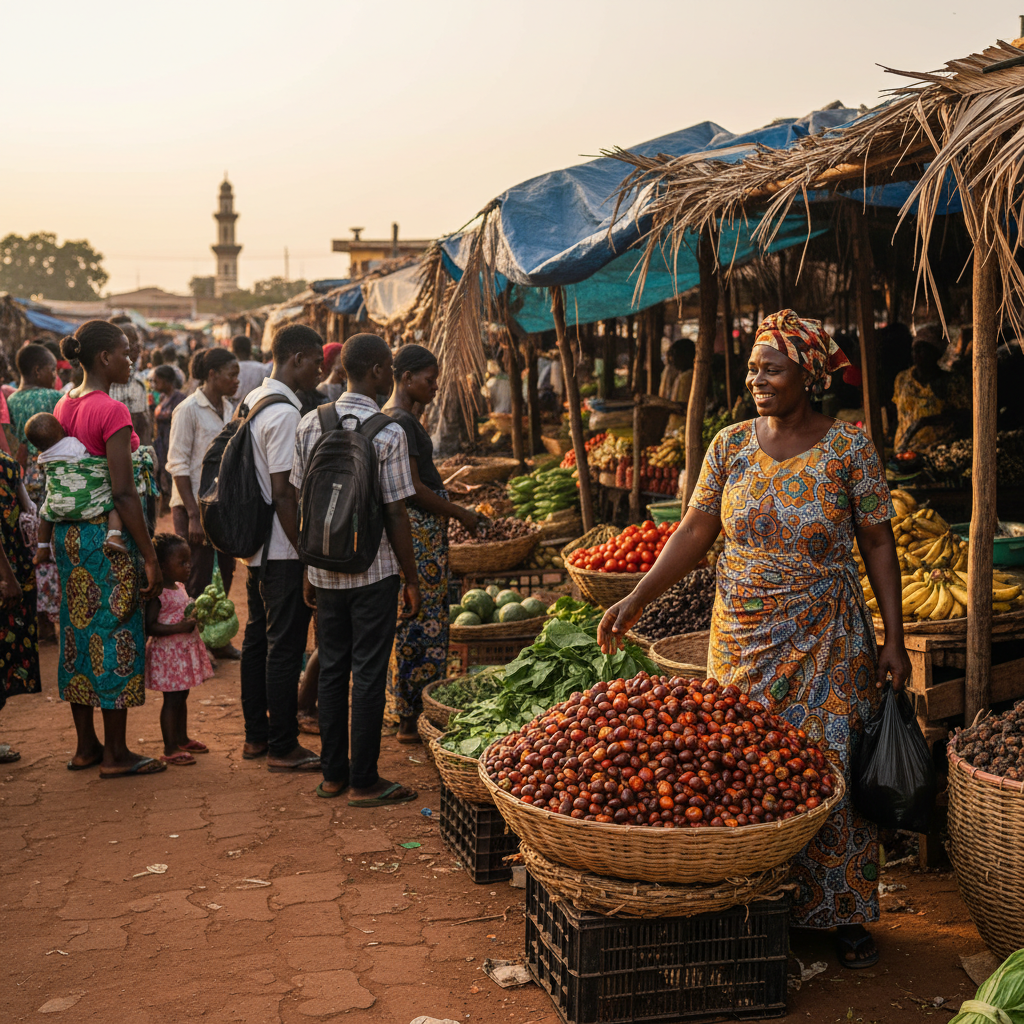
Food is a flexible expense, but it can quickly drain your wallet if you're not careful. Warri is blessed with fantastic local cuisine, and tapping into it is the key to eating well on a budget.
Your monthly food budget could look like this:
- Shopping at Local Markets: This is your best bet for savings. Places like Igbudu Market and Effurun Market offer fresh produce, seafood, and local staples at great prices. A single person can realistically budget ₦40,000 - ₦60,000 a month by cooking at home.
- Supermarkets: For packaged goods and imported items, you'll find places like Shoprite at the Delta Mall. Prices are considerably higher, so these should be for specific items, not your main grocery run.
- Eating Out: Warri has options for every pocket. A satisfying plate of banga soup and starch at a local joint might cost ₦1,500 - ₦3,000. A meal at a mid-range restaurant or lounge could be ₦6,000 - ₦12,000 per person. When you're planning a housewarming and need to feed your new friends, you can find and book affordable caterers and small chops vendors directly on TrustAm. The escrow payment protects your funds until the food is delivered.
Utilities & Other Monthly Bills
These are the recurring costs that you must account for every month. The most significant variable here is power, or the lack thereof.
Here’s a list of essential utilities to budget for:
- Electricity (BEDC): Power supply is notoriously epileptic. Even with a prepaid meter, your bill could be between ₦8,000 - ₦20,000, but you'll barely get enough light to justify it.
- Generator Fuel & Maintenance: This is a non-negotiable expense. Depending on your generator's size and how often you run it, budget anywhere from ₦20,000 to ₦50,000+ monthly for fuel. And when your gen inevitably needs a fix, don't just call a random number on a pole. Use TrustAm to find a trusted generator repair technician in Warri to get you back up and running quickly and securely.
- Cooking Gas: A 12.5kg cylinder refill will likely cost between ₦15,000 - ₦18,000 in 2026 and could last 6-10 weeks depending on your usage.
- Internet & Data: A reliable monthly data plan from providers like MTN or Airtel will cost between ₦10,000 - ₦25,000 for decent speeds and volume.
- Waste Disposal & Security: Most neighbourhoods have private waste management (PSP) services for about ₦2,000 - ₦4,000 a month. Estate or street security dues can add another ₦3,000 - ₦10,000.
Sample Monthly Budget for a Single Person in Warri (2026)
To put it all together, here's a sample monthly budget for a young professional living in a mid-range area like Effurun. This is just an estimate to give you a clearer picture.
This budget doesn't include savings, investments, or major one-off expenses. To manage all these moving parts, the TrustAm app's AI budgeting tool is invaluable. It helps you track your spending across categories, see where your money is going, and stick to your new Warri budget without stress.
Take Control of Your Finances with TrustAm
Moving to a new city like Warri comes with financial uncertainty. TrustAm's AI budgeting tool helps you track every naira, while our marketplace connects you with verified movers, artisans, and local professionals. Take control of your move and your money.
Create Your Free Account →Join 50,000+ Nigerians already using TrustAm to manage their money smarter.
Frequently Asked Questions
Is Warri cheaper to live in than Lagos or Abuja?
Yes, Warri is significantly cheaper than Lagos or Abuja. The biggest savings are in housing, where rent can be 50-70% lower for a comparable property. Local transportation and food are also more affordable, allowing for a lower overall cost of living.
What is a good monthly salary to live comfortably in Warri?
A single person could live a reasonably comfortable life in Warri on a monthly salary of ₦250,000 to ₦400,000, assuming they live in a mid-range area and manage their expenses well. For a small family, a household income of ₦500,000 and above would provide more comfort and financial security.
How can I find a reliable artisan like a plumber or electrician in Warri?
The safest and most reliable way to find a trustworthy artisan in a new city like Warri is through a verified platform like the TrustAm marketplace. You can browse profiles of plumbers, electricians, painters, and more, read reviews from actual customers, and pay using an escrow system that protects your money until the job is completed successfully.
What are the safest areas to live in Warri?
Generally, areas like the Government Reserved Area (GRA), Ogunu, and parts of Edjeba are considered the safest and most secure residential areas in Warri. They typically have better infrastructure, private security arrangements, and a more serene environment, which is reflected in their higher rental prices.
Book a verified Movers in Warri
Verified providers. Payment held safe until the job is done. Reviews only from real, paid bookings.
Download TrustAm
AI-powered budgeting, instant P2P payments, and escrow protection. Built for Nigeria.
Or get a download link sent to your phone
Chisom Anen
Founder and CEO of TrustAm. Building Nigeria's reputation marketplace for verified service providers. Reviews unlock only after real payments.
Disclosure: This article is published by TrustAm. Some links may direct to our own marketplace and products.
Sources & References
- National Bureau of Statistics— nigerianstat.gov.ng
- World Bank Nigeria— worldbank.org
- BudgIT — Fiscal Data— budgit.org
Related Services
Find trusted providers related to this article.
Related Articles



Free Tools You Might Find Useful
Try these free calculators and tools related to this article.
Moving Costs
Estimate moving and relocation costs across Nigerian cities.
Use free tool →Moving Calculator
Estimate moving and relocation costs within and between Nigerian cities.
Use free tool →Lagos Budget
Plan your monthly budget for living in Lagos with realistic cost breakdowns.
Use free tool →Abuja Budget
Plan your monthly budget for living in Abuja with realistic cost breakdowns.
Use free tool →