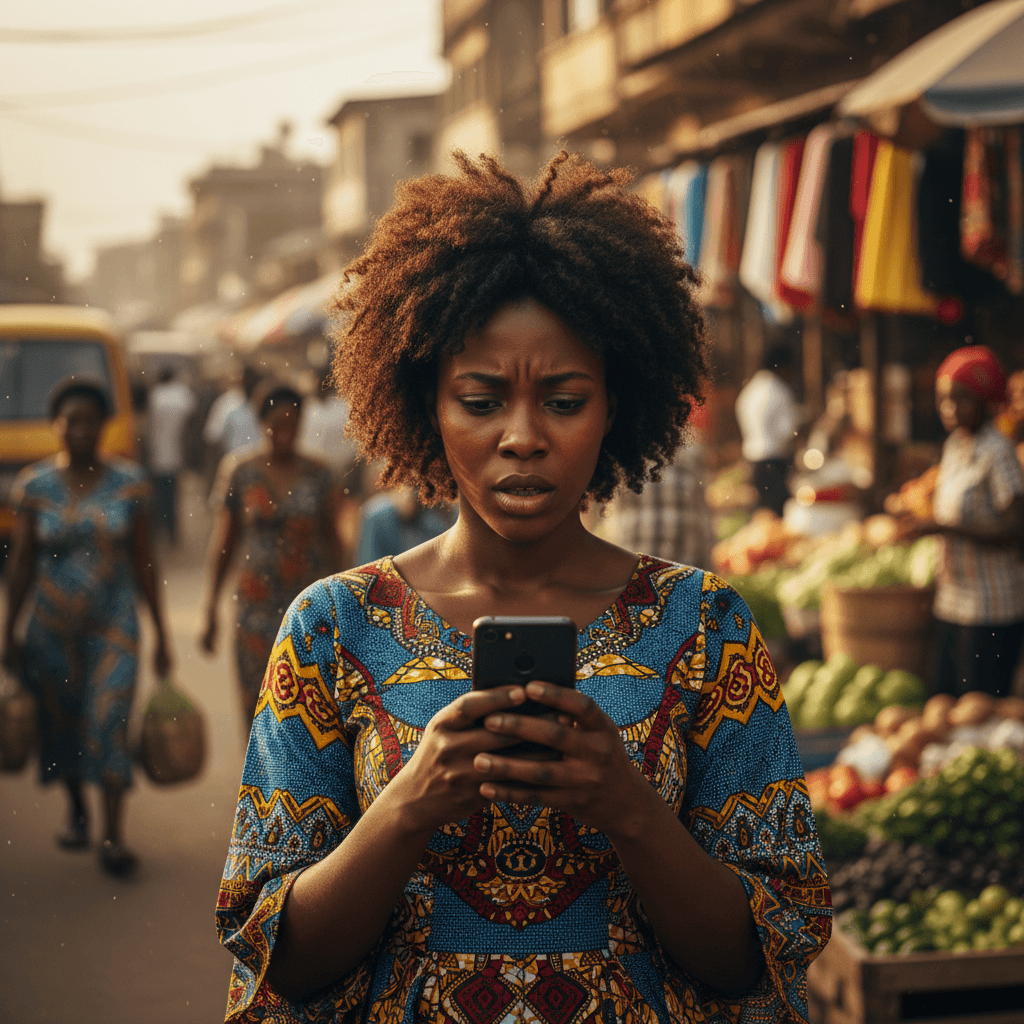
CBN's 1 Phone, 1 App Rule: What It Means for 50 Million Nigerians
On March 12, 2026, the Central Bank of Nigeria dropped a regulatory bombshell that will reshape how every Nigerian interacts with their money. Starting July 1, 2026, every banking and fintech app in Nigeria must be locked to a single device per user.
The directive, signed by Musa Jimoh, Director of Payments System Policy at the CBN, gives banks and fintech companies just 109 days to implement mandatory device binding across their platforms. For the estimated 30 to 50 million Nigerians who rely on apps like OPay, Moniepoint, Kuda, PalmPay, and Paga for daily transactions, this changes everything.
Other providers in Port Harcourt
Book with escrow protection. If a job isn't done right, open a dispute and our team steps in.

Gulsly
Service Provider · Port Harcourt
- Payment protected by escrow
- Money released only after you confirm the job

Brightsmith
Service Provider · Port Harcourt
- Payment protected by escrow
- Money released only after you confirm the job
What Exactly Is Changing?
The new CBN directive introduces three major changes:
1. One Device Per Account
Your banking or fintech app will only work on one phone at a time. If you currently use your OPay on both your personal phone and a backup device, that ends on July 1. Each account gets linked to one registered device through mandatory device binding — tracking your IMEI number, device ID, and MAC address.
2. Strict Limits When You Switch Phones
Lost your phone? Upgraded to a new one? Here’s what happens:
- Re-authentication required — BVN validation, biometric checks, and one-time passwords
- 24-hour waiting period before full access is restored
- ₦20,000 transaction cap on both incoming and outgoing transfers during the first 24 hours
That ₦20,000 limit applies whether you’re sending money or receiving it. So if your phone gets stolen on a Saturday morning and you need to pay rent by Monday, you’re in trouble.
3. BVN Phone Number: One Change, Forever
Starting even earlier — May 1, 2026 — Nigerians can change the phone number linked to their Bank Verification Number (BVN) only once in their entire lifetime.
This is arguably the most consequential change. Consider this scenario: You lose your phone and your SIM card. You get a new number and use your one-time BVN update. Two years later, your phone is stolen again. You’re now permanently stuck with whatever number is on file, with no ability to update it ever again.
Why Is the CBN Doing This?
The numbers tell the story. Digital payment fraud cost Nigeria ₦25.85 billion in 2025 alone, down from ₦52.26 billion in 2024. Between January 2023 and April 2025, a staggering ₦320 billion disappeared to financial fraud. Lagos accounts for 63.43% of all fraud activity.
Social engineering and SIM-swap attacks are the primary weapons. Fraudsters convince victims to share OTPs, or they compromise phone numbers through insider abuse at telecom companies. The CBN’s logic is straightforward: if your banking app is physically bound to one device, stealing your credentials alone won’t be enough to drain your account.
The NIBSS data backs this up — social engineering schemes accounted for 62,901 fraud cases in 2023, with SIM-related compromises playing a significant role in account takeovers.
Who Gets Hit the Hardest?
This policy doesn’t affect everyone equally. Three groups face disproportionate impact:
Phone Theft Victims
Nigeria recorded 25.35 million stolen phones between May 2023 and April 2024, with less than 12% recovery rates. That’s 25 million people who would face immediate banking lockout under the new rules, followed by a 24-hour period where they can barely transact.
Shared-Device Households
In many low-income Nigerian households, family members share a single smartphone. Under the new rules, only one person per device gets banking app access. The rest are effectively locked out of digital finance, pushed back to USSD codes or physical bank branches.
Rural Users and the Elderly
Re-authentication requires reliable network access, familiarity with biometric systems, and access to device repair or replacement. Rural Nigerians with limited connectivity and elderly users unfamiliar with these processes will struggle most.
How Does Nigeria Compare to Other Countries?
The UK’s Financial Conduct Authority takes a different approach, emphasizing layered security — two-factor authentication, behavioral analytics, and transaction monitoring — over device restrictions. Users can access their accounts from multiple devices while still being protected.
Nigeria chose restriction over flexibility, prioritizing fraud reduction over user convenience. Whether that trade-off makes sense depends on how well the implementation handles edge cases like phone theft, device repairs, and shared households.
What You Should Do Right Now
With the July 1 deadline approaching, here’s how to prepare:
- Decide on your primary phone. Pick the device you want all your banking apps linked to. This should be your most reliable, best-protected phone.
- Don’t change your BVN phone number casually. After May 1, you only get one lifetime change. Save it for a genuine emergency.
- Back up your phone properly. Set up Find My Device (Android) or Find My iPhone. Enable remote wipe. This becomes critical when losing your phone means losing banking access.
- Keep your BVN phone number active. Don’t let your SIM expire or get recycled by your network provider. Top up regularly, even if you don’t use that number for calls.
- Know your bank’s re-authentication process. Before July 1, familiarize yourself with how your bank and fintech apps handle device switches. Some will be smoother than others.
- Consider a PIN and biometric lock on your phone. With your phone now being the single key to your finances, physical security matters more than ever.
How TrustAm Is Preparing
At TrustAm, we’ve been building with Nigerian realities in mind from day one. Our platform already implements device fingerprinting, secure session management, and biometric authentication — the exact infrastructure the CBN now requires industry-wide.
We’re taking additional steps to make the transition painless:
- Seamless device migration — When you switch phones, our re-authentication is fast, clear, and doesn’t require a bank branch visit
- Transaction PIN + biometric — Every payment already requires dual verification, matching the CBN’s intent without the friction
- Offline-first architecture — If network issues slow down re-authentication, your queued transactions won’t be lost
- AI-powered fraud detection — We monitor for suspicious activity so device binding is just one layer of many protecting your money
The CBN’s goal of reducing fraud is the right one. The question is execution. With 109 days and 50 million users affected, the next few months will test Nigeria’s fintech infrastructure like never before.
Stay informed. Stay prepared. And whatever you do — don’t lose your phone.
Sources & References
- CBN Tiered KYC Framework — CBN guidelines on know-your-customer tiers and transaction limits
- Nigeria Data Protection Act 2023 — Data protection requirements for financial services in Nigeria
- NIBSS — Nigeria Inter-Bank Settlement System — Official clearing and settlement infrastructure documentation
Sources verified as of March 2026. For the most current data, visit the linked institutions directly. TrustAm is a financial services company — some links in this article may direct to our products or services.
Sources
- National Bureau of Statistics — NBS — inflation data, CPI, GDP figures, and employment statistics
- National Bureau of Statistics — CPI Reports — NBS — Consumer Price Index and inflation tracking
- World Bank Nigeria — World Bank — Nigeria economic overview, development indicators, and poverty data
- BudgIT — Fiscal Data — BudgIT — Nigeria budget analysis, fiscal transparency, and public finance data
- NITDA — National Information Technology Development Agency — digital economy policies and tech regulations
Book a verified Print Services in Port Harcourt
Verified providers. Payment held safe until the job is done. Reviews only from real, paid bookings.
Download TrustAm
AI-powered budgeting, instant P2P payments, and escrow protection. Built for Nigeria.
Or get a download link sent to your phone
Chisom Anen
Founder and CEO of TrustAm. Building Nigeria's reputation marketplace for verified service providers. Reviews unlock only after real payments.
Disclosure: This article is published by TrustAm. Some links may direct to our own marketplace and products.
Sources & References
- CBN Tiered KYC Framework— cbn.gov.ng
- Nigeria Data Protection Act 2023— ndpc.gov.ng
- NIBSS — Nigeria Inter-Bank Settlement System— nibss-plc.com.ng
- National Bureau of Statistics— nigerianstat.gov.ng
- World Bank Nigeria— worldbank.org
- BudgIT — Fiscal Data— budgit.org
- NITDA— nitda.gov.ng
Related Services
Find trusted providers related to this article.
Related Articles



Free Tools You Might Find Useful
Try these free calculators and tools related to this article.
PH Budget
Plan your monthly budget for living in Port Harcourt, Nigeria.
Use free tool →Lagos Budget
Plan your monthly budget for living in Lagos with realistic cost breakdowns.
Use free tool →Abuja Budget
Plan your monthly budget for living in Abuja with realistic cost breakdowns.
Use free tool →PH Budget
Plan your monthly budget for living in Port Harcourt.
Use free tool →