
Naira vs Dollar in April 2026: What It Means for Your Wallet
Naira vs Dollar in April 2026: What It Means for Your Wallet
It feels like just yesterday when ₦1,000 could get you a decent lunch in Lagos. Now, that same note barely covers your keke fare to the office. The constant dance between the Naira and the US Dollar isn't just news for economists; it's a daily reality that dictates the price of bread, fuel, and even your Netflix subscription. As we navigate April 2026, the exchange rate continues to be the biggest conversation in Nigeria, directly impacting your personal finances, your business, and your future plans.
Overview & Key Takeaways
This article breaks down why the Naira-to-Dollar exchange rate is so volatile in 2026 and what it practically means for your daily expenses. You'll learn actionable strategies to protect your money, from smart budgeting to leveraging local services, and see how TrustAm can be your financial shield in these uncertain times.
- The Naira is expected to trade between ₦1,900 - ₦2,200 to $1 in the parallel market due to inflation (~28%), fluctuating oil prices, and foreign reserve pressures.
- Your direct costs for fuel, food, imported gadgets, and online subscriptions have likely increased by 150% or more compared to a few years ago.
- For business owners, finding reliable local suppliers and clients through a platform like the TrustAm marketplace is crucial to manage rising operational costs.
- Protect your finances by creating an inflation-aware budget with a tool like TrustAm's AI budget planner and prioritizing spending on local goods and services.
- Consider saving in a domiciliary account or investing in Naira-denominated assets that have the potential to outpace inflation.
Understanding the Naira-Dollar Exchange Rate in 2026
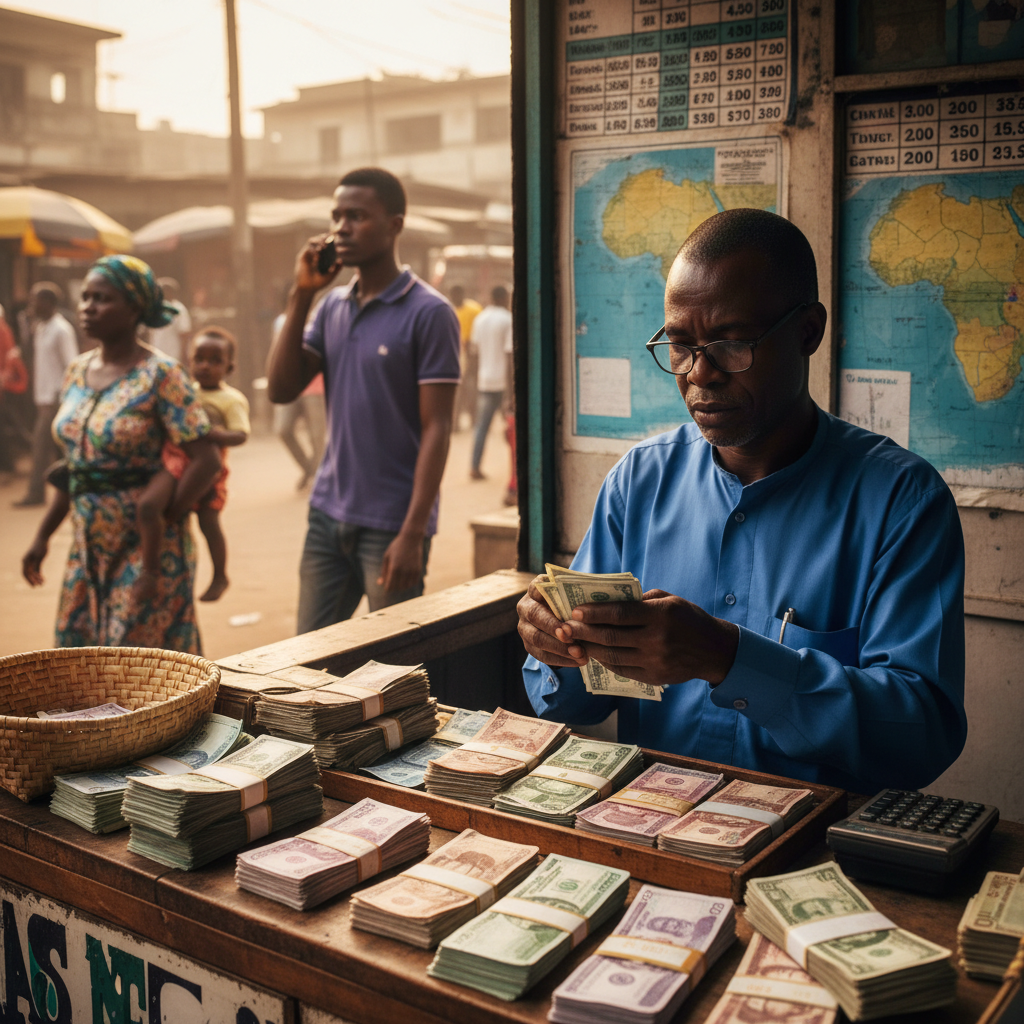
The exchange rate is the price of one currency in terms of another, and in Nigeria, the Naira-to-Dollar rate is the undisputed king of economic indicators. In April 2026, the gap between the official CBN rate and the parallel (or 'black market') rate remains significant. While the official window might quote around ₦1,600 to $1, the reality for most individuals and small businesses is the parallel market rate, which hovers around the ₦2,000 mark. This volatility isn't random; it's driven by several core factors.
- Crude Oil Prices: Nigeria's economy is heavily dependent on crude oil exports, which are priced in dollars. When global oil prices are unstable or production levels drop, our inflow of dollars shrinks, putting pressure on the Naira.
- Inflation: With inflation stubbornly high (currently around 28%), the purchasing power of the Naira is constantly eroding. This means you need more Naira to buy the same amount of goods and services, including foreign currency.
- Foreign Reserves: The CBN uses our foreign reserves (mostly held in USD) to defend the Naira's value. When these reserves are low, the CBN has less firepower to manage the exchange rate, leading to depreciation.
- Import Dependency: From petrol and wheat to iPhones and machinery parts, Nigeria imports a vast amount of goods. Since these items are paid for in dollars, high demand for imports translates to high demand for dollars, weakening the Naira.
How the Exchange Rate Directly Impacts Your Daily Costs
The Naira vs Dollar conversation isn't just an abstract economic problem; it's the reason your budget feels stretched to its breaking point. A weaker Naira makes anything imported or with an imported component more expensive. Let's look at the real-world impact.
Here’s a quick comparison of how prices have changed due to the exchange rate shift:
| Item / Service | Approx. Cost in 2023 (at ₦750/$1) | Est. Cost in April 2026 (at ₦2,000/$1) |
|---|---|---|
| Standard Netflix Subscription (Monthly) | ₦4,400 | ~₦11,700 |
| Tokunbo Toyota Corolla (2010 model) | ₦5,000,000 | ~₦13,300,000 |
| Cost of a new iPhone | ₦950,000 | ~₦2,500,000 |
| Fixing a cracked phone screen (imported part) | ₦25,000 | ~₦66,000 |
As you can see, the impact is massive. Here's a further breakdown:
- Transport & Fuel: Since Nigeria imports refined petroleum products, a weaker Naira leads directly to higher fuel prices at the pump. This has a knock-on effect on the cost of everything, from your Bolt ride in Abuja to the price of tomatoes transported from the north. Check out our guide on 15 Ways to Save on Fuel and Transport Costs in Nigeria for practical tips.
- Food & Groceries: Staple foods like bread (made from imported wheat) and rice have seen significant price hikes. Even locally grown food is affected because transportation and fertilizer costs (which have foreign components) have gone up.
- Technology & Subscriptions: Your gadgets—laptops, phones, and accessories—are priced based on the dollar. So are your international subscriptions like Spotify, Apple Music, and cloud storage. The price in Naira can change overnight.
- Rent & Real Estate: In major cities like Lagos and Abuja, many landlords, especially for premium properties, mentally price their rent in dollars. As the Naira weakens, they increase Naira rents to maintain the dollar value of their investment.
For Service Providers: Navigating the FX Crisis
If you're a small business owner, artisan, or freelancer in Nigeria, you're feeling the squeeze from two sides. Your operational costs are rising due to imported materials, and your customers have less disposable income. A fashion designer needs imported fabrics, a mechanic needs imported spare parts, and a baker needs imported flour and sugar. The challenge is pricing your services competitively without running at a loss.
This is where a platform like TrustAm becomes essential for survival and growth. Instead of relying on volatile foreign clients or struggling with rising marketing costs, you can tap into a ready market of local customers.
- Get Discovered Locally: By listing your services on the TrustAm marketplace, you become visible to thousands of Nigerians in your city looking for verified professionals. Whether you're a plumber in Port Harcourt or a makeup artist in Ikeja, TrustAm connects you with clients who need you right now.
- Price with Confidence: You can set your prices in Naira and adjust them as needed based on your costs, without the complexity of international payment gateways.
- Build Trust with Escrow: In a tough economy, clients are wary of scams. TrustAm's escrow protection holds the client's payment until you've delivered the service, giving them the confidence to book you. This security means you get paid on time, every time.
Find Verified Providers on TrustAm
Looking for trusted professionals whose prices are fair and transparent? Browse verified providers with payment-backed reviews and escrow protection to avoid getting scammed.

5 Actionable Strategies to Protect Your Money
Feeling helpless is not an option. While you can't control the CBN's monetary policy, you can control your personal financial strategy. Here are five concrete steps you can take to shield your wallet from the Naira's slide.
- Create an Inflation-Aware Budget: A static budget from last year is useless now. You need a dynamic view of your money. This is where TrustAm's AI budget planner shines. It connects to your bank accounts, tracks your spending in real-time, and shows you exactly which categories (like 'transport' or 'groceries') are being hit hardest by inflation, so you can adjust intelligently.
- Shift Spending to Local Services: Instead of ordering that expensive dress from an international site, find a talented local tailor on the TrustAm marketplace. Instead of buying a new imported generator, find a verified generator repair technician near you. By patronizing local service providers, you not only save money but also support the local economy. TrustAm's escrow protection ensures you get value for your money without fear of being duped.
- Open a Domiciliary Account: If you earn in foreign currency or want to save in a more stable currency, opening a domiciliary account with a Nigerian bank is a wise move. This allows you to hold funds in US Dollars, Pounds, or Euros, protecting that portion of your wealth from Naira devaluation. With TrustAm, you can link all your accounts—both Naira and domiciliary—to see your complete financial picture in one app.
- Dollar-Cost Average (DCA): Instead of trying to 'time the market' and converting a large sum of Naira to dollars when you think the rate is good, consider dollar-cost averaging. This means buying a smaller, fixed amount of dollars at regular intervals (e.g., $50 every month). This strategy smooths out the volatility and reduces the risk of buying at a peak.
- Invest to Outpace Inflation: Leaving all your money in a standard savings account is like walking backwards on an escalator; inflation will eat away at its value. Explore Naira-denominated investments with returns that aim to beat the ~28% inflation rate. These could include high-yield savings products from fintechs, Nigerian Treasury Bills (T-Bills), or carefully selected stocks on the Nigerian Stock Exchange.
Take Control of Your Finances with TrustAm
In a volatile economy, clarity is power. Use TrustAm's AI budgeting to track where the Naira-Dollar rate impacts your spending, find affordable local services on our marketplace to cut costs, and manage all your bank accounts in one secure place. Stop guessing, start controlling.
Create Your Free Account →Join 50,000+ Nigerians already using TrustAm to manage their money smarter.
Frequently Asked Questions
Why is the Naira falling against the dollar in 2026?
The Naira is depreciating against the US Dollar in 2026 primarily due to a combination of high inflation (around 28%), strong demand for dollars to pay for imports, fluctuating global oil prices affecting Nigeria's dollar earnings, and pressure on the country's foreign exchange reserves. This imbalance between the high demand for and limited supply of dollars pushes its value up relative to the Naira.
How can I protect my savings from Naira devaluation?
To protect your savings, focus on strategies that preserve purchasing power. Consider holding a portion of your savings in a more stable currency by opening a domiciliary account. You can also invest in Naira-denominated assets like Treasury Bills or mutual funds that offer returns higher than the inflation rate. Additionally, using a smart budgeting app like TrustAm helps you cut unnecessary costs and allocate funds more effectively.
Is it a good time to buy dollars in Nigeria?
Deciding when to buy dollars is a personal financial choice that depends on your goals and risk tolerance. Trying to predict the market is difficult and risky. A more prudent strategy might be dollar-cost averaging, where you buy small amounts of dollars consistently over time. This approach helps to average out your purchase price and reduces the risk of buying a large amount at an unfavorable rate.
What is the difference between the official and black market exchange rate?
The official exchange rate is the rate set by the Central Bank of Nigeria (CBN) and used for official transactions, like by large corporations and for government business. The black market (or parallel market) rate is determined by supply and demand among individuals and smaller businesses on the open market. The black market rate is typically higher because dollar demand there far outstrips the supply available through official channels.
Find verified service providers
Verified providers. Payment held safe until the job is done. Reviews only from real, paid bookings.
Download TrustAm
AI-powered budgeting, instant P2P payments, and escrow protection. Built for Nigeria.
Or get a download link sent to your phone
Chisom Anen
Founder and CEO of TrustAm. Building Nigeria's reputation marketplace for verified service providers. Reviews unlock only after real payments.
Disclaimer: This article is for informational purposes only and does not constitute financial advice. Always consult a qualified financial professional before making major financial decisions.
Disclosure: This article is published by TrustAm, a financial technology company. Some links in this article may direct to our own products.
Sources & References
- National Bureau of Statistics— nigerianstat.gov.ng
- World Bank Nigeria— worldbank.org
- BudgIT — Fiscal Data— budgit.org
Related Articles



Free Tools You Might Find Useful
Try these free calculators and tools related to this article.
Lagos Budget
Plan your monthly budget for living in Lagos with realistic cost breakdowns.
Use free tool →Abuja Budget
Plan your monthly budget for living in Abuja with realistic cost breakdowns.
Use free tool →PH Budget
Plan your monthly budget for living in Port Harcourt.
Use free tool →Ibadan Budget
Plan your monthly budget for living in Ibadan with affordable cost breakdowns.
Use free tool →