
Counterfeit Naira Notes: How Printing Shop Owners Can Check Fast
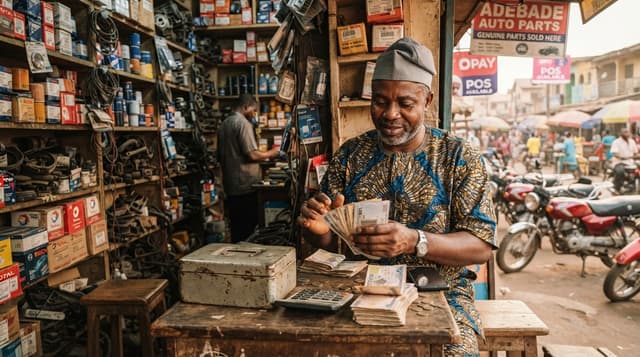
Oga, you are at your shop, busy with customers. Someone pays you with a bundle of cash. You have to serve the next person, then the next. By the time you finally get to check the money, you might have already accepted fake notes. This is a big worry for printing shop owners in Nigeria, especially when dealing with larger sums or new customers. How can you quickly spot a fake Naira note before it causes you serious trouble?
Overview & Key Takeaways
Learn the simple, quick ways to check Naira notes for fakes so you don't lose money. We focus on practical tips for busy printing shop owners.
- Feel the paper: Real Naira feels crisp and slightly rough, not too smooth or flimsy.
- Look for the security thread: It’s a metallic line embedded in the note that’s hard to fake.
- Check the watermark: Hold the note to the light to see the portrait and the value.
- Examine the intaglio printing: Raised ink on the portrait and serial numbers is a good sign.
- Trust your gut: If a note feels off, it probably is. Ask for another one.
Printers on TrustAm
Book with escrow protection. If a job isn't done right, open a dispute and our team steps in.


Igbonekwu Chinedu
Service Provider · Surulere
- Payment protected by escrow
- Money released only after you confirm the job

My business name is Joycelyn creative world
Service Provider · Location: Asaba
- Payment protected by escrow
- Money released only after you confirm the job
Tife Magic Touch
Service Provider · Surulere and Osogbo
- Payment protected by escrow
- Money released only after you confirm the job

Branded Souvenirs
Service Provider · Ipaja
- Payment protected by escrow
- Money released only after you confirm the job

Sunkky Collection Victoria
Service Provider · Ikeja
- Payment protected by escrow
- Money released only after you confirm the job
Quick Ways to Spot Fake Naira Notes While Serving Customers
As a printing shop owner, you handle cash every day. It’s easy to get busy and miss things. But accepting fake Naira notes can cost you dearly. It’s not just the money lost; it’s the trouble with the bank and the loss of trust. The good news is, you don’t need special equipment to check. You can do it fast, right at your counter.
1. The Feel Test: Is it Real Paper?
This is your first and fastest check. Real Naira notes are printed on special paper. It feels crisp, slightly rough, and has a bit of thickness to it. Counterfeit notes are often printed on regular paper that feels too smooth, too thin, or too glossy. Try this:
- Feel the texture: Rub the surface of the note, especially around the portrait and the serial number. Real notes have a raised feel from the printing. Fake ones are usually flat.
- Listen to the crispness: A real Naira note makes a distinct crisp sound when you flick it. Fake ones sound dull or papery.
Imagine you are selling custom branded T-shirts. A customer pays with a ₦1000 note. You take it, feel it. It’s too smooth, almost like a photocopy. You can politely say, “Oga, this one feels a bit off. Can you give me another one?” This simple check saves you from a big problem.

2. The Security Thread: A Line of Defence
Every Naira note has a security thread. This is a thin, metallic-looking strip that is embedded *inside* the paper, not just printed on it. You should be able to see it when you hold the note up to the light. For higher denominations, this thread might have text like “CBN” and the value of the note printed on it.
- Check for embedding: The thread should look like it's part of the paper, not something stuck on the surface.
- Look for text: If you can see text on the thread, it's a good sign. Fake threads might be just a shiny line.
For instance, the ₦1000 note has a visible silver security thread. Try to catch a glimpse of it. If it looks like a sticker or is easily peeled off, it’s likely fake.
3. The Watermark: See Through the Fakery
Hold any Naira note up to a light source. You should see a clear watermark. This is usually a portrait of a prominent Nigerian figure and the value of the note, visible from both sides. This is very difficult and expensive for counterfeiters to replicate accurately.
- Clarity is key: The watermark should be distinct and visible without being too dark or too faint.
- Location matters: The watermark is typically in a specific spot on the note.
If you don't see a clear watermark, or if it looks smudged or poorly done, be suspicious. This is one of the easiest ways to spot a fake, especially for higher denominations.

4. The Raised Ink: Feel the Difference
Genuine Naira notes use a printing technique called intaglio. This creates a slightly raised ink effect, especially on the portrait of the leader and the serial numbers. When you run your finger over these areas, you should feel a subtle texture.
- Run your finger over the portrait: Can you feel the ink?
- Check the serial number: It should also have a raised feel.
Counterfeit notes are often printed using flat methods, so the ink will feel smooth and flat against the paper.
5. The Serial Number: A Unique Identifier
Each genuine Naira note has a unique serial number, printed in a distinct colour (often red or black, depending on the denomination and series). The numbers should be evenly spaced and aligned. Faked serial numbers might be unevenly spaced, appear smudged, or be printed in a way that doesn’t match the rest of the note’s quality.
- Check alignment: Are the numbers in a straight line?
- Colour consistency: Does the ink colour look right?
Some counterfeiters might use the same serial number on multiple fake notes. While you can’t check every note against a database, a quick look at the printing quality of the serial number can be a good indicator.
What if You Suspect a Fake Note?
It happens. If you’re serving a customer and you suspect a note is fake, don’t panic. Here’s what you can do:
- Be polite but firm: Say something like, “Oga, I’m sorry, this note feels a bit unusual. Can you please provide another one?”
- Don’t accept it: It’s better to refuse a single note than to accept a fake and lose more.
- If you’ve already accepted it: If you realize later that you accepted a fake, don’t try to pass it on to someone else. That makes you part of the problem. The best thing to do is to take it to your bank. They will confiscate it and might give you a report. It’s a loss, but it stops the fake from circulating further.
For printing shop owners, keeping accurate sales records is crucial. If you’re unsure about the cash you received, having a system that records payments helps. With TrustAm, when a customer pays you, the payment request itself becomes a record. If a payment is made with a fake note, and you later discover it, you can trace back when and from whom you received it through your sales tracking. This is much harder if you are just stuffing cash into a drawer.
Beyond Cash: Securing Your Business Payments
While checking Naira notes is important, relying solely on cash can expose your business to more risks, including theft and fake notes. Consider using digital payment methods. With TrustAm, you can send payment requests directly via WhatsApp. Customers can pay you easily using their phone, and the money lands in your account. This means you get real money, not potentially fake notes.
TrustAm also helps you manage credit sales with its debt book. You can record who owes you, how much, and when it’s due. The system can even send polite reminders. This way, you reduce the risk associated with giving goods on credit.
Start Free on WhatsApp
Stop worrying about fake notes and start getting paid securely. TrustAm's WhatsApp Business Assistant makes collecting payments simple and records everything automatically.
Free to start. No app to download. Setup takes about two minutes.
Frequently Asked Questions
What are the main security features on Nigerian Naira notes?
The main security features include a security thread embedded in the paper, a watermark (visible when held to light), intaglio printing (raised ink), and microprinting. The quality and presence of these features are key indicators of a genuine note.
Can I use a UV light to check for fake Naira notes?
Yes, a UV light can help. Genuine Naira notes have specific fluorescent markings that glow under UV light. Counterfeit notes may not have these markings, or they may glow differently. However, this is an extra step, and the basic checks (feel, look, texture) are usually enough for quick verification.
What should I do if I receive a fake Naira note from a customer?
If you identify a fake note, politely refuse it and ask the customer for a different one. If you discover it after the transaction, do not try to pass it on. Report it to your bank; they will confiscate it. It’s a loss, but it prevents the fake note from circulating further.
How can TrustAm help printing shop owners manage money better?
TrustAm helps by making payment collection digital, reducing reliance on cash. It records every payment automatically, creates a digital receipt, and helps you track who owes you. This transparency helps prevent losses from fake notes or poor credit management.
Book a verified Print Services
Verified providers. Payment held safe until the job is done. Reviews only from real, paid bookings.
Download TrustAm
AI-powered budgeting, instant P2P payments, and escrow protection. Built for Nigeria.
Or get a download link sent to your phone
Chisom Anen
Founder and CEO of TrustAm. Building Nigeria's reputation marketplace for verified service providers. Reviews unlock only after real payments.
Disclosure: This article is published by TrustAm. Some links may direct to our own marketplace and products.
Sources & References
- Start on WhatsApp →— wa.me
- Federal Inland Revenue Service— firs.gov.ng
- Corporate Affairs Commission— cac.gov.ng
- Small and Medium Enterprises Development Agency— smedan.gov.ng
- National Bureau of Statistics— nigerianstat.gov.ng
Related Services
Find trusted providers related to this article.
Related Articles


Free Tools You Might Find Useful
Try these free calculators and tools related to this article.
Invoice Generator
Generate professional invoices for your Nigerian business or freelance work.
Use free tool →Receipt Generator
Generate payment receipts for completed services in Nigeria.
Use free tool →Quote Generator
Generate service quotations for clients in Nigeria.
Use free tool →Contract Generator
Generate basic service agreements for Nigerian service providers.
Use free tool →