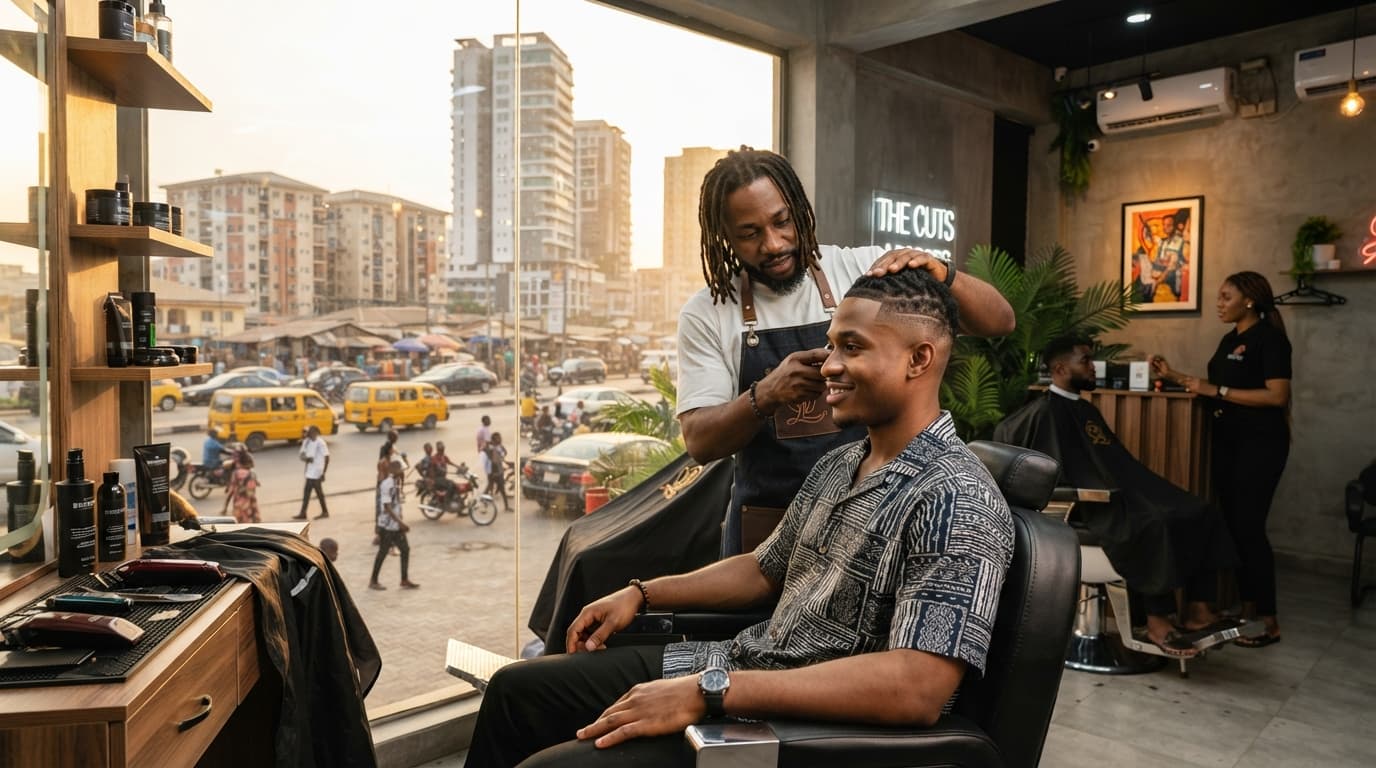
How to Communicate With Your Barber for the Best Results
Overview & Key Takeaways
Mastering communication with your barber is essential for achieving your desired haircut. Learn how to articulate your needs, understand barber lingo, and build a lasting relationship for consistent great results.
- Be specific and use descriptive language to explain your desired style.
- Bring reference pictures to visually communicate your expectations.
- Understand common barbering terms to avoid misunderstandings.
- Ask questions and provide feedback throughout the haircut process.
- Build a relationship with a trusted barber for consistent results.
Barbers on TrustAm
Book with escrow protection. If a job isn't done right, open a dispute and our team steps in.

Hairland unisex Salon
Service Provider · Lagos
- Payment protected by escrow
- Money released only after you confirm the job
- Responds in 3 min

MrFresh cut
Service Provider · Abuja
- Payment protected by escrow
- Money released only after you confirm the job
Freshpop of lagos unisex salon worldwide home service
Service Provider · Lagos
- Payment protected by escrow
- Money released only after you confirm the job

Biggleesky
Service Provider · Ikeja
- Payment protected by escrow
- Money released only after you confirm the job

Bluewind Mobile Barber
Service Provider · Onitsha
- Payment protected by escrow
- Money released only after you confirm the job

Okikiola _ barber_ shop
Service Provider · Oshodi
- Payment protected by escrow
- Money released only after you confirm the job
Why Clear Communication is Crucial for Your Haircut
Getting a haircut is more than just a chore; it's a form of self-expression and a significant part of personal grooming. In Nigeria, a well-executed haircut can boost your confidence immensely, whether you're heading to a business meeting in Lagos or an owambe in Enugu. However, the difference between a good haircut and a great one often boils down to how effectively you communicate your vision to your barber. Misunderstandings can lead to disappointment, wasted money, and the dreaded awkward phase while your hair grows back. It’s about more than just saying “cut am”; it’s about conveying precision, style, and your personal preference.
1. Be Specific with Your Style Request
Forget vague instructions. Instead of saying "just trim it," try to articulate exactly how much you want off and what kind of trim you’re aiming for. Are you looking for a classic taper, a sharp fade, a clean buzz cut, or a specific style like a Caesar, crew cut, or even a modern textured crop? The more details you provide, the better your barber can understand your needs. Consider the length on the sides, the top, and the back. For instance, "I want a low fade on the sides, about a number 2 clipper guard, blending into a slightly longer top, maybe a scissor cut around 3 inches." This level of detail leaves less room for error.Find Verified Providers on TrustAm
Looking for trusted Barbers near you? Browse verified providers with payment-backed reviews and escrow protection.
Create a Free Account →2. Leverage Visual Aids: Bring Reference Pictures
Words can sometimes fail, but a picture is worth a thousand cuts – especially when it comes to hairstyles. Before your appointment, browse online for celebrity haircuts, Instagram styles, or even pictures of yourself with a hairstyle you loved. Save these images to your phone. When you sit down, show your barber the pictures. Point out what you like about the style and what you want to replicate. This visual guide is invaluable, especially for complex or trendy styles. It bridges the gap between your imagination and the barber's interpretation.3. Understand Barbering Lingo
Barbers often use specific terms to describe cuts, styles, and techniques. Familiarizing yourself with some common ones can significantly improve communication. For example: * **Fade:** A gradual decrease in hair length from the bottom of the haircut to the top. * **Taper:** Similar to a fade, but usually less dramatic, with hair gradually getting shorter towards the neckline and sideburns. * **Taper Fade:** A combination of both, where the hair tapers down to a fade. * **Buzz Cut:** A short haircut achieved with electric clippers. * **Crew Cut:** A short haircut where the hair on the front of the head is longer than the hair on the back. * **Undercut:** Hair is clipped short or shaved at the sides and back, while the top is left significantly longer. * **Line-up/Edge-up:** Sharpening the hairline at the forehead, temples, and sideburns. * **Clipper Guards:** Numbers (e.g., #1, #2, #3) that indicate the length of hair left by the clippers. Knowing these terms, like understanding the difference between a taper and a fade, helps you speak your barber's language and ensure they understand your request accurately. If you're unsure, don't hesitate to ask your barber to explain what each term means.
4. Ask Questions and Give Feedback
Communication is a two-way street. Don't be afraid to ask your barber questions about what they recommend based on your hair type and face shape. During the cut, pay attention. If you notice the barber is going shorter than you intended on the sides, speak up immediately. A simple "Can we keep it a little longer there?" or "That's looking good, just a bit more off the top" can make a world of difference. Similarly, if you're happy with the direction, give positive reinforcement. This feedback loop ensures you both stay on the same page throughout the entire process. This is crucial, much like it is when hiring any service provider. As we've discussed in red flags to watch out for, clear communication and addressing issues proactively can prevent bigger problems down the line.5. Build a Relationship with Your Barber
Once you find a barber who consistently gives you great cuts and understands your style, stick with them! Building a rapport over time means your barber gets to know your preferences intimately. They'll remember what you like, what you don't like, and how you prefer your hair styled. This familiarity reduces the need for lengthy explanations and ensures a more relaxed and predictable experience. For providers, this translates to loyalty and repeat business, something vital for growth. On TrustAm, you can build this trust through verified reviews and consistent booking history. For barbers, understanding client preferences is key to growing their business. By offering excellent service and clear communication, they build a loyal clientele. This is precisely why platforms like TrustAm are essential for service providers. They help connect barbers with clients looking for verified professionals, offer secure payment options through escrow, and showcase their skills through payment-backed reviews. A barber who lists their services on TrustAm can gain visibility across cities like Lagos, Abuja, and Port Harcourt, reaching more clients seeking quality cuts. This also helps clients find trusted barbers, avoiding the stress of searching and the disappointment of a bad haircut, much like finding a reliable tailor or makeup artist.6. Be Realistic About What's Possible
While your barber is skilled, they are not miracle workers. Understand your hair type, its growth patterns, and your face shape. Some hairstyles might not be achievable or suitable for you. A good barber will be honest about this. If you're asking for a style that's extremely difficult to maintain or doesn't suit your hair texture, they should guide you towards alternatives. Openly discussing these limitations ensures you don't end up with unrealistic expectations that lead to disappointment. It's about finding a style that works for you and your hair.7. Post-Haircut Feedback
After your haircut, take a moment to assess the result in good lighting. If something isn't quite right, politely inform your barber before you leave. Most reputable barbers are happy to make minor adjustments to ensure customer satisfaction. This feedback is also valuable for your future visits. If you had a great experience, leave a positive review. For barbers, positive reviews on platforms like TrustAm are gold. They attract new clients and build a reputation for quality service. Conversely, if you experience issues, understand your recourse, similar to what is discussed in what to do if a service provider does bad work.
Conclusion: The Power of a Conversation
Achieving your ideal haircut is a collaborative effort. By being specific, using visual aids, understanding terminology, providing feedback, and being realistic, you empower your barber to deliver exactly what you envision. For barbers, mastering these communication skills is not just about cutting hair; it's about building trust and ensuring client satisfaction, which is the bedrock of a thriving service business. Platforms like TrustAm make it easier for both clients to find skilled, verified barbers and for barbers to showcase their expertise and grow their customer base across Nigeria.Get the Perfect Cut and More with TrustAm
Finding a barber you can trust is now easier than ever. Connect with verified professionals on TrustAm, book your next haircut with confidence, and enjoy peace of mind with secure payments and reviews.
Create Your Free Account →Join 50,000+ Nigerians already using TrustAm to manage their services smarter.
Frequently Asked Questions
How can I explain a fade to my barber?
To explain a fade, be specific about the 'low', 'mid', or 'high' aspect, and indicate the clipper guard number you want at the bottom (e.g., #1, #2). Mention how high you want the fade to go up your head and if you want it to blend seamlessly into the top, or if you prefer a more distinct line.
What's the best way to ask for a haircut if I'm unsure of the name?
The best approach is to bring a picture of the hairstyle you like. Point to specific elements in the picture – the length on top, how it's faded on the sides, the texture, or the hairline. You can also describe the look you're going for, like "neat but textured on top" or "very short on the sides and back." TrustAm providers often have portfolios to help you choose.
Should I tell my barber if I don't like the haircut while they're still cutting?
Absolutely! It's much better to speak up early if you're not happy with how the cut is progressing. Politely mention what you'd like changed – for example, "Could we blend this a bit more here?" or "I think that's a little too short on this side." This allows the barber to correct it while they still have the chance.
How do I ask for a sharp line-up?
To request a sharp line-up, simply ask for a "sharp line-up" or "edge-up" at the front and sides. You can also specify if you want it to be straight across or have a slight curve. Showing a reference picture is also very effective for this detail.
How can TrustAm help me find a good barber?
TrustAm helps you find good barbers by listing verified professionals with payment-backed reviews. You can browse profiles, see pictures of their work, read what other customers say, and book with confidence, knowing you're choosing a provider with a proven track record. This reduces the risk of a bad haircut.
Book a verified Barber
Verified providers. Payment held safe until the job is done. Reviews only from real, paid bookings.
Download TrustAm
AI-powered budgeting, instant P2P payments, and escrow protection. Built for Nigeria.
Or get a download link sent to your phone
Chisom Anen
Founder and CEO of TrustAm. Building Nigeria's reputation marketplace for verified service providers. Reviews unlock only after real payments.
Disclosure: This article is published by TrustAm. Some links may direct to our own marketplace and products.
Sources & References
- Haircuts in Nigeria: Men's hairstyles that are trending— bbc.com
- Fashion: Styles for Nigerian Men 2016— vanguardngr.com
- Men's Haircut Trends 2023— vogue.com
Related Services
Find trusted providers related to this article.
Related Articles



Free Tools You Might Find Useful
Try these free calculators and tools related to this article.
Barber Calculator
Estimate haircut and grooming prices from barbers across Nigeria.
Use free tool →Invoice Generator
Generate professional invoices for your Nigerian business or freelance work.
Use free tool →Receipt Generator
Generate payment receipts for completed services in Nigeria.
Use free tool →Quote Generator
Generate service quotations for clients in Nigeria.
Use free tool →