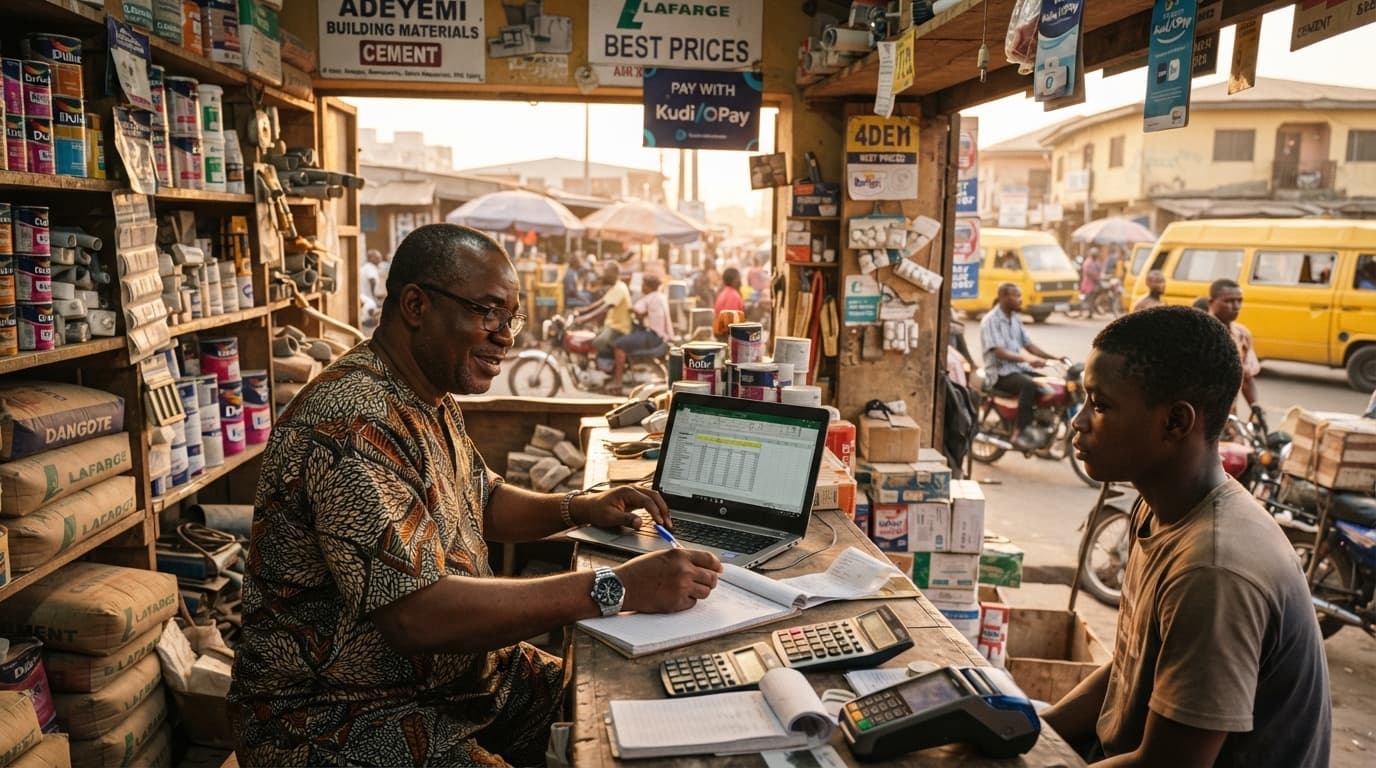
How to Price Your Goods as a Building Materials Shop Owner in Abuja
Ah, pricing. It’s one of the biggest headaches for any shop owner, especially when you sell cement, rods, tiles, and all those heavy items. You stand in your shop in Abuja, maybe somewhere like Dutse Alhaji or Wuye, and a customer asks for the price of 10 bags of cement. What do you say? How do you even know what to say? Getting the price right means good profit, happy customers, and your business growing. Get it wrong, and you might be losing money without even knowing it.
Overview & Key Takeaways
This guide explains how to price your building materials in Abuja to ensure profitability and customer satisfaction. Learn to calculate your costs, understand market rates, and use smart strategies to set prices that work for your business.
- Always know your exact cost price for every item.
- Research what competitors in Abuja are charging for similar items.
- Add your desired profit margin on top of your total cost.
- Consider bulk discounts and special offers carefully.
- Use your sales records to see which prices are working best.
Construction Services in Abuja
Book with escrow protection. If a job isn't done right, open a dispute and our team steps in.
Ifeanyi welding service
Service Provider · Abuja
- Payment protected by escrow
- Money released only after you confirm the job
Know Your Costs: The Foundation of Good Pricing
Before you can even think about a selling price, you need to know exactly how much each item cost you. This is not just the price you paid the supplier. For building materials, your costs go deeper. Think about:
- The Price You Paid: This is the obvious one. What did you pay the manufacturer or distributor for that bag of cement or bundle of rebar?
- Transportation: How much did it cost to bring those goods from the supplier to your shop in Abuja? If you paid for a truck, divide that cost among the items it carried.
- Storage: Do you have a warehouse? Rent, security, electricity for fans or lights – these are costs that add up.
- Staff Salaries: Your gateman, your sales boys, anyone helping you – their wages are part of the cost of doing business.
- Other Overheads: Think about NEPA bills, generator fuel, phone credit for calls, even the cost of the pen you use to write.
If you’re selling items that are delivered directly to customer sites, you also need to factor in delivery costs. Sometimes, customers pay for delivery separately, but you need to know if that payment actually covers your expense or if you’re subsidizing it. Getting this detailed is what separates a struggling shop from a profitable one. You can track all these expenses easily with TrustAm, even recording them by voice note.

Check the Competition: What Are Others Charging in Abuja?
Once you know your costs, the next step is to see what your neighbours and competitors in Abuja are doing. Visit other building materials shops, especially those around your area or in popular markets like those near the Kubwa or Gwagwalada areas. Ask for prices of common items like cement, blocks, tiles, or plumbing fittings. This isn't about copying them blindly, but understanding the market rate. If your price is way higher than everyone else's for the same quality, customers might go elsewhere. If it’s too low, they might think your products are fake or of poor quality. For example, knowing how to spot fake naira notes can also help you price confidently, knowing you're dealing with real money.
Here's how to do your competitor check:
- Visit Shops: Go physically to different shops in Abuja.
- Ask for Prices: Inquire about a few key items you sell.
- Note Quality: See if their products look similar to yours. Are they selling Grade A cement or a different type?
- Observe Foot Traffic: Which shops seem busier? This can sometimes indicate good pricing or customer service.
- Talk to Suppliers: Sometimes, your suppliers know what prices others are paying.
Calculate Your Profit Margin
Now, you combine your costs with what you learned from competitors. Your selling price needs to cover your costs AND give you a profit. A common way to do this is by adding a markup percentage. For building materials, profit margins can vary. Some items might have thin margins (like cement, where you might only make N50-N100 per bag), while others like specialized tiles or fittings might allow for higher margins (say, 15-25%).
Formula: Selling Price = Cost Price + (Cost Price * Profit Margin Percentage)
Let’s say a bag of cement costs you ₦4,000 after all your expenses. You want a 10% profit margin. Your selling price would be ₦4,000 + (₦4,000 * 0.10) = ₦4,000 + ₦400 = ₦4,400.
If you see competitors selling the same cement for ₦4,300, you have a decision to make. You could match them and reduce your profit slightly for higher volume, or stick to your price and try to attract customers who value your service or other factors.
Smart Pricing Strategies for Building Materials
Pricing isn't just about adding a number. You can use strategies to make your prices work harder for you and your customers.
- Bundle Deals: Offer a discount if a customer buys multiple items together. For example, buy 50 bags of cement and get a discount on delivery, or buy cement, sand, and blocks together for a special price. This encourages larger sales.
- Bulk Discounts: For very large orders (like for a construction company), you might offer a slightly lower price per unit to secure the entire contract. This is where knowing your minimum acceptable profit is crucial.
- Tiered Pricing: For items like tiles or paint, you might have different price points based on quality or brand. Make sure customers understand why one tile is more expensive than another.
- Psychological Pricing: Ending prices in .99 (like ₦4,399 instead of ₦4,400) can sometimes trick the brain into seeing a lower price. This is more common for smaller items, but can work for things like paint cans or smaller fittings.
- Promotional Pricing: Occasionally run special offers to clear old stock or attract new customers. Be careful not to do this too often, or customers will only buy when you have a sale. If you have old stock that isn't selling, it might be time to offer it at a lower price before it becomes completely dead stock.
It’s also important to consider your customers. Are you mostly serving individual homeowners doing renovations, or large contractors? Contractors might negotiate harder on price but buy in much bigger volumes. Homeowners might be more sensitive to smaller price differences. Understanding who you are selling to helps you tailor your pricing. For any business, tracking sales and customer history is vital. TrustAm’s sales tracking feature helps you see which products are moving and at what prices.

Using Technology to Simplify Pricing and Sales
Keeping track of prices, costs, and sales manually can be a nightmare, especially in a busy building materials shop. Imagine trying to remember the exact cost of every single item and then calculating a profit margin on the spot when a customer is waiting. This is where tools like TrustAm can make a huge difference. You don't need to download any new app; it works right inside WhatsApp.
When you collect payment through TrustAm, the sale is automatically recorded. You can even send a payment request with a specific amount. If someone owes you money, the debt book feature helps you keep track and even sends polite reminders. This means your records are always up-to-date, and you can easily see which products are your best sellers and which are not moving, helping you adjust your pricing strategy. You can even record cash sales with a quick voice note or text message.
Pricing for Specific Building Materials
Different materials have different pricing considerations:
- Cement: Prices are often influenced by supply and demand, and national policies. Margins are usually tight. Know the current ex-factory price and add your transport and a small profit.
- Rebars and Steel: Prices fluctuate with global steel markets. You need to buy in bulk when prices are favourable and mark up accordingly.
- Tiles and Sanitary Wares: These often have higher profit margins. You can use tiered pricing based on brand, design, and quality.
- Sand, Gravel, and Blocks: These are often sold by volume or quantity. Ensure your pricing covers transportation to the customer's site if you deliver.
Always be transparent with your customers. If there’s a reason your price is higher (e.g., better quality, faster delivery, easier payment terms), let them know. Building trust is just as important as making a profit.
Common Mistakes to Avoid
Here are some pricing mistakes building materials shop owners in Abuja often make:
- Not Knowing Your Costs: The most common mistake. If you don't know your true costs, you can't set a profitable price.
- Pricing Based Only on Competitors: You might end up selling at a loss if your competitor has lower overheads or a different business model.
- Forgetting Overhead Costs: Rent, electricity, and salaries must be factored in.
- Not Adjusting Prices: The cost of goods can change. You need to review your prices regularly, especially for items like cement and steel that fluctuate.
- Fear of Charging Enough: If you are providing good quality and service, don’t be afraid to charge a fair price that ensures your business stays afloat and grows.
Conclusion
Pricing your building materials in Abuja requires a mix of knowing your numbers, understanding the market, and being smart about how you present your offers. Start with your costs, research your competitors, set a fair profit margin, and use strategies that encourage sales. By keeping good records, perhaps using a simple tool that works from WhatsApp, you can make pricing less of a headache and more of a tool for growing your business.
Start Free on WhatsApp
Getting your prices right starts with knowing your numbers. TrustAm makes it easy to track sales and expenses, so you always know your costs.
Free to start. No app to download. Setup takes about two minutes.
Frequently Asked Questions
How do I calculate profit margin for building materials?
To calculate profit margin, first find your total cost per item (including purchase price, transport, and overheads). Then, subtract this cost from your selling price to get your profit. Divide the profit by the cost price and multiply by 100 to get the profit margin percentage. For example, if an item costs ₦4,000 and sells for ₦4,600, your profit is ₦600. The profit margin is (600 / 4000) * 100 = 15%.
What is a good profit margin for cement in Nigeria?
Profit margins on cement in Nigeria are typically quite thin, often ranging from ₦50 to ₦200 per bag, depending on the location, supplier, and market conditions. It's a high-volume, low-margin product for most sellers. Focus on selling large quantities to make significant profit.
Should I price my goods higher if I deliver them?
Yes, if you are offering delivery services, you should factor the cost of delivery into your pricing. This can be done by adding a specific delivery fee that covers your transport costs, or by slightly increasing the price of the goods themselves to absorb the delivery expense. Transparency is key; let customers know if the price includes delivery or if it's an additional charge.
How often should I review my prices?
You should review your prices regularly, especially for building materials where costs can fluctuate rapidly. Monitor market prices for key items like cement, steel, and aggregates weekly or bi-weekly. Major price changes from your suppliers or significant shifts in demand/supply should trigger an immediate review.
What if my competitor has much lower prices?
If your competitor's prices are significantly lower, investigate why. They might be buying in larger volumes, have lower overheads, be selling lower quality goods, or even be operating at a loss to attract customers. You don't have to match them; instead, focus on your unique selling points like quality, reliability, customer service, or convenient payment options. Communicate these benefits to your customers.
Book a verified Construction in Abuja
Verified providers. Payment held safe until the job is done. Reviews only from real, paid bookings.
Download TrustAm
AI-powered budgeting, instant P2P payments, and escrow protection. Built for Nigeria.
Or get a download link sent to your phone
Chisom Anen
Founder and CEO of TrustAm. Building Nigeria's reputation marketplace for verified service providers. Reviews unlock only after real payments.
Disclosure: This article is published by TrustAm. Some links may direct to our own marketplace and products.
Sources & References
- Start on WhatsApp →— wa.me
- Federal Inland Revenue Service— firs.gov.ng
- Corporate Affairs Commission— cac.gov.ng
- Small and Medium Enterprises Development Agency— smedan.gov.ng
- National Bureau of Statistics— nigerianstat.gov.ng
Related Services
Find trusted providers related to this article.
Related Articles



Free Tools You Might Find Useful
Try these free calculators and tools related to this article.
Abuja Budget
Plan your monthly budget for living in Abuja with realistic cost breakdowns.
Use free tool →Invoice Generator
Generate professional invoices for your Nigerian business or freelance work.
Use free tool →Receipt Generator
Generate payment receipts for completed services in Nigeria.
Use free tool →Quote Generator
Generate service quotations for clients in Nigeria.
Use free tool →