Recording Speech for AI at Home: Quiet Rooms, Phone Position and a Clear Voice
Overview & Key Takeaways
This article explains how to make high-quality audio recordings for AI training at home, focusing on creating a quiet environment, optimal phone placement, and clear vocal delivery. It’s for anyone in Nigeria looking to contribute recordings and for AI teams seeking authentic African speech data.
- Choose a quiet location to minimize background noise for AI speech models.
- Position your phone correctly to capture clear audio without distortion.
- Speak clearly and at a consistent volume for better AI recognition.
- Understand that pay is only for approved audio minutes.
- TrustAm verifies contributors and workplaces for data integrity.
Making good audio recordings for Artificial Intelligence (AI) training is more than just speaking into your phone. For AI systems to understand different people, they need clear, clean speech data. If you are in Nigeria and want to contribute your voice to this growing field, understanding a few key things can make your recordings high quality and eligible for payment. This guide focuses on making those important first steps at home.
Why Recording Environment Matters for AI Data
The environment where you record your voice is critical for creating AI training data. AI models learn by listening to thousands of hours of speech. If the recordings are full of background noise like traffic, music, or chatter, the AI struggles to pick out the words. This makes the AI less accurate when it is eventually used. For AI to understand diverse accents and languages across Africa, like the many heard in Nigeria, the data must be clean. This is why TrustAm insists on clear recordings. We pay for approved minutes, so focusing on quality from the start helps you earn more. A quiet room is your best first step.
Think about the common sounds in a Nigerian home. Is there a busy street nearby? Are children playing? Is the television on? Even a humming refrigerator or fan can be picked up by a phone's microphone. Finding a time and place with the least amount of these distractions is key. Some recorders find that early mornings or late evenings are quieter. Others might have a spare room that is naturally more soundproof. For AI systems to work well, especially for tasks like voice assistants or translation, the audio must be as clean as possible. This is a core principle in building effective AI, as highlighted in strategies like Nigeria's National Artificial Intelligence Strategy. Why Speech Recognition Still Fails Many African Accents discusses how background noise and accent diversity are challenges for AI.

When you join TrustAm, you are contributing to a growing need for authentic African data. This data helps AI understand local languages and accents better. Without it, AI tools might not work well for Nigerians. You can contribute to this by making sure your recordings are free from disruptive sounds. This attention to detail ensures your contribution is valuable.
Positioning Your Phone for Optimal Audio Capture
How you hold or place your phone when recording your voice significantly impacts audio quality. The goal is to get the microphone close enough to capture your voice clearly without picking up too much room echo or handling noise. For AI speech data, consistent placement is important. If the phone is too far away, your voice will sound faint and distant. If it’s too close, it can cause distortion, pops, or breath sounds to be overly loud.
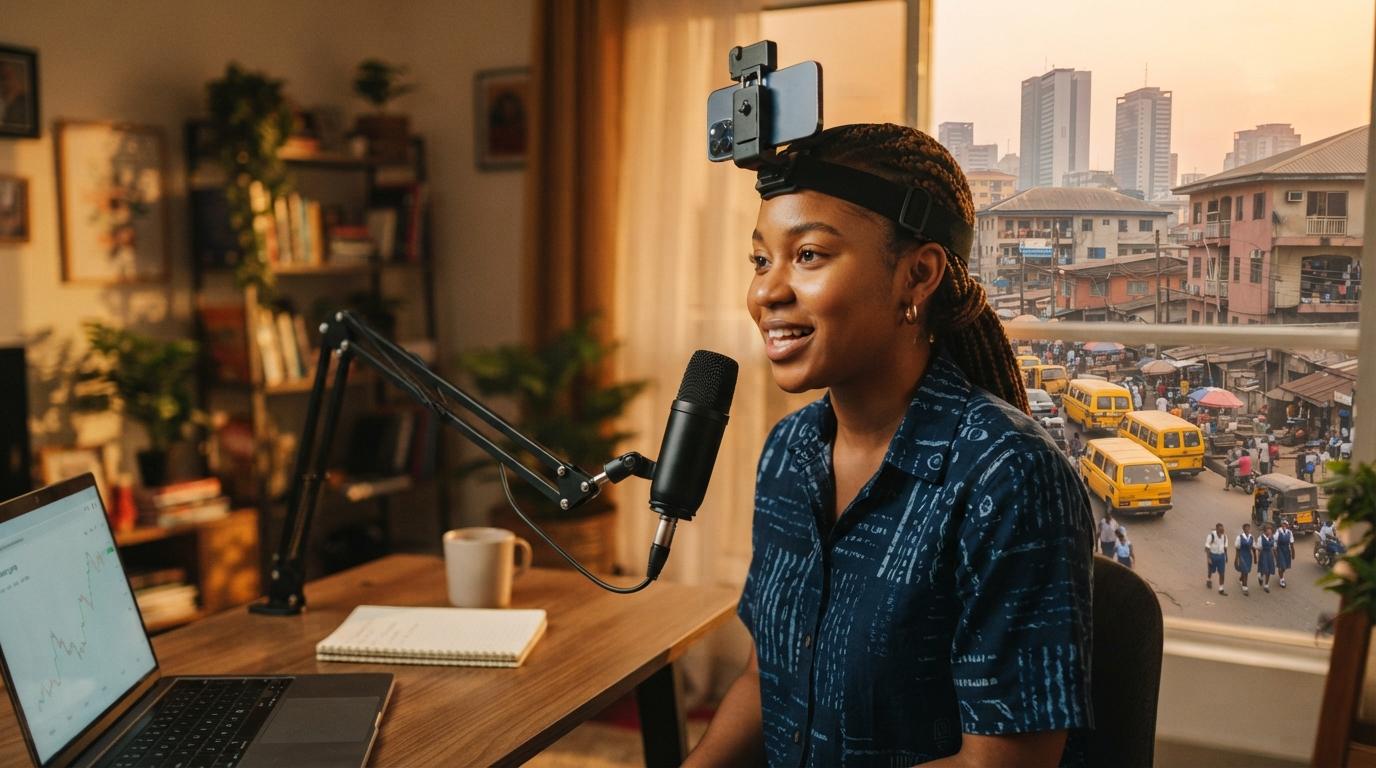
A good starting point is to hold the phone about 15-20 cm (6-8 inches) away from your mouth. Imagine you are having a normal conversation. You don't want to shout into the phone, nor do you want to whisper. If you are using a smartphone, the microphone is usually at the bottom. Make sure this part is pointed towards your mouth. Avoid covering the microphone with your fingers or the phone case. If you are using a head strap for recording, ensure the phone is stable and positioned consistently for each recording session.
Experimenting with different positions can help you find what works best in your specific recording environment. Some recorders find that placing the phone on a stable surface like a table, angled towards them, works well. This can reduce the handling noise you might get from holding the phone. Remember, the AI needs to hear your words clearly, not the sound of the phone moving or being muffled. This attention to detail is vital for the data to pass TrustAm's quality checks. This is similar to how good video recordings require careful camera placement, as discussed in What a Good First AI Recording Looks Like: A Checklist for New Recorders.
Speaking Clearly for AI Recognition
The clarity of your voice is paramount when recording for AI training. AI models are trained to understand standard speech patterns, but they also need exposure to natural variations. The key is to speak clearly and at a consistent pace and volume. This means enunciating your words properly, avoiding mumbling, and maintaining a steady rhythm. While you should sound natural, every effort should be made to ensure your words are distinct.

When you are asked to read specific phrases or sentences, pay attention to the instructions. If you are recording spontaneous speech, try to maintain a natural conversational flow but still be clear. Avoid speaking too fast, as this can make it difficult for the AI to process. Similarly, speaking too softly can result in recordings that are too quiet to be useful. The Open vs. Commercial African Speech Datasets post touches on the importance of data quality for different AI applications.
It is also important to avoid filler words like 'um' and 'ah' where possible, especially if the recording task specifies this. If you make a mistake, it’s usually better to pause briefly and repeat the sentence or phrase correctly rather than trying to edit it out yourself. TrustAm’s process includes reviewers who can identify and cut problematic sections, but clean recordings from the start improve the chances of your minutes being approved. The ultimate goal is to provide AI with data that helps it understand human speech better, especially the rich linguistic diversity of Nigeria. This is why providing clear, well-recorded speech is so important. According to the National Centre for Artificial Intelligence and Robotics (NCAIR), high-quality data is fundamental to advancing AI capabilities in Nigeria.
The TrustAm Process: Quality and Fair Payment
TrustAm is committed to providing high-quality AI training data while ensuring fair compensation for our recorders. We understand that contributing your voice requires effort and attention to detail. That's why we have a rigorous quality control process. Once you submit your recordings, they are reviewed by trained personnel. They check for background noise, clarity, and accuracy against the task requirements. You are paid only for approved minutes. This means that while we aim for accuracy, not every second recorded may pass review. This ensures that the data we supply to AI companies is of the highest standard.
To ensure the integrity of our data, TrustAm verifies all recorders and their workplaces. Your identity is checked using your BVN or NIN, and a live selfie is matched to your ID. We also verify workplaces in person. Payments are made directly to your bank account in naira, with no fees deducted by TrustAm. The pilot pays ₦4,750 per approved hour of recording. This rigorous approach, detailed further in how people, places and minutes are verified, ensures that both our recorders and our clients can trust the data we provide. This aligns with Nigeria's data protection regulations, emphasizing the need for secure and ethical data handling, as overseen by the Nigeria Data Protection Commission (NDPC).
We believe in transparency and fairness. While not every minute may be approved, focusing on the quality tips provided—quiet environment, proper phone placement, and clear speech—will significantly increase the chances of your recordings being accepted. This process helps build robust AI systems that can understand and serve diverse populations. For buyers looking for this type of data, understanding the collection process is key. You can learn more about what buyers look for in How to Buy African Speech Data: An RFP Template.
Frequently Asked Questions
What kind of background noise is acceptable for AI speech recordings?
How close should my phone be to my mouth when recording?
What if I make a mistake while recording?
How am I paid for my recordings?
Can I record in any Nigerian language?
The market and your bank, in one chat.
Your own bank account and the artisans you book, in one WhatsApp chat. Just say Hi.
Prefer the app? App Store · Google Play
Founder and CEO of TrustAm. Building Nigeria's reputation marketplace for verified service providers. Reviews unlock only after real payments.
Disclaimer: This article is for informational purposes only and does not constitute financial advice. Always consult a qualified financial professional before making major financial decisions.
Disclosure: This article is published by TrustAm, a financial technology company. Some links in this article may direct to our own products.
Sources & References
- National Centre for Artificial Intelligence and Robotics (NCAIR)— ncair.nitda.gov.ng
- Nigeria Data Protection Commission (NDPC)— ndpc.gov.ng
Related Articles


Free Tools You Might Find Useful
Try these free calculators and tools related to this article.