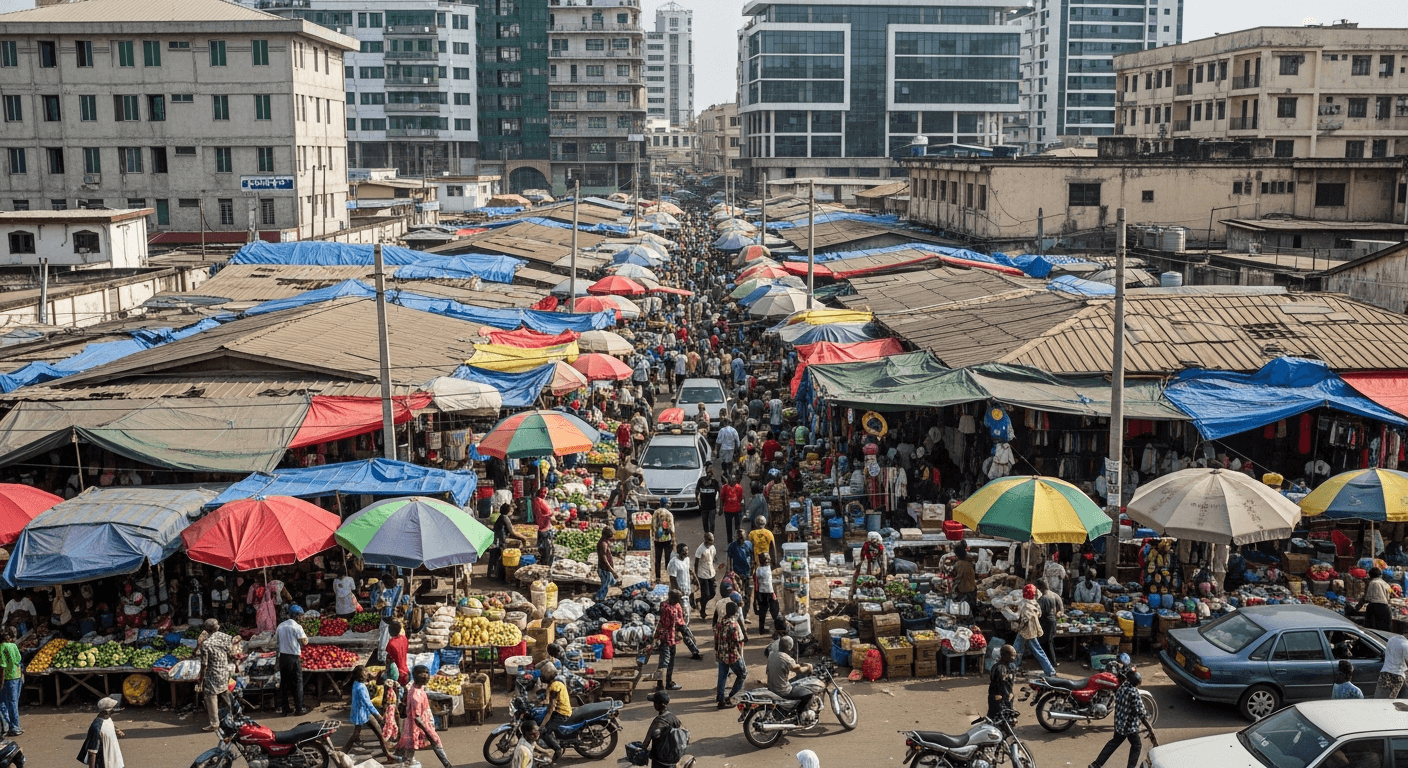
Rent Prices in Lagos 2026: Area-by-Area Breakdown
Rent Prices in Lagos 2026: Area-by-Area Breakdown
Let's be honest, house-hunting in Lagos can feel like an extreme sport. Between the legendary traffic, questionable agents, and prices that make you question your life choices, finding a decent place to live can be a major source of stress. The big question on everyone's mind is always: "How much is this going to cost me, really?" As we look towards 2026, with inflation hovering around 25-30%, understanding the rental market is more crucial than ever for your financial planning.
Overview & Key Takeaways
This guide breaks down the estimated annual rent prices for different apartment types across key areas of Lagos Island and Mainland for 2026. You'll learn what to expect, the hidden costs involved, and how to navigate the market without losing your sanity or your savings.
- Expect Wide Price Gaps: A mini-flat can cost anywhere from ₦700,000 in a budget area like Ikorodu to over ₦5,000,000 in premium locations like Ikoyi.
- Budget for Extra Fees: Factor in an additional 30-50% of your first year's rent for mandatory fees like agency, agreement, and a caution deposit.
- Location is Everything: Proximity to commercial hubs (like VI and Ikeja), security, and quality of infrastructure (especially roads and power supply) are the biggest price drivers.
- Mainland Offers Value: The Mainland generally offers more space and value for money, with areas like Surulere and Yaba providing a good balance of cost and accessibility.
- Plan Your Move Smartly: Once you find a place, use the TrustAm marketplace to find verified movers, cleaners, and electricians to make your move seamless and secure.
Why is Rent in Lagos So Expensive?
The high cost of renting in Lagos is driven primarily by a massive demand that far outstrips the supply of decent housing. With millions flocking to the nation's commercial nerve centre for opportunities, the pressure on the property market is immense. This, combined with high construction costs and persistent inflation, creates a perfect storm for landlords to charge premium rates.
- Population Density: Lagos is one of Africa's most populous cities, and its population continues to grow. More people means more competition for the same limited number of apartments.
- Economic Magnet: As the hub of finance, tech, and entertainment in Nigeria, Lagos attracts talent from all over the country and beyond, all of whom need a place to live.
- High Development Costs: The price of land, building materials, and labour is incredibly high. Developers often have to provide their own infrastructure like boreholes and power generators, and they pass these costs on to tenants.
- Inflationary Pressures: With the Naira's value fluctuating and general inflation high, landlords increase rent to protect the value of their investment. A comprehensive guide on the Cost of Living in Lagos in 2026 shows how rent is the biggest chunk of anyone's budget.
Lagos Island Rent Prices (2026 Estimates)
The Island is where you'll find the highest property prices in Lagos, driven by its status as the city's prime commercial and luxury residential district. From the corporate headquarters in Victoria Island to the trendy spots in Lekki, living on the Island comes with a hefty price tag but also offers proximity to high-paying jobs and premium amenities.

Ikoyi
The domain of old money, embassies, and luxury high-rises. It's serene, secure, and astronomically expensive.
- Mini-Flat (1-Bedroom): ₦4,500,000 - ₦7,000,000+ per annum
- 2-Bedroom Flat: ₦8,000,000 - ₦15,000,000+ per annum
- 3-Bedroom Flat: ₦12,000,000 - ₦25,000,000+ per annum
Victoria Island (VI)
The heart of business and nightlife. It's busy, vibrant, and slightly more 'affordable' than Ikoyi, but still firmly in the luxury category.
- Mini-Flat (1-Bedroom): ₦3,500,000 - ₦6,000,000 per annum
- 2-Bedroom Flat: ₦6,000,000 - ₦12,000,000 per annum
- 3-Bedroom Flat: ₦9,000,000 - ₦18,000,000 per annum
Lekki Phase 1
The preferred address for young, upwardly mobile professionals and entrepreneurs. Known for its social scene, but also for its traffic and potential for flooding.
- Self-Contained/Studio: ₦1,500,000 - ₦2,500,000 per annum
- Mini-Flat (1-Bedroom): ₦2,500,000 - ₦4,000,000 per annum
- 2-Bedroom Flat: ₦4,000,000 - ₦7,000,000 per annum
- 3-Bedroom Flat: ₦5,500,000 - ₦9,000,000 per annum
Ajah / Sangotedo
Further down the Lekki-Epe expressway, these areas offer more space for your money but come with a significant commute. They are rapidly developing with new estates.
- Self-Contained/Studio: ₦600,000 - ₦1,000,000 per annum
- Mini-Flat (1-Bedroom): ₦1,000,000 - ₦1,800,000 per annum
- 2-Bedroom Flat: ₦1,800,000 - ₦3,000,000 per annum
- 3-Bedroom Flat: ₦2,500,000 - ₦4,500,000 per annum
Lagos Mainland Rent Prices (2026 Estimates)
The Mainland is the soul of Lagos for many residents, offering a more diverse range of neighbourhoods and rental prices. It's generally more affordable than the Island and provides a more authentic Lagos experience, with better-connected road networks in many areas (traffic notwithstanding).
Ikeja (GRA & Central)
As the state capital, Ikeja is a major commercial and administrative hub. Ikeja GRA is a well-planned, quiet, and expensive area, while central Ikeja is bustling and more moderately priced.
- Mini-Flat (1-Bedroom): ₦1,200,000 - ₦2,500,000 (GRA); ₦800,000 - ₦1,500,000 (Central)
- 2-Bedroom Flat: ₦2,500,000 - ₦4,500,000 (GRA); ₦1,500,000 - ₦2,500,000 (Central)
- 3-Bedroom Flat: ₦4,000,000 - ₦7,000,000 (GRA); ₦2,200,000 - ₦3,500,000 (Central)
Yaba
Nigeria's "Silicon Valley," home to tech startups, co-working spaces, and several tertiary institutions. It's a youthful, energetic area with great connectivity but high demand.
- Self-Contained/Studio: ₦700,000 - ₦1,200,000 per annum
- Mini-Flat (1-Bedroom): ₦1,000,000 - ₦1,800,000 per annum
- 2-Bedroom Flat: ₦1,800,000 - ₦3,000,000 per annum
- 3-Bedroom Flat: ₦2,500,000 - ₦4,000,000 per annum

Surulere
A classic, centrally located residential area known for its family-friendly vibe and relatively stable infrastructure. It offers a good balance of affordability and accessibility.
- Self-Contained/Studio: ₦500,000 - ₦800,000 per annum
- Mini-Flat (1-Bedroom): ₦800,000 - ₦1,500,000 per annum
- 2-Bedroom Flat: ₦1,500,000 - ₦2,500,000 per annum
- 3-Bedroom Flat: ₦2,000,000 - ₦3,500,000 per annum
Ikorodu
Located on the outskirts of Lagos, Ikorodu offers some of the most affordable rents in the city. The trade-off is the significant travel time to the central business districts.
- Self-Contained/Studio: ₦250,000 - ₦450,000 per annum
- Mini-Flat (1-Bedroom): ₦400,000 - ₦700,000 per annum
- 2-Bedroom Flat: ₦600,000 - ₦1,000,000 per annum
- 3-Bedroom Flat: ₦800,000 - ₦1,500,000 per annum
Don't Forget the Hidden Costs!
Your first year's rent is never just the base rent. To avoid nasty surprises, you must budget for several additional fees that can inflate your initial payment by up to 50%. Tracking these expenses is simple with a smart budgeting tool like the one built into the TrustAm app.
- Agency Fee: This is the agent's commission. It's typically 10% of the annual rent. For a ₦2,000,000 apartment, that's an extra ₦200,000.
- Agreement/Legal Fee: This covers the cost of drafting the tenancy agreement. It usually ranges from 5% to 10% of the rent (₦100,000 - ₦200,000 on a ₦2M rent).
- Caution Deposit: A refundable deposit to cover any damages you might cause. It's often equal to 10% of the rent or more, but getting it back can be a struggle.
- Service Charge: For serviced apartments or estates, this annual or monthly fee covers amenities like security, waste disposal, water treatment, and cleaning of common areas. It can range from ₦200,000 to over ₦2,000,000 per year depending on the location and services.
Find Verified Providers on TrustAm
Moving into a new place? You'll need reliable hands to get your new home in order. Browse verified providers on TrustAm with payment-backed reviews and escrow protection to ensure the job gets done right.
Create a Free Account →Tips for a Scam-Free House Hunt
The Lagos rental market is notorious for fraudulent agents. To protect yourself, always inspect the property yourself, verify the landlord's identity, and never pay into an agent's personal bank account. A moment of caution can save you months of heartache and financial loss.
- Inspect in Person: Never pay for an apartment you haven't seen with your own eyes. Photos can be deceiving or entirely fake.
- Talk to Neighbours: Ask current tenants about the landlord, power supply (NEPA situation), water, and any hidden issues.
- Verify Ownership: Ask for proof that the agent is authorized to rent the property and that the person you're paying is the actual landlord or a designated facility manager.
- Read the Fine Print: Go through your tenancy agreement carefully. Understand the rules, notice period, and your responsibilities before you sign.
- Avoid Desperation: Scammers prey on desperation. Don't be pressured into making a hasty decision or payment. If a deal seems too good to be true, it probably is.

Take Control of Your Finances with TrustAm
Found your dream apartment? The next step is budgeting for the move and managing your new expenses. TrustAm's AI-powered budgeting tool can help you create a realistic plan, while our marketplace connects you with verified service providers for a stress-free move.
Create Your Free Account →Join 50,000+ Nigerians already using TrustAm to manage their money smarter.
Frequently Asked Questions
How much is a mini-flat in Lagos in 2026?
The price of a mini-flat (a one-bedroom apartment with a living room, kitchen, and bathroom) in Lagos for 2026 varies drastically by location. You can expect to pay between ₦400,000 to ₦700,000 in budget areas like Ikorodu, ₦1,000,000 to ₦1,800,000 in mid-range areas like Yaba and Surulere, and from ₦2,500,000 to over ₦5,000,000 in prime areas like Lekki Phase 1 and Ikoyi.
Which area is the cheapest to rent in Lagos?
The most affordable areas to rent in Lagos are typically on the outskirts of the city. Areas like Ikorodu, Badagry, and parts of the mainland further from the central business districts offer the lowest rental prices. While the rent is cheaper, you should factor in the increased transportation costs and longer commute times to work or business hubs.
How much salary do I need to live in Lekki?
To live comfortably in Lekki Phase 1, you should ideally spend no more than 30% of your income on rent. With the average mini-flat costing around ₦3,000,000 per year, your annual income should be at least ₦10,000,000. This would give you enough room to cover other high costs like feeding, transportation, and service charges associated with living in the area.
Can I pay my rent monthly in Lagos?
While it is becoming more common with some modern prop-tech companies, the standard practice in Lagos is for landlords to demand one or even two years' rent upfront. Monthly payments are still very rare, especially with individual landlords. It is a significant financial challenge for many and a key reason why budgeting for rent requires long-term planning.
Find verified service providers
Verified providers. Payment held safe until the job is done. Reviews only from real, paid bookings.
Download TrustAm
AI-powered budgeting, instant P2P payments, and escrow protection. Built for Nigeria.
Or get a download link sent to your phone
Chisom Anen
Founder and CEO of TrustAm. Building Nigeria's reputation marketplace for verified service providers. Reviews unlock only after real payments.
Disclaimer: This article is for informational purposes only and does not constitute financial advice. Always consult a qualified financial professional before making major financial decisions.
Disclosure: This article is published by TrustAm, a financial technology company. Some links in this article may direct to our own products.
Sources & References
- National Bureau of Statistics— nigerianstat.gov.ng
- World Bank Nigeria— worldbank.org
- BudgIT — Fiscal Data— budgit.org
- Federal Mortgage Bank of Nigeria— fmbn.gov.ng
Related Articles



Free Tools You Might Find Useful
Try these free calculators and tools related to this article.
Lagos Budget
Plan your monthly budget for living in Lagos with realistic cost breakdowns.
Use free tool →Abuja Budget
Plan your monthly budget for living in Abuja with realistic cost breakdowns.
Use free tool →PH Budget
Plan your monthly budget for living in Port Harcourt.
Use free tool →Ibadan Budget
Plan your monthly budget for living in Ibadan with affordable cost breakdowns.
Use free tool →