RLDS vs LeRobot vs WebDataset for Robot Learning Data

Overview & Key Takeaways
This article compares three popular formats for robot learning data: RLDS, LeRobot, and WebDataset. It helps AI and robotics teams choose the best format for their needs, considering factors like data structure, ease of use, and integration with existing tools. We highlight how TrustAm Data can provide diverse, high-quality robotics training data suitable for these formats.
- RLDS (Robot Learning Data Standard) offers a structured, efficient format for robot learning data, integrating well with tools like TensorFlow.
- LeRobot is a Python library and format specifically designed for egocentric video data, simplifying its use in robotics research.
- WebDataset provides a flexible and robust way to store and stream large datasets, including those for robotics, from cloud storage.
- The choice depends on project requirements, existing infrastructure, and the need for specific features like structured metadata or egocentric video handling.
- TrustAm Data can supply custom robotics training data from Africa, adaptable to various data formats including RLDS and LeRobot.
Choosing the right data format is critical for efficient and effective robot learning. As AI and robotics teams gather more data, especially from real-world environments like those in Africa, the way this data is stored, accessed, and processed becomes a major factor in development speed and model performance. Three formats commonly considered are RLDS (Robot Learning Data Standard), LeRobot, and WebDataset. Each offers distinct advantages for handling the complex, multi-modal data used in robotics.
What is RLDS for robot learning data?
RLDS stands for Robot Learning Data Standard. It is a specification designed to provide a consistent and efficient way to store and access data for robot learning. The primary goal of RLDS is to make it easier for researchers and developers to share, reproduce, and build upon robot learning experiments. It typically uses formats like Apache Parquet or TFRecord, which are optimized for large-scale data processing and integration with machine learning frameworks such as TensorFlow.
RLDS emphasizes structured data, often including elements like robot actions, observations (images, sensor readings), and metadata. This structure is invaluable for tasks like imitation learning, reinforcement learning, and learning from demonstration, where precise alignment between actions and their corresponding states is crucial. The standardization helps in building large, diverse datasets that can fuel more robust and generalizable robot policies. For teams working with data from various sources, RLDS simplifies the process of unifying and preparing it for training.
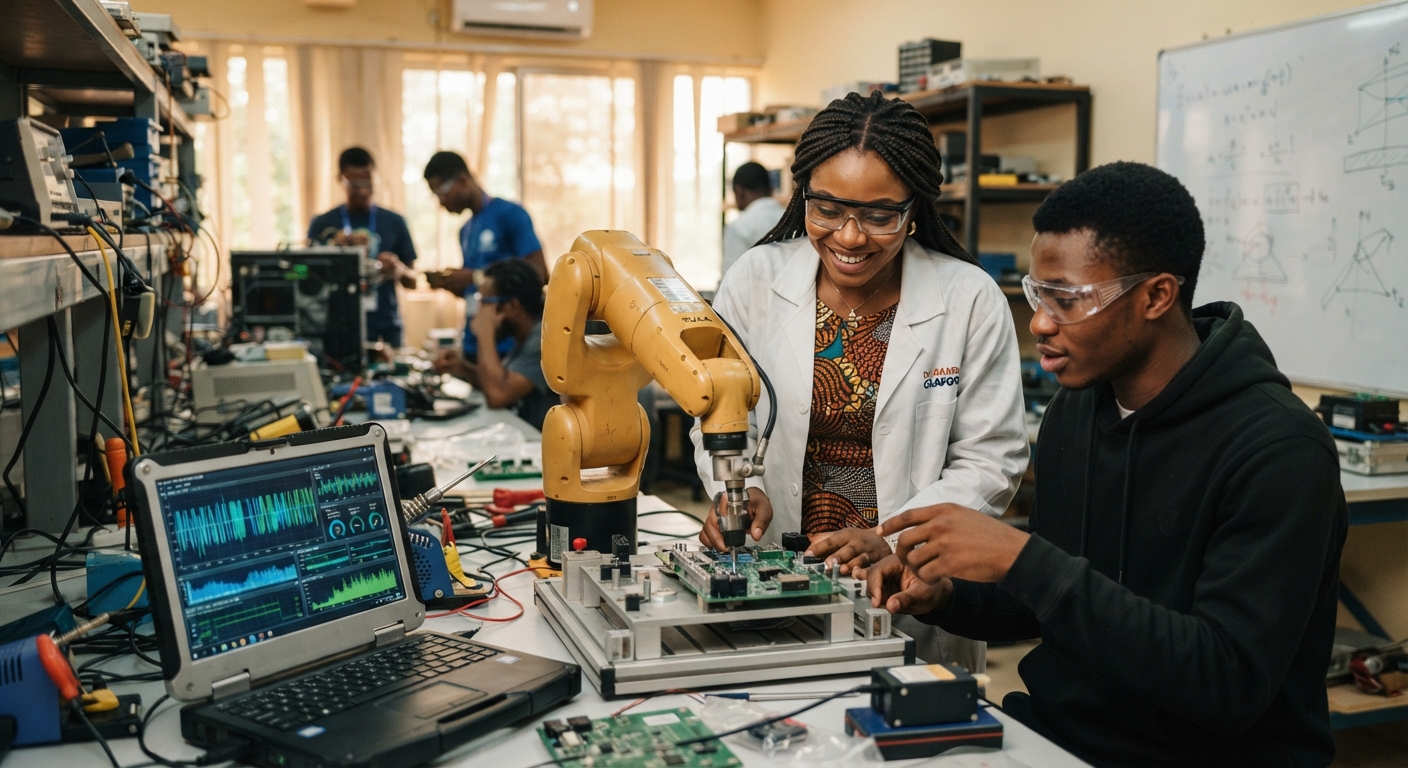
The National Centre for Artificial Intelligence and Robotics (NCAIR) in Nigeria is actively promoting the development and adoption of AI technologies, including those in robotics. Standardized data formats are key to building a robust AI ecosystem, enabling collaboration and the creation of larger, more impactful datasets. For more on AI strategies in Nigeria, see the National Artificial Intelligence Strategy.
What is LeRobot format?
LeRobot is more than just a data format; it's a Python library and a structured approach specifically tailored for handling egocentric video data in robotics. Egocentric video, captured from a first-person perspective, is incredibly valuable for training robots to perform tasks as humans do. This type of data is often rich with temporal information, human actions, and environmental context, making it ideal for embodied AI and learning human skills. The LeRobot library provides tools to easily ingest, process, and augment egocentric video datasets.
The format itself is designed to accommodate the complexities of egocentric video, including multiple synchronized camera streams, audio, and sensor data. It facilitates tasks like action segmentation, hand-object interaction annotation, and training vision-language-action models. For instance, if you're collecting data on auto mechanics in Ladipo market or tailors in Aba, LeRobot can help structure this complex first-person video data effectively. TrustAm Data specializes in collecting this type of work video, and we can deliver it in formats compatible with LeRobot. You can learn more about delivering egocentric video in LeRobot format in our guide, Egocentric video in LeRobot format: a delivery guide.
The demand for high-quality egocentric video data is growing rapidly, as evidenced by large-scale datasets like Ego4D (arXiv). These datasets are crucial for developing robots that can understand and interact with the human world. For AI labs looking to acquire such data, understanding formats like LeRobot is essential.

What is WebDataset?
WebDataset is a Python library and data format designed for efficiently storing and streaming large datasets, particularly from cloud storage. It takes a simple approach: it packages data into standard TAR archives, which can then be stored on any object storage service (like Amazon S3, Google Cloud Storage, or local file systems). The library provides efficient tools for reading these archives sequentially, making it suitable for training deep learning models without requiring massive local storage or complex data management pipelines.
The flexibility of WebDataset is its main strength. It doesn't impose a strict schema on the data itself, allowing it to store diverse types of files—images, audio, text, sensor logs, and more—within the same archive. This makes it highly adaptable for various robotics tasks, from storing raw sensor logs to packaging annotated video clips. When working with large datasets, especially those that need to be streamed over a network, WebDataset offers a robust solution for managing data efficiently. This is particularly relevant for projects that require massive datasets, as suggested by the Grand View Research report on the AI Training Dataset Market (Grand View Research).
Comparing RLDS, LeRobot, and WebDataset
When deciding between RLDS, LeRobot, and WebDataset, consider the specific needs of your robot learning project. Each format excels in different areas:
Structure and Standardization
- RLDS: High standardization, structured format ideal for consistent data across experiments and easy integration with ML frameworks. Best for tabular or structured sensor data.
- LeRobot: Specifically structured for egocentric video, includes tools for annotation and processing of first-person perspectives. Ideal for human-robot interaction and skill learning from video.
- WebDataset: Highly flexible, no strict schema. Can store any file type. Excellent for diverse, large-scale datasets and streaming from cloud storage.
Ease of Use and Integration
- RLDS: Good integration with TensorFlow and other Python ML libraries. Requires adherence to its structure.
- LeRobot: Python-centric library, easy to use for egocentric video tasks. Well-suited for Python-based ML workflows.
- WebDataset: Simple to implement, works with any storage backend. Offers efficient data loading for large datasets.
Typical Use Cases
- RLDS: Reinforcement learning, imitation learning, learning from demonstration where action-state alignment is key.
- LeRobot: Embodied AI, training robots to mimic human actions, understanding human tasks from video, hand-object interaction analysis.
- WebDataset: Large-scale dataset management, streaming data from cloud, projects with diverse data types (images, text, sensor logs, video).
For instance, if you are training a robot to assist in a market trading environment in Nigeria, you might collect sensor data (position, joint angles), video (first-person and third-person), and audio. RLDS could structure the sensor and action data, LeRobot could handle the egocentric video, and WebDataset could be used to store and stream all these diverse components efficiently.
TrustAm Data for Robotics Training
TrustAm Data provides high-quality, diverse AI training data from Africa, tailored to the needs of AI and robotics teams. We focus on collecting authentic, real-world data that captures the nuances of human activities and environments. Our data collection efforts are grounded in ethical practices, ensuring contributor consent and data privacy, adhering to standards set by bodies like the Nigeria Data Protection Commission (NDPC) (NDPC).
We specialize in first-person (egocentric) work video and African-language speech. For robotics, this translates to valuable data for training embodied AI systems, robots for human-robot interaction, and task execution in real-world settings. Our data can be collected to your specifications and delivered in formats compatible with RLDS and LeRobot, or as raw data that can be packaged using WebDataset. We understand the importance of geographic and cultural diversity in AI training data, as discussed in our article, Why robotics data needs geographic and cultural diversity.
Live in Nigeria with 1,000+ recorders. South Africa next. Custom collection anywhere in Africa on request. Nigeria is where we started.
Frequently Asked Questions
What is the main advantage of RLDS?
When is LeRobot the best choice?
How does WebDataset handle large datasets?
Can TrustAm Data provide data for all three formats?
Is it possible to combine these formats?
Need AI training data from Nigeria?
Egocentric video of skilled work and Nigerian-language speech, collected to order. Email [email protected] or request a free 10-hour sample; a person replies within one working day.
Founder and CEO of TrustAm. Building Nigeria's reputation marketplace for verified service providers. Reviews unlock only after real payments.
Disclosure: This article is published by TrustAm Data, part of TrustAm Limited. Links to /data pages are our own data service.
Sources & References
- National Artificial Intelligence Strategy— ncair.nitda.gov.ng
- (arXiv)— arxiv.org
- (Grand View Research)— grandviewresearch.com
- (NDPC)— ndpc.gov.ng