
Dead Stock: How to Find the Goods Quietly Trapping Your Capital
Dead Stock: How to Find the Goods Quietly Trapping Your Capital
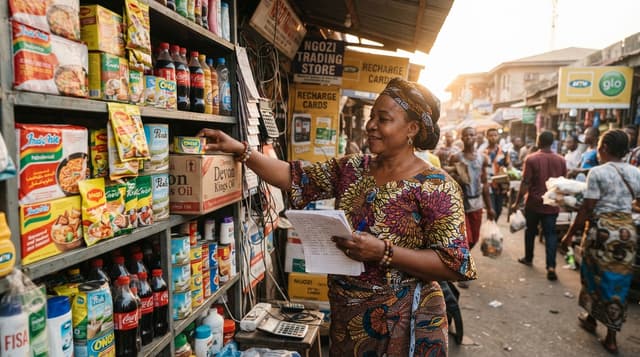
You open your shop in the morning, ready for the day. Customers are buying, you're making sales. But at the end of the day, when you check your money, it feels like something is missing. You sold goods, but where did all the money go? Sometimes, the problem isn't that you're not selling. It's that you have goods sitting on your shelves, collecting dust, and eating up your precious capital. These are called dead stock, and they are like silent thieves, trapping your money and stopping your business from growing.
Overview & Key Takeaways
This article explains what dead stock is and how it traps your business capital. Learn how to identify these slow-moving items and what to do to free up your money and boost your sales.
- Dead stock are goods that have not sold for a long time, tying up your money.
- Regularly reviewing your stock is key to identifying dead stock.
- TrustAm automatically flags items that haven't sold in 90 days.
- Clearing dead stock through discounts or bundles can recover capital.
- Focus on buying what your customers actually want to avoid future dead stock.
What Exactly is Dead Stock?
Dead stock is any item in your shop that has sat unsold for a long time. We're talking about goods that have been there for months, maybe even a year or more, without a single sale. These items are not just taking up shelf space; they represent money you spent that is not coming back to you. Imagine you bought 50 cartons of a particular product for N100,000. If only 10 cartons sell in a whole year, the other 40 cartons are dead stock. That's N80,000 just sitting there, doing nothing for your business.
Why is this a problem? Because that N80,000 could have been used to buy new, fast-moving goods that would sell quickly and bring in more profit. Or it could have been used to pay for urgent needs, like school fees for your children or repairs for your shop. When your capital is tied up in dead stock, your business feels the pinch. You might find it hard to restock popular items, pay suppliers on time, or even manage unexpected expenses. It's like having money in your pocket but being unable to use it because it's stuck somewhere.

How to Spot the Silent Capital Traps
The biggest challenge with dead stock is that it can be hard to see. It doesn't shout for attention. It just sits there, quietly eating into your profits. So, how do you find these hidden capital traps?
1. Regular Stock Checks are Your Best Friend
You need to know what you have. Make it a habit to check your inventory regularly. Don't wait for a customer to ask for something you "should" have, only to find out it's been gathering dust for months. Schedule a time, maybe once a week or once a month, to physically count your items. Note down what you have and when you bought it. This is the first step to understanding your stock movement. TrustAm helps with this by automatically flagging items that haven't sold in 90 days, making it easier to spot slow movers before they become dead stock.
2. Analyse Your Sales Records
This is where knowing your numbers becomes crucial. If you're writing sales in a notebook, go back and check. Which items appear frequently? Which ones are rarely mentioned? If you have a system that tracks sales automatically, like TrustAm's WhatsApp Assistant, this becomes much easier. The assistant records every payment, so you can easily see which products are selling and which are not. You can see your sales tracking history and identify patterns. A product that hasn't sold in three months, six months, or even a year is a strong candidate for dead stock.
3. Look at Your Purchase Dates
When did you buy that item? If you bought a batch of goods last year and they are still sitting there, that's a red flag. Sometimes, we buy too much of a product, or the demand for it suddenly drops. Without knowing the purchase date, it's easy to forget how long an item has been with you. If you use TrustAm, every expense is recorded, and you can even attach photos of receipts. This makes it simple to go back and check when you acquired certain stock.
4. Track Your Expenses Carefully
Knowing how much you spent on each item is vital. If you don't know the cost of an item, you can't tell if it's making you money or losing you money. TrustAm makes it easy to record expenses, either by voice note or by snapping a photo of a receipt. This means you have a clear record of your spending, which helps you identify which unsold items are costing you the most money.

Why Dead Stock is a Silent Killer of Capital
Dead stock does more than just occupy space; it actively harms your business finances. Here’s how:
- Tied-up Capital: Every Naira spent on dead stock is money that cannot be used for anything else. This limits your ability to buy new, profitable inventory, pay bills, or invest in business growth.
- Storage Costs: Even if it's just shelf space in your shop, that space has value. Dead stock takes up valuable real estate that could be used for items that sell quickly.
- Risk of Obsolescence: Products can become outdated, expire, or go out of fashion. The longer stock sits, the higher the risk it becomes worthless. Think about electronics or seasonal fashion items.
- Reduced Profitability: When you finally decide to get rid of dead stock, you often have to sell it at a deep discount, sometimes even at a loss. This eats into your overall profit margins.
- Missed Opportunities: The money stuck in dead stock could have been used to chase profitable opportunities, expand your product line, or even take a much-needed break.
How to Deal With Dead Stock
Once you’ve identified your dead stock, the next step is to get rid of it and free up your capital. Here are some strategies:
1. Discount and Clearance Sales
This is the most common method. Offer significant discounts to move the items quickly. You might not make a profit, but the goal is to recover as much of your initial capital as possible. Advertise it clearly: "Clearance Sale! Up to 50% Off!"
2. Bundle Offers
Pair slow-moving items with popular products. Offer a bundle deal where customers get a discount if they buy both. For example, if you have a slow-selling phone case, bundle it with a popular screen protector at an attractive price.
3. Return to Supplier (If Possible)
Check your agreement with your supplier. Some suppliers allow returns, especially if the items are still in good condition and within a certain timeframe. It's worth asking.
4. Donate or Dispose
If the value is very low and the cost of trying to sell it outweighs any potential recovery, consider donating it to charity or disposing of it responsibly. This clears space and can sometimes offer a small tax benefit, depending on local regulations.
Preventing Future Dead Stock
The best way to deal with dead stock is to avoid accumulating it in the first place. Here’s how:
- Know Your Customers: Pay attention to what your customers are asking for and what they are buying. Don't stock up on items you're not sure will sell. Understanding your market is key, whether you are in Balogun Market or a small neighbourhood shop.
- Buy in Smaller Quantities: Especially for new or untested products, start with smaller orders. You can always reorder if they prove popular.
- Track Inventory Accurately: As mentioned, having a good system to track what you have and what's selling is essential. This is where tools like TrustAm come in handy, as stock counts can be managed alongside sales and payments. TrustAm's inventory management features can help you keep track.
- Monitor Sales Trends: Keep an eye on what's selling well and what's not. If an item is consistently slow, reduce your orders or stop buying it altogether. You can learn more about this in our guide on how to know what to restock without guessing.
- Regularly Review Your Stock: Make it a habit to review your stock levels and identify slow-moving items before they become dead stock.
Start Free on WhatsApp
Stop letting your capital get trapped in unsold goods. Use TrustAm to track your sales and stock automatically, so you always know what's moving and what's not.
Free to start. No app to download. Setup takes about two minutes.
Frequently Asked Questions
What is considered dead stock?
Dead stock refers to inventory items that have not been sold for an extended period, typically 90 days or more. These items have no demand, are obsolete, or are simply not moving, tying up capital and storage space.
How do I calculate the value of my dead stock?
To calculate the value of your dead stock, multiply the quantity of each unsold item by its cost price. Sum these values for all items that qualify as dead stock. For example, if you have 50 units of a product that cost you N100 each, and they are dead stock, their value is 50 * N100 = N5,000.
Can dead stock be profitable?
Dead stock is rarely profitable. The goal is usually to recover the initial investment or minimize losses by selling it at a discount, sometimes even below cost. Any recovery of capital is a win, as it frees up funds for more profitable inventory.
How often should I check for dead stock?
It's best to check for dead stock at least quarterly. However, if you have a system that tracks inventory and sales daily, you can identify slow-moving items much sooner, preventing them from becoming true dead stock. TrustAm helps by alerting you to items that haven't sold in 90 days.
What is the difference between slow-moving stock and dead stock?
Slow-moving stock sells, but at a much slower rate than other items. Dead stock, on the other hand, has not sold at all for a significant period and is unlikely to sell without drastic measures.
Can I prevent dead stock entirely?
While it's difficult to prevent dead stock completely, you can significantly minimize it by careful purchasing, understanding customer demand, maintaining accurate inventory records, and regularly reviewing your stock movement. Smart inventory management is key.
Find verified service providers
Verified providers. Payment held safe until the job is done. Reviews only from real, paid bookings.
Download TrustAm
AI-powered budgeting, instant P2P payments, and escrow protection. Built for Nigeria.
Or get a download link sent to your phone
Chisom Anen
Founder and CEO of TrustAm. Building Nigeria's reputation marketplace for verified service providers. Reviews unlock only after real payments.
Disclaimer: This article is for informational purposes only and does not constitute financial advice. Always consult a qualified financial professional before making major financial decisions.
Disclosure: This article is published by TrustAm, a financial technology company. Some links in this article may direct to our own products.
Sources & References
- Start on WhatsApp →— wa.me
- Small and Medium Enterprises Development Agency of Nigeria (SMEDAN)— smedan.gov.ng
- Central Bank of Nigeria (CBN)— cbn.gov.ng
- National Bureau of Statistics (NBS)— nigerianstat.gov.ng
Related Articles


Free Tools You Might Find Useful
Try these free calculators and tools related to this article.
Invoice Generator
Generate professional invoices for your Nigerian business or freelance work.
Use free tool →Receipt Generator
Generate payment receipts for completed services in Nigeria.
Use free tool →Quote Generator
Generate service quotations for clients in Nigeria.
Use free tool →Contract Generator
Generate basic service agreements for Nigerian service providers.
Use free tool →