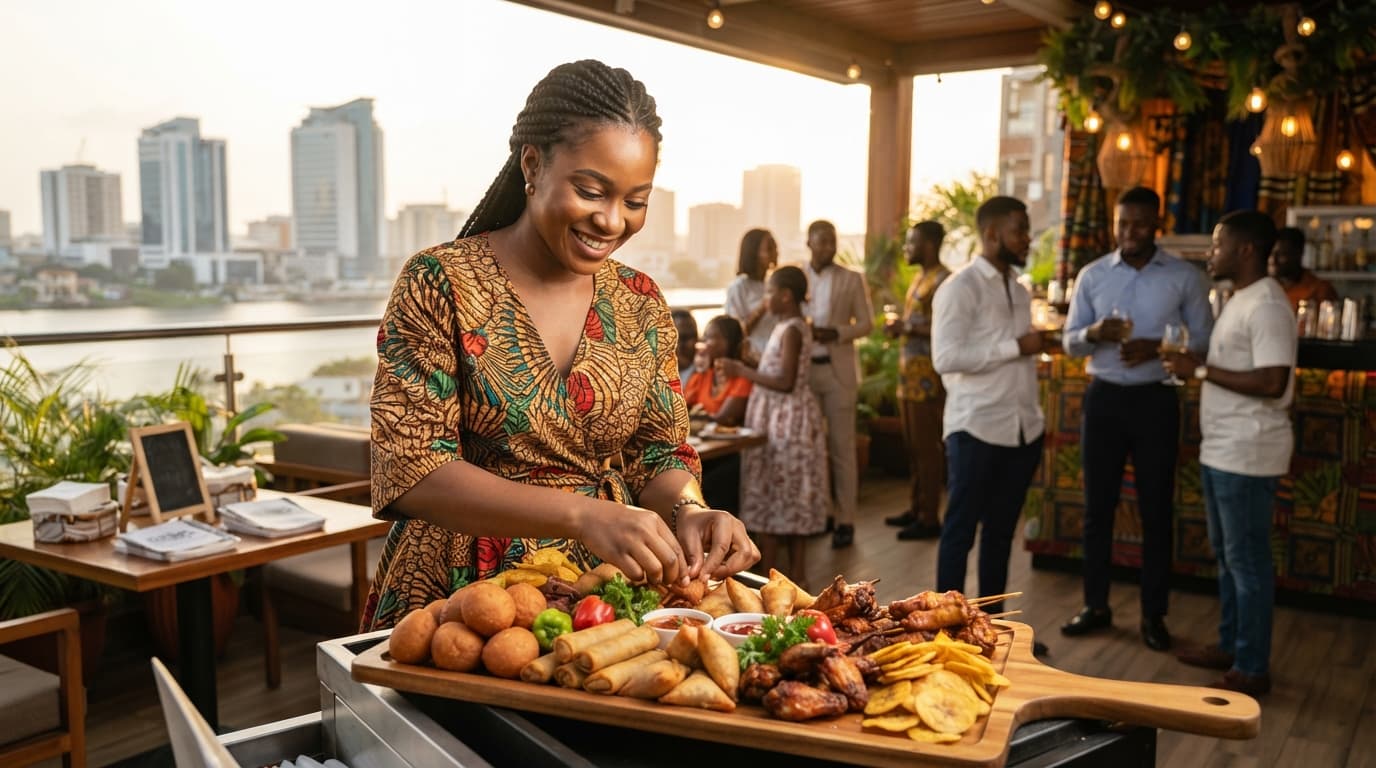
How to Set Your Prices as a Small Chops Vendor in Nigeria (Without Underselling)
Overview & Key Takeaways
Learn how to price your small chops business in Nigeria by understanding your costs, researching the market, and adding value. Discover strategies to avoid underselling and ensure profitability.
- Accurately calculate all your costs, including ingredients, labour, packaging, and overheads.
- Research competitor pricing to understand market rates, but don't blindly follow them.
- Factor in your unique selling proposition and the quality of your ingredients.
- Consider different pricing models: per piece, per platter, or package deals.
- Leverage platforms like TrustAm to showcase your verified services and secure your earnings with escrow.
Small Chops Vendors on TrustAm
Book with escrow protection. If a job isn't done right, open a dispute and our team steps in.

Fit-ness
Service Provider · Ikeja
- Payment protected by escrow
- Money released only after you confirm the job

Amazing bites funfood and more
Service Provider · Agege
- Payment protected by escrow
- Money released only after you confirm the job

Crystal Empire Business Hub
Service Provider · Ibadan
- Payment protected by escrow
- Money released only after you confirm the job

Cake
Service Provider · Ota
- Payment protected by escrow
- Money released only after you confirm the job
Deborah's brand
Service Provider · Onitsha
- Payment protected by escrow
- Money released only after you confirm the job

Chop with Pappy
Service Provider · Lagos
- Payment protected by escrow
- Money released only after you confirm the job
Understanding Your Costs: The Foundation of Profitable Pricing
To price your small chops effectively, you first need a crystal-clear understanding of your expenses. This isn't just about the cost of flour and oil; it's a comprehensive look at everything that goes into your business. Think of it as building a solid foundation for your pricing strategy. Without this, you're essentially guessing, and that’s a fast track to financial trouble. Here’s a breakdown of what to consider:- Ingredient Costs: This is the most obvious. List every single ingredient for each small chops item (puff-puff, samosas, spring rolls, puff-puff, mosa, chin chin, etc.) and track their current prices. Remember to account for fluctuating prices due to inflation or seasonal availability.
- Flour, sugar, yeast, oil, eggs, spices, vegetables (onions, carrots, peas), meat/fish (for fillings), dough ingredients, etc.
- Don't forget the small but essential items like salt, pepper, and seasoning cubes.
- Labour Costs: Even if you’re a solo operation right now, your time has value. Estimate the hours spent on preparation, cooking, packaging, and delivery for a typical order. If you have staff, factor in their wages, benefits, and any other employment costs.
- Your time is valuable. Assign an hourly rate to yourself.
- If you hire help, include their salaries, training, and any associated HR costs.
- Packaging Costs: Attractive and functional packaging is crucial for small chops. This includes:
- Food trays, boxes, cling film, paper bags, labels, serviettes.
- Consider the cost per unit for each packaging item.
- Overhead Costs: These are the ongoing expenses of running your business, even when you're not actively cooking.
- Rent for your kitchen space (if applicable)
- Utilities (electricity, gas, water) – NEPA bills can be significant in Nigeria!
- Equipment maintenance and depreciation (mixers, fryers, ovens)
- Transportation costs for sourcing ingredients and deliveries.
- Marketing and advertising expenses.
- Business registration and permits.
- Contingency Fund: Always add a buffer (around 10-15%) for unexpected expenses, waste, or spoilage. This helps prevent 'sapa' from hitting your business when things go wrong.

Market Research: Know Your Worth and Your Competition
Once you know your costs, it’s time to look outwards. Understanding what other small chops vendors are charging in your area and for similar quality is vital. This isn't about copying them, but about positioning yourself effectively in the market. Here’s how to do your market research:- Identify Competitors: Who else is selling small chops in your city or serving your target market? This includes home-based vendors, caterers, and even restaurants.
- Gather Pricing Information:
- Check their social media pages (Instagram is huge for this!).
- Visit their websites or online marketplaces (like TrustAm, where verified vendors list their services and prices).
- Ask friends or contacts who have recently hired small chops vendors.
- Look at the quality and presentation of their offerings. Are they using premium ingredients? Is their packaging top-notch?
- Analyse Your Findings:
- What are the typical price ranges for popular small chops items (e.g., a platter of 30 pieces)?
- Are there vendors who charge significantly higher or lower? Why might that be? (e.g., premium ingredients, larger portions, established reputation, or simply underselling).

Value-Based Pricing: It’s More Than Just Ingredients
If you simply price based on cost plus a small markup, you’re missing a huge opportunity. Your small chops business offers value beyond just the food itself. Clients are paying for convenience, taste, presentation, reliability, and the overall experience. Consider these value-added factors:- Quality of Ingredients: Are you using fresh, high-quality ingredients? Sourcing premium items often justifies a higher price point.
- Skill and Expertise: Your unique recipes, cooking techniques, and ability to create delicious, consistent small chops are valuable skills.
- Presentation and Packaging: Beautifully arranged platters and attractive packaging elevate the perceived value of your offerings. This is especially important for events and corporate functions.
- Customer Service: Prompt responses, friendly communication, reliability, and punctuality contribute significantly to customer satisfaction and loyalty.
- Dietary Options: Offering vegetarian, vegan, or gluten-free small chops can cater to a niche market and command premium pricing.
- Convenience: Providing delivery services, flexible ordering options, and easy payment methods (like those offered by TrustAm) adds significant value.
Find Verified Providers on TrustAm
Looking for trusted small chops vendors or other event services near you? Browse verified providers with payment-backed reviews and escrow protection.
Create a Free Account →Pricing Models for Small Chops Vendors
There isn't a one-size-fits-all approach to pricing. Different scenarios call for different models. Here are common pricing strategies:- Per Piece Pricing: This is straightforward. You calculate the cost of making one piece of a specific item (e.g., one samosa) and add your desired profit margin. This is great for individual sales or when clients want to pick and choose specific items. However, it can be tedious for large event orders.
- Platter/Tray Pricing: This is a popular method for events. You create standard platters with a mix of small chops (e.g., 30 pieces, 50 pieces, 100 pieces) and set a price for each. This simplifies ordering for clients and allows you to streamline production. You can offer different platter sizes or themed platters.
- Package Deals: Create bundled packages for different event sizes or types (e.g., a "Small Party Pack" for 20 guests, a "Big Event Bundle" for 100 guests). These packages often include a variety of small chops at a slightly discounted rate compared to buying individual pieces, encouraging larger orders.
- Custom Quotes: For large or highly customized orders, provide a bespoke quote based on the client’s specific requirements, number of guests, chosen items, and any special requests. This is where your detailed cost calculation and value-based pricing really shine.
Avoiding Underselling: Protect Your Business
Underselling is a common pitfall for new vendors. It might seem like a good way to attract clients, but it’s a short-sighted strategy that can harm your business in the long run. Here's how to avoid it:- Stick to Your Numbers: Don't drop your prices below your calculated break-even point just to win a bid. If you can't make a profit, it's not a sustainable business.
- Don't Compare Yourself to Everyone: Your journey and your costs are unique. A vendor using cheaper ingredients or operating with lower overheads might be able to charge less. Focus on your own value proposition.
- Educate Your Clients: Explain what goes into your pricing – the quality of ingredients, the labour involved, the presentation. Clients are often willing to pay more for superior quality and service when they understand the value.
- Highlight Your USP: What makes your small chops special? Is it a secret family recipe? Organic ingredients? Exceptional presentation? Emphasize these unique selling points to justify your pricing.
- Build Trust: Clients are more likely to pay premium prices if they trust you. Verified reviews and a professional online presence can significantly boost this trust. Platforms like TrustAm provide a secure environment for clients to book and pay, building confidence for both parties.
- Start with a Minimum Order Value: For very small orders, consider setting a minimum purchase amount to ensure the order is profitable after accounting for preparation and delivery time.

Leveraging TrustAm for Pricing and Growth
As a small chops vendor in Nigeria, navigating pricing and client acquisition can be challenging. TrustAm offers a powerful solution to streamline your business operations and boost your earnings. Here’s how TrustAm helps:- Verified Marketplace: List your small chops services on TrustAm and reach thousands of potential clients actively searching for vendors in cities like Lagos, Abuja, Port Harcourt, and beyond.
- Transparent Pricing Showcase: Clearly list your platter options, package deals, and custom quote availability. Clients can easily compare your offerings.
- Payment-Backed Reviews: Build credibility with genuine reviews from clients who have booked and paid through the platform. This social proof helps justify your pricing and attract more bookings.
- Escrow Protection: Secure your earnings with TrustAm's escrow service. Clients pay into escrow, giving you peace of mind that payment is guaranteed once the service is rendered. This protects you from non-payment, a common issue when dealing directly with clients.
- Business Insights: As you get more bookings, TrustAm can provide data on popular service types and pricing trends, helping you refine your offerings and pricing strategy over time.
Start Getting Clients on TrustAm
List your small chops services on TrustAm to connect with verified clients, secure your earnings with escrow, and build a reputation with payment-backed reviews.
Create Your Free Account →Join thousands of Nigerian service providers growing their business with TrustAm.
Frequently Asked Questions
How much should I charge per piece of small chops in Nigeria?
The price per piece varies significantly based on the item, ingredient cost, and your overheads. A good starting point is to calculate your cost per piece and add a profit margin of 50-100%. For instance, if a samosa costs ₦100 to make, you might charge ₦150-₦200.
What is a fair price for a small chops platter for an event in Lagos?
For a platter of 50 pieces in Lagos, expect to pay anywhere from ₦10,000 to ₦25,000 or more, depending on the variety, quality of ingredients, and the vendor's reputation. Vendors should factor in all costs, including premium packaging and potentially delivery, when setting platter prices.
Should I offer discounts to clients?
Discounts can be strategic but should not compromise your profitability. Consider offering them for bulk orders (e.g., 100+ pieces), for repeat customers, or as part of a package deal. Avoid deep discounts that make your service seem cheap or devalue your work. Ensure any discount is built into your overall pricing strategy.
How do I price custom small chops orders?
For custom orders, first, understand the client's exact requirements (number of pieces, specific items, any special ingredients or dietary needs). Calculate the total cost for these specific items, add your labour and overheads, and then apply your desired profit margin. It's advisable to provide a detailed quote that outlines the items and the total price.
How can I increase my small chops business revenue?
To increase revenue, focus on expanding your client base by listing on platforms like TrustAm, offering tiered packages, introducing new small chops varieties, improving your presentation, and ensuring excellent customer service for repeat business. Upselling add-ons like drinks or larger platter sizes can also boost revenue.
Book a verified Small Chops
Verified providers. Payment held safe until the job is done. Reviews only from real, paid bookings.
Download TrustAm
AI-powered budgeting, instant P2P payments, and escrow protection. Built for Nigeria.
Or get a download link sent to your phone
Chisom Anen
Founder and CEO of TrustAm. Building Nigeria's reputation marketplace for verified service providers. Reviews unlock only after real payments.
Disclosure: This article is published by TrustAm. Some links may direct to our own marketplace and products.
Sources & References
- Nigerian Bureau of Statistics (NBS)— nigerianstat.gov.ng
- Central Bank of Nigeria (CBN)— cbn.gov.ng
- Paystack Blog— paystack.com
- The World Bank in Nigeria— worldbank.org
Related Services
Find trusted providers related to this article.
Related Articles

Free Tools You Might Find Useful
Try these free calculators and tools related to this article.
Invoice Generator
Generate professional invoices for your Nigerian business or freelance work.
Use free tool →Receipt Generator
Generate payment receipts for completed services in Nigeria.
Use free tool →Quote Generator
Generate service quotations for clients in Nigeria.
Use free tool →Contract Generator
Generate basic service agreements for Nigerian service providers.
Use free tool →