Egocentric Video vs Third-Person Video: Which Does Your Robot Policy Need?

Overview & Key Takeaways
Robots learn from data, but the type of data matters. This article explores egocentric (first-person) and third-person video data, explaining their unique benefits for AI training and helping you decide which is best for your robot policy.
- Egocentric video captures the world from the robot's own perspective, mimicking human sight and interaction.
- Third-person video provides an external view, useful for understanding spatial relationships and overall scene context.
- Egocentric data is crucial for robots learning to perform tasks, navigate complex environments, and interact with objects.
- Third-person data helps robots understand their position within a larger space and observe interactions from a distance.
- Combining both data types offers a more comprehensive understanding for advanced AI and robotics applications.
What is Egocentric Video and Why Does it Matter for Robots?
Egocentric video, also known as first-person video, records the world from the viewpoint of the person or robot wearing the camera. Think of it as seeing through the eyes of the actor. For AI and robotics, this perspective is invaluable because it closely matches how humans perceive and interact with their surroundings. Robots need to understand not just where objects are, but also how they relate to the robot's own body and actions. This type of data is essential for training robots to perform tasks, navigate dynamically, and understand human intent. Without it, a robot might know a cup is on a table, but not how to reach for it or what to do with it.

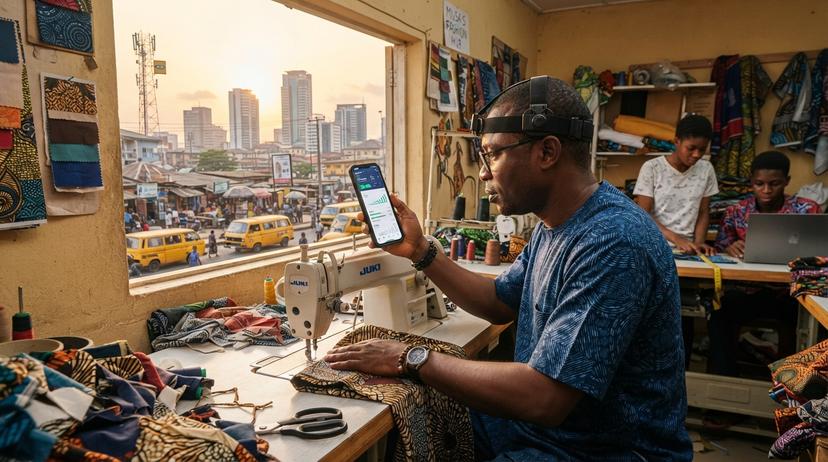
The insights gained from egocentric video are fundamental for developing robots that can operate safely and effectively in human environments. Researchers are increasingly collecting large-scale egocentric datasets to advance AI capabilities. For example, the Ego4D dataset, which contains over 3,000 hours of egocentric video, aims to capture a wide range of human activities and interactions [1]. Similarly, Ego-Exo4D integrates egocentric and exocentric (third-person) views to provide a richer understanding of skilled human actions [2]. This is particularly relevant for tasks like those performed by Nigerian tailors or mechanics, where precise hand-eye coordination and environmental awareness are key. What Robots Can Learn From Watching Nigerian Tailors Work highlights how detailed, first-person views of craftspeople are essential for teaching robots complex manual skills.
What is Third-Person Video and When is it Useful?
Third-person video, also known as exocentric video, offers an external perspective of a scene. Instead of seeing through the eyes of the actor, you see the actor and their environment from a fixed or moving camera position outside the actor's own viewpoint. This perspective is excellent for understanding spatial relationships, overall scene context, and the interactions between multiple agents or objects. For a robot, third-person video can help it understand its place within a room, track the movement of others, or observe the broader consequences of its actions. It provides a 'God's-eye view' that complements the egocentric perspective.

Consider a scenario where a robot is operating in a busy market like those found in Lagos. While egocentric video helps the robot navigate its immediate path and pick up items, third-person video from a nearby camera could show the overall crowd flow, potential obstacles, or the location of other people it needs to avoid. Datasets like EPIC-KITCHENS [3] often include both egocentric and third-person views to provide a more complete picture of human activities. This dual perspective allows AI models to learn not only how to perform a task but also how that task fits into the larger environment. For robotics research focused on human-robot collaboration or team-based operations, third-person data is indispensable. It can also be useful for safety monitoring, understanding complex social dynamics, and evaluating the overall efficiency of robotic systems.
Key Differences and Synergies
The fundamental difference lies in the viewpoint: egocentric is 'inside' the actor's head, while third-person is 'outside' looking in. This leads to distinct strengths. Egocentric video excels at teaching fine motor skills, object manipulation, and understanding immediate sensory input. It's like learning to thread a needle by looking at your own hands. Third-person video is better for understanding object permanence, spatial reasoning, multi-agent coordination, and understanding the global context. It’s like watching someone else thread a needle from across the room.
However, these two data types are not mutually exclusive; they are highly synergistic. Combining them provides a richer, more robust dataset for training AI models. For instance, a robot learning to assemble furniture might use egocentric video to understand how to grip a screw and use a screwdriver, while using third-person video to understand its position relative to the overall piece of furniture and the workshop environment. This blended approach mimics how humans learn: we often observe others (third-person) before attempting a task ourselves (egocentric). Datasets like Open X-Embodiment [4] and models like π0 [5] are exploring how to integrate diverse perspectives for more generalizable robotic learning.
For AI and robotics teams looking to develop sophisticated systems, a comprehensive data strategy often involves collecting or sourcing both egocentric and third-person video. Understanding the specific goals of your robot policy will determine the priority, but a balanced approach typically yields the best results. This is a core principle in building reliable AI, and TrustAm is committed to providing high-quality data that reflects these diverse perspectives from real-world Nigerian work environments. As discussed in What to Ask an African Data Vendor Before You Buy AI Training Data, inquiring about the types of perspectives captured is crucial when sourcing data.
Choosing the Right Data for Your Robot Policy
The choice between egocentric and third-person video, or a combination of both, depends entirely on the intended application of your AI and robotics policy. If your robots are designed for tasks requiring close interaction with objects, intricate manipulation, or navigating cluttered personal spaces, egocentric video is likely your primary need. This could include robots performing repairs, assisting in kitchens, or providing personal care. The ability to learn from a first-person view is paramount for such applications.
Conversely, if your robots need to operate in larger, dynamic environments, coordinate with other robots or humans, or monitor broader situations, third-person video will be more critical. Examples include autonomous vehicles navigating city streets, warehouse robots managing inventory across a large facility, or security robots patrolling an area. Understanding the entire spatial layout and the movements of other entities is key here.
A balanced strategy is often ideal. Consider using egocentric video to train the robot's direct interaction capabilities and third-person video to train its situational awareness and navigation skills within a larger context. For example, a robot designed to assist elderly individuals in their homes would benefit from egocentric data for tasks like fetching items or administering medication, and third-person data for navigating hallways, avoiding furniture, and understanding the overall state of the living space. TrustAm offers first-person (egocentric) work video and can also facilitate the collection of data that captures broader environmental context, helping teams build robust robotic systems.
Frequently Asked Questions
What is the main advantage of egocentric video for robots?
When is third-person video more suitable for AI training?
Can AI models use both egocentric and third-person video?
What kind of Nigerian work is good for egocentric video collection?
How does TrustAm collect this type of data?
Need AI training data from Nigeria?
Egocentric video of skilled work and Nigerian-language speech, collected to order. Email [email protected] or request a free 10-hour sample; a person replies within one working day.
Founder and CEO of TrustAm. Building Nigeria's reputation marketplace for verified service providers. Reviews unlock only after real payments.
Disclosure: This article is published by TrustAm Data, part of TrustAm Limited. Links to /data pages are our own data service.